Every great game begins as a whisper—a late-night idea that refuses to fade. For thousands of aspiring creators, Microsoft's Xbox Academy turned that whisper into a shout. Back in 2020, when the games industry was already roaring, Microsoft opened the doors to a free online workshop that promised something rare: a direct line to the people who actually make games. From the perspective of 2026, it is clear that this two-day event was no small potatoes.
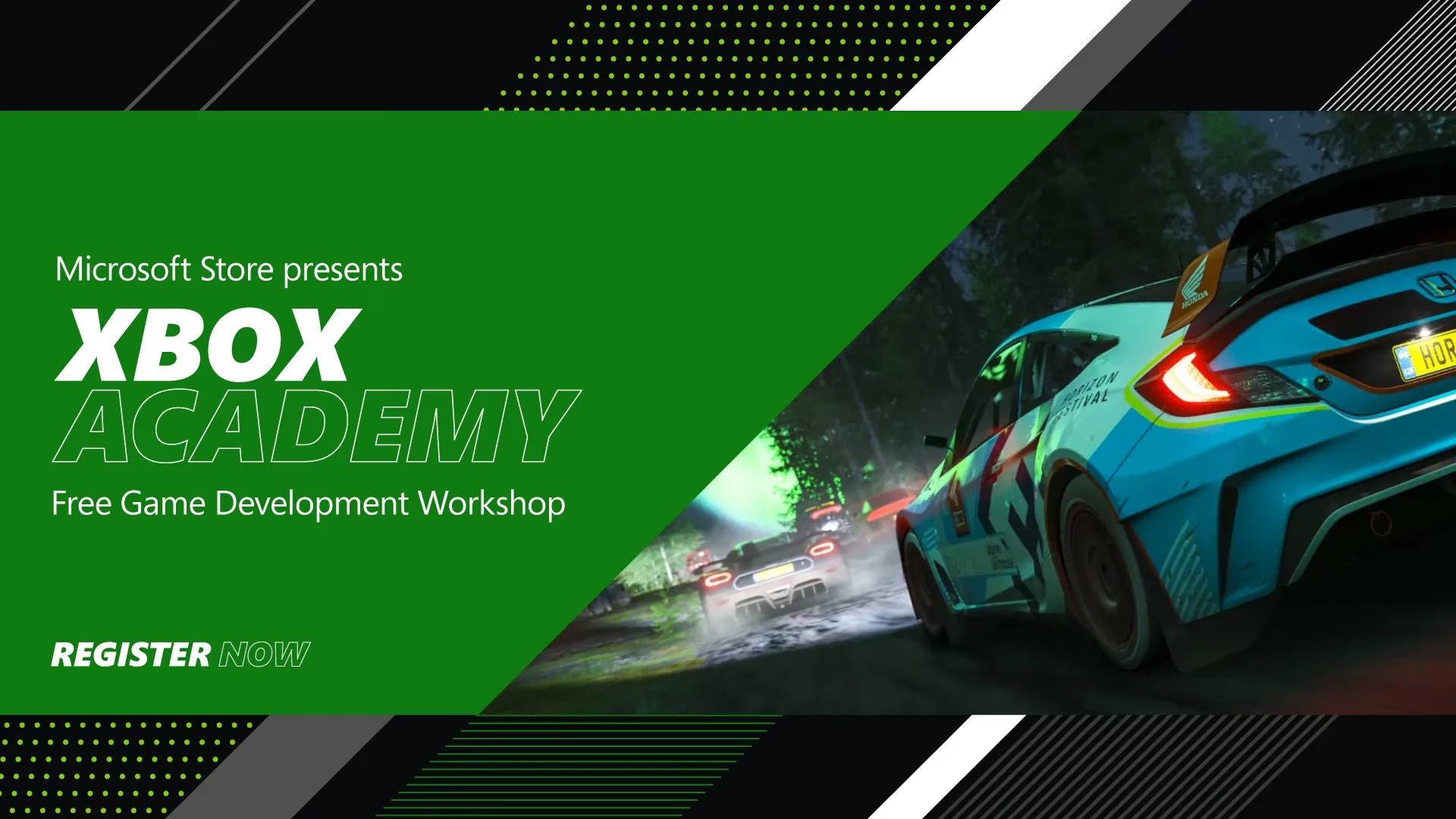
The concept was simple, but the ambition was huge. Xbox Academy was not another passive webinar. It was an interactive, 90-minute session designed to 'inspire the next generation of games creators' and pull back the curtain on game design and development. Microsoft partnered with veterans from Playground Games, Games London, and East London Arts and Music to build something that felt less like a lecture and more like a backstage pass.
🎮 At a Glance
| Element | Detail |
|---|---|
| Format | Free online workshop |
| Duration | 90-minute sessions |
| Dates | September 12–13 |
| Hosts | Playground Games, Games London, East London Arts and Music |
| Tools | Unity engine + 3D Game Kit |
| Age rule | Over 16 only |
| Seats | Limited, registration required |
At the center of it all were four people who had spent years turning ideas into pixels. Maria Lee, a senior producer at Playground Games, had only recently stepped into that role after working as an art producer. Ryan Greene, a senior game designer from the same studio, understood how to balance fun and challenge. Curtis Le Blanc, director of games at East London Arts and Music, brought the educational fire. And Phil Graham-Koranteng from Microsoft Store's training team kept the technical side steady. Together, they transformed an ordinary online session into a masterclass.
Each speaker brought a different flavor:
-
🎨 Maria Lee — the producer who understood art and deadlines
-
🕹️ Ryan Greene — the designer who chased the fun
-
🎓 Curtis Le Blanc — the teacher who made complex ideas click
-
🛠️ Phil Graham-Koranteng — the technical guide who kept everyone on track
The 90-minute workshop did not waste a single second. Attendees learned the basics of game design before diving into the whole development process. They discovered how to use developer kits like Unity to bring wild ideas to life. Unity, after all, was the quiet engine under the hood—patient, powerful, and ready to turn blocky prototypes into living worlds.
But let’s be honest: building a game is not magic. It takes tools, patience, and a willingness to fail. Xbox Academy made that clear in the best possible way. Before the show began, participants had to download the latest version of the Unity engine and its 3D Game Kit resource files. That way, they could follow along step by step with the presenters, their screens humming with curiosity while the instructors clicked through the same menus and code.
The workshop was offered at four different times across September 12 and September 13. This was the real deal, and the limited number of spots meant hesitation could cost a seat. Aspiring creators had to register fast, because the gaming world was watching and the seats were not going to fill themselves.
There was one small gate, though. Attendees had to be over 16 years old. It was a practical rule, but it did not dampen the enthusiasm of younger dreamers waiting in the wings.
Looking back from 2026, Xbox Academy feels less like a one-off event and more like a time capsule. The tools have evolved, AI-assisted development has become common, and online learning is everywhere. Yet the same lesson remains: game development is a craft, and the best way to learn it is from the people who love it. Microsoft understood that early, and it gave a generation of players permission to stop dreaming and start building.
The legacy is hard to measure but easy to feel. Somewhere out there, a student who attended a 90-minute session in September 2020 is now shipping a game. Somewhere else, a quiet teenager who watched the recording is debugging a prototype at 2 a.m. The sparks from Xbox Academy did not fade when the stream ended. They just kept burning.