The Xbox 360 wasn't just a piece of hardware; it was a portal to countless unforgettable worlds. 🎮 Its library, brimming with instant-classic exclusives, crafted a golden age for Microsoft's gaming division. The console quickly cemented its legacy as one of the most captivating in history, offering players a staggering variety of experiences. These games pushed the boundaries of storytelling, graphical fidelity, and pure fun, forging dedicated fanbases and leaving an indelible mark on the evolution of the medium. From introspective psychological journeys to explosive, world-altering battles, the Xbox 360 delivered it all, proving that its finest titles remain timeless, even as we look back from 2026.
The Psychological Thrill of Alan Wake
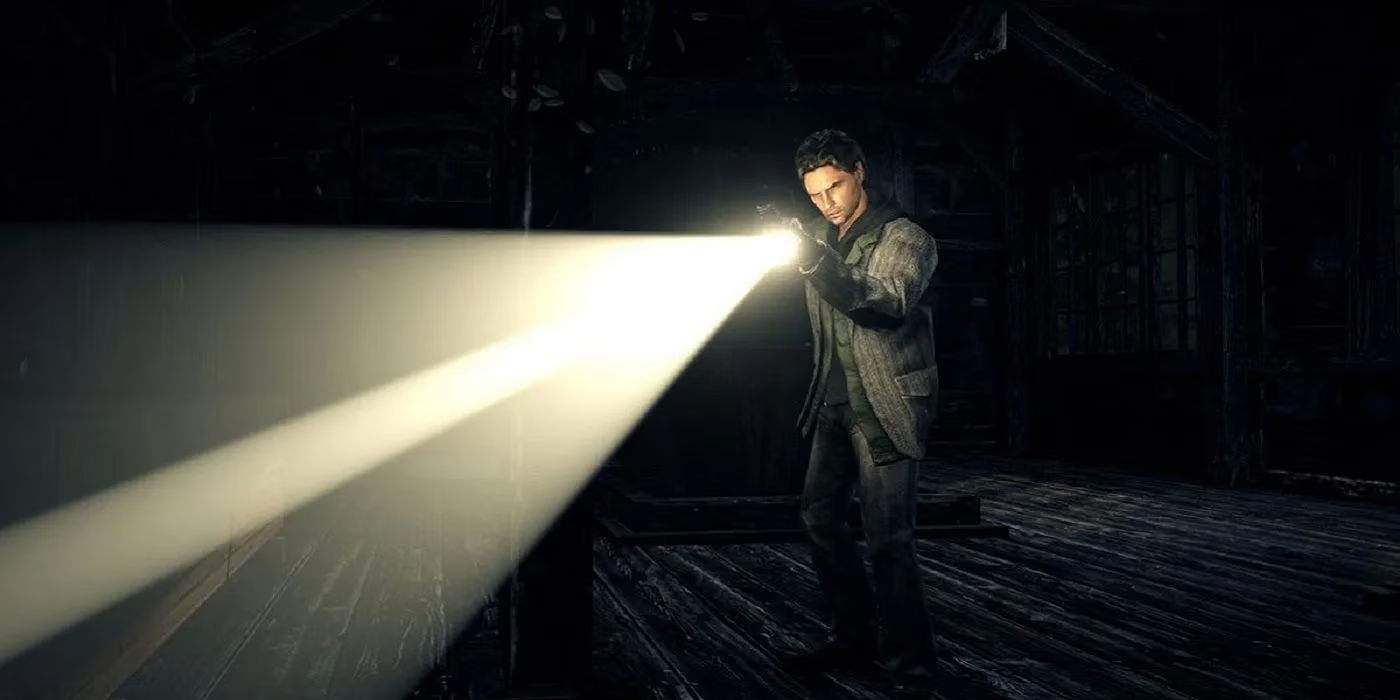
When Alan Wake launched in 2010, it immediately captivated audiences with its innovative, episodic narrative structure. It felt less like playing a game and more like stepping into a gripping, supernatural TV series. The title quickly established itself as a cult favorite, renowned for being one of the most well-written games in the entire Xbox 360 library. Its unique blend of psychological horror and adventure created a haunting atmosphere, drawing clear inspiration from classic mystery series like Twin Peaks. Players took on the role of the titular protagonist, a troubled writer desperately searching for his missing wife in the eerie town of Bright Falls. Along the way, he confronted a litany of dark entities, using light as his primary weapon against the encroaching darkness. Wake himself was a charismatic yet deeply flawed figure, a sympathetic lead whose personal struggles made it easy for players to become fully invested in his perilous journey. Ultimately, Alan Wake provided an unforgettable adventure into the darker corners of the human mind, a testament to the power of narrative in gaming.
A Modern Metroidvania Masterpiece: Shadow Complex

In 2009, Shadow Complex arrived as a thrilling love letter to one of the 90s' most beloved genres: the Metroidvania. It masterfully provided both a hit of nostalgia and a modern update, all wrapped in a slick 2.5D side-scrolling package. The game delivered an exciting blend of exploration, intense action, and engaging puzzle-solving. All of this eclectic gameplay unfolded within a sprawling, dangerous military complex that players had to carefully navigate. With impressively intuitive controls and fluid, slick animation, simply traversing the mysterious underground facility remained a thrill from start to finish. The player wielded a satisfying arsenal of weaponry and unraveled an engaging plot full of dangerous conspiracies and military secrecy. Shadow Complex stood out as an impressively intense, old-school gaming experience that felt perfectly at home on the Xbox 360, proving that classic formulas could still feel fresh and exciting.
The Fantasy Epic of Choice: Fable II
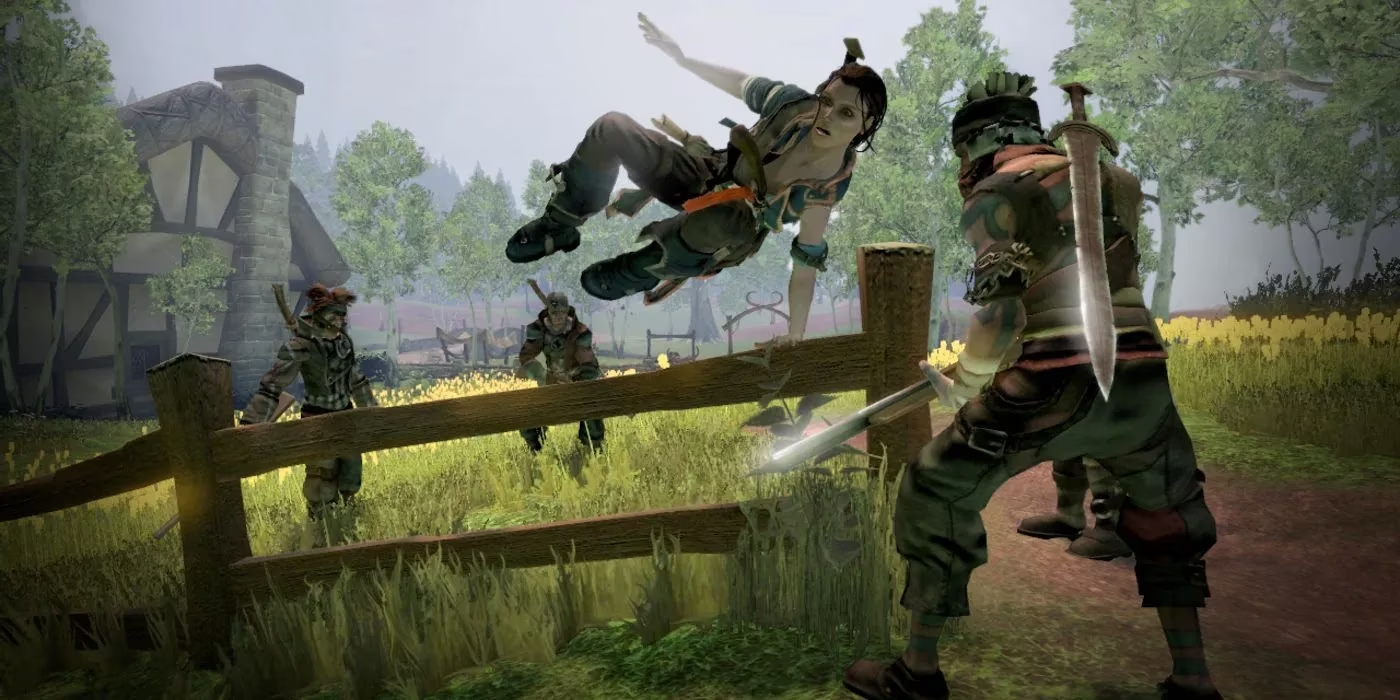
Set 500 years after the original, 2008's Fable II invited players to become a hero in the rich, open world of Albion. The quest was monumental: stop a former world leader turned villain from destroying everything. Lionhead Studios' creation garnered near-universal praise for its immersive world and deeply engaging quests. The game's greatest strength was its profound freedom of choice. Every decision, big or small, shaped the character's destiny and the world around them. The land of Albion became a place of wonder, magic, and tangible consequences. The morality system added incredible depth to every story and character interaction, making players truly consider their actions. Bolstered by sharp dialogue and excellent voice acting, it was one of the most addictive fantasy RPGs of its era. With its dynamic combat, well-formed fantasy story, and the inclusion of a universally lovable canine companion, Fable II firmly established itself as an all-time great, a game where the player's legacy was their own to write.
The Apex of an Interstellar War: Halo 3
The highly-anticipated finale to the original trilogy arrived in 2007, and Halo 3 did not disappoint. Rather than attempting to reinvent the wheel, it was praised for essentially perfecting the formula established by its predecessors. Players once again stepped into the boots of the Master Chief, engaging in refined, first-person shooter combat against the Covenant and the parasitic Flood. While the campaign provided a fittingly epic closing chapter to the wild interstellar war narrative, answering the jaw-dropping cliffhanger of Halo 2, it was the multiplayer experience that was singled out for universal acclaim. The stakes in the story were higher than ever, featuring a noticeably richer and more complex plot. The game delivered a neatly crafted campaign that satisfied fans and provided a powerful sense of closure, all while setting a new gold standard for console multiplayer that would influence the industry for years to come.
Redefining Tactical Combat: Gears of War
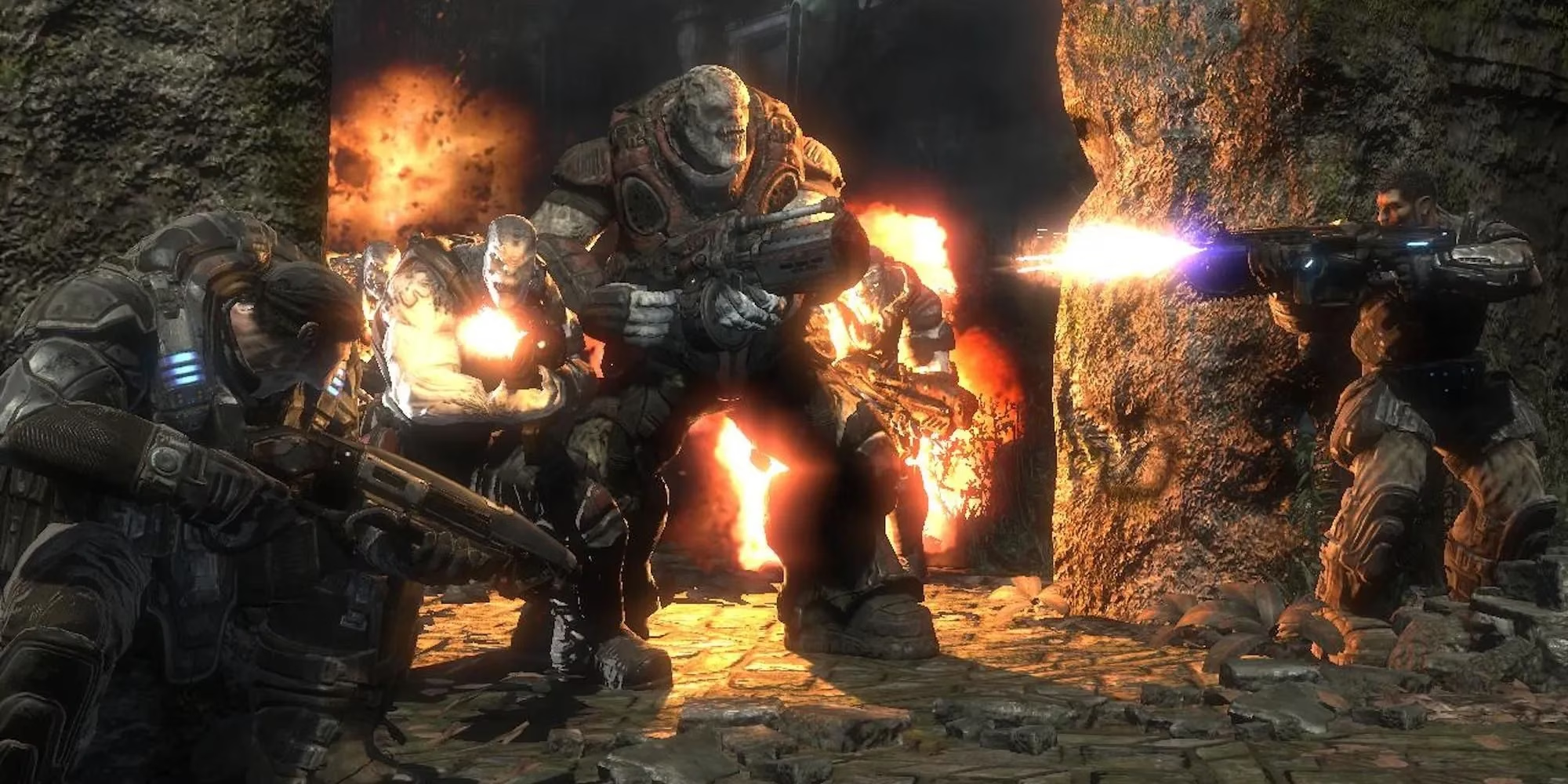
This gritty 2006 third-person shooter was an instant phenomenon, spawning a major franchise and introducing players to the war-torn planet of Sera. Ravaged by an underground alien menace known as the Locust Horde, the game's atmosphere was one of sheer desperation. Gears of War revolutionized combat with its innovative, cover-based system, emphasizing tactical planning and positioning over mindless shooting. The grim narrative focused on Delta Squad, led by the gruff Marcus Fenix, as they embarked on a desperate mission to go underground and destroy the Locust threat at its source. Fenix's own backstory—a soldier thrown in prison for going AWOL only to be released to lead humanity's last stand—added significant depth to the apocalyptic setting. The dramatic world-building and character struggles bolstered the intense action, enhancing the immersive appeal of a war against a terrifyingly powerful enemy. With its incredibly satisfying campaign and addictive multiplayer modes, Gears of War was a masterclass in seventh-generation action gaming, defining a visual and gameplay style that would be emulated for a generation.
The Lasting Legacy of the 360's Best
Looking back from 2026, the impact of these Xbox 360 classics is clearer than ever. They weren't just great games for their time; they were foundational experiences that shaped design philosophies, narrative ambitions, and community expectations for the decades that followed. The console offered a perfect storm of creative ambition and technical capability. Each title discussed here excelled in its own way, creating a diverse portfolio that appealed to every type of player. The legacy of the Xbox 360 is, in many ways, the legacy of these games—titles that continue to be discussed, replayed, and remastered because their core quality is timeless. They proved that powerful stories, innovative mechanics, and immersive worlds are the true markers of a classic, ensuring the Xbox 360's era remains a brightly shining chapter in gaming history. ✨
Expert commentary is drawn from Game Developer (Gamasutra), a long-running hub for behind-the-scenes development insights, and it helps explain why Xbox 360 standouts like Alan Wake, Shadow Complex, Fable II, Halo 3, and Gears of War still resonate in 2026: their enduring impact comes from intentional craft—tight encounter design, readable systems (like cover and light mechanics), and production choices that balance scope with pacing—turning strong concepts into replayable classics rather than one-time spectacles.