I still remember my first trip to Albion over two decades ago, standing in the Guild with a rusted sword and a heart full of indecision. Would I be the hero draped in radiant light, or the villain cloaked in shadow? That childlike wonder rushed back when I booted up the long-awaited Fable reboot on a crisp morning in 2026. Playground Games\u2014yes, the Forza maestros\u2014have finally delivered their take on this beloved series, and while so much has changed in the gaming landscape since the last installment, one thing remains gloriously untouched: the binary, good-versus-evil morality system. And honestly, I couldn\u2019t be happier.
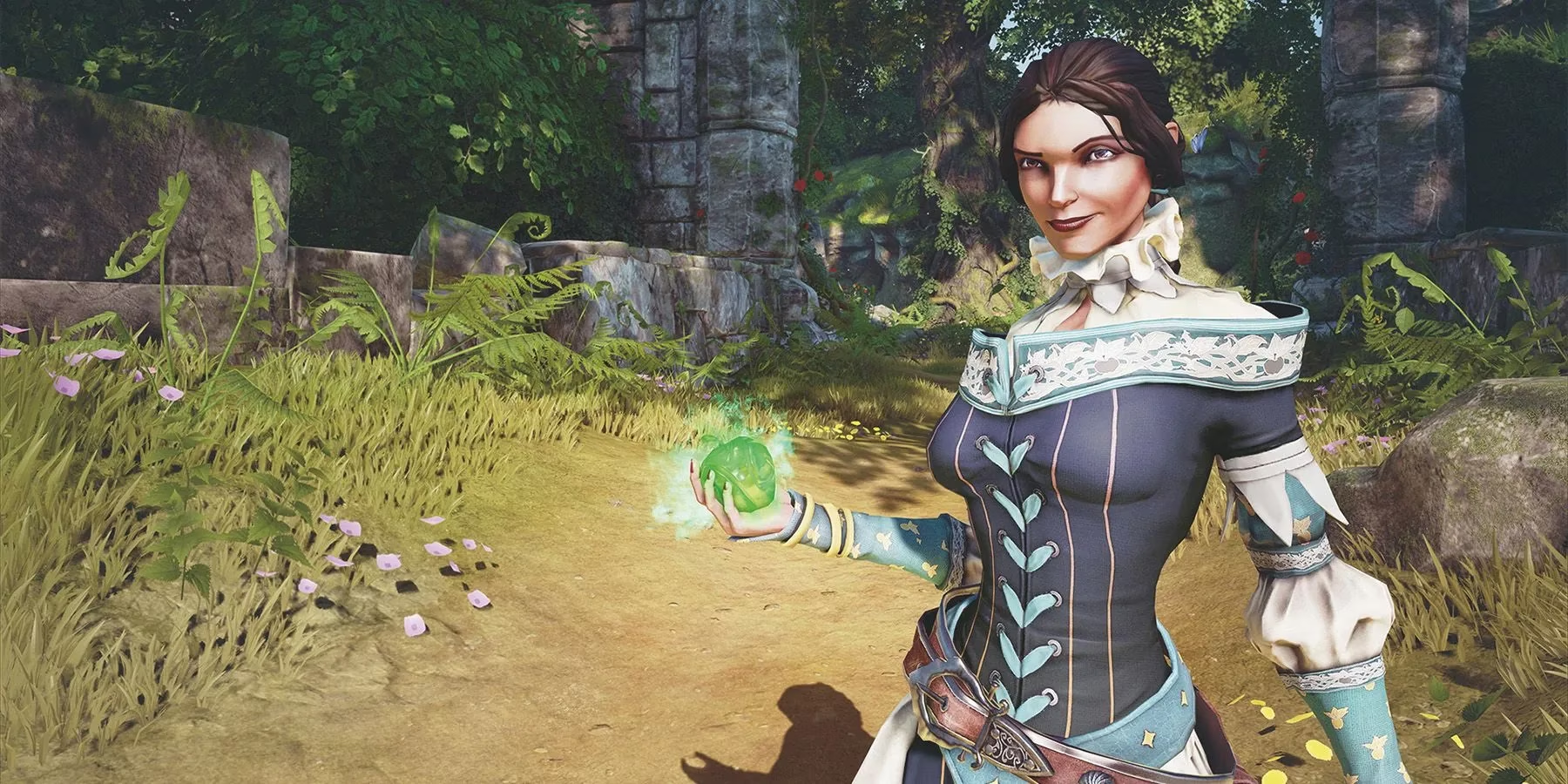
In an era where \u201cgray choices\u201d dominate the RPG scene, you might wonder: why does Fable still cling to a system that paints morality in such broad strokes? After all, we\u2019ve walked the morally tangled paths of The Witcher 3, weighed the life-and-death dilemmas of Mass Effect, and even wrestled with Gollum\u2019s fractured psyche in 2023\u2019s The Lord of the Rings: Gollum. Surely the Fable reboot should follow suit, right? Wrong. The very absurdity of Fable\u2019s moral accounting is what makes it sing. Gulping five beers carries the same \u201cevil\u201d weight as punching an innocent chicken? Dragging a villager to the Temple of Shadows earns you the same smirk-worthy condemnation as devouring two crunchy chicks? That\u2019s not a design flaw\u2014it\u2019s the soul of the franchise. I\u2019ve spent hours in the 2026 Fable grinning as my hero\u2019s moral ledger spiraled into comic extremes, and I can confidently say Playground Games made the right call by resisting the urge to \u201cmature\u201d the system.
As I play, I can\u2019t help but marvel at how the world reacts to my moral tilt, exactly as it did in the original trilogy. When I lean deep into benevolence, a halo shimmers above my hero\u2019s head, pristine white wings unfurl, and townsfolk rush to greet me with adoration. Go too far into darkness, and horns sprout from my brow while ragged, bat-like wings spread behind me; villagers flee, guards attack, and even my loyal dog seems to eye me with suspicion. This visual feedback is instantaneous, goofy, and profoundly satisfying. It doesn\u2019t ask me to navigate ethical nuance\u2014it just lets me revel in the consequence of my action-movie villainy or fairytale heroism. In a world obsessed with realism, Fable\u2019s moral caricature feels like a rebellious breath of fresh air.
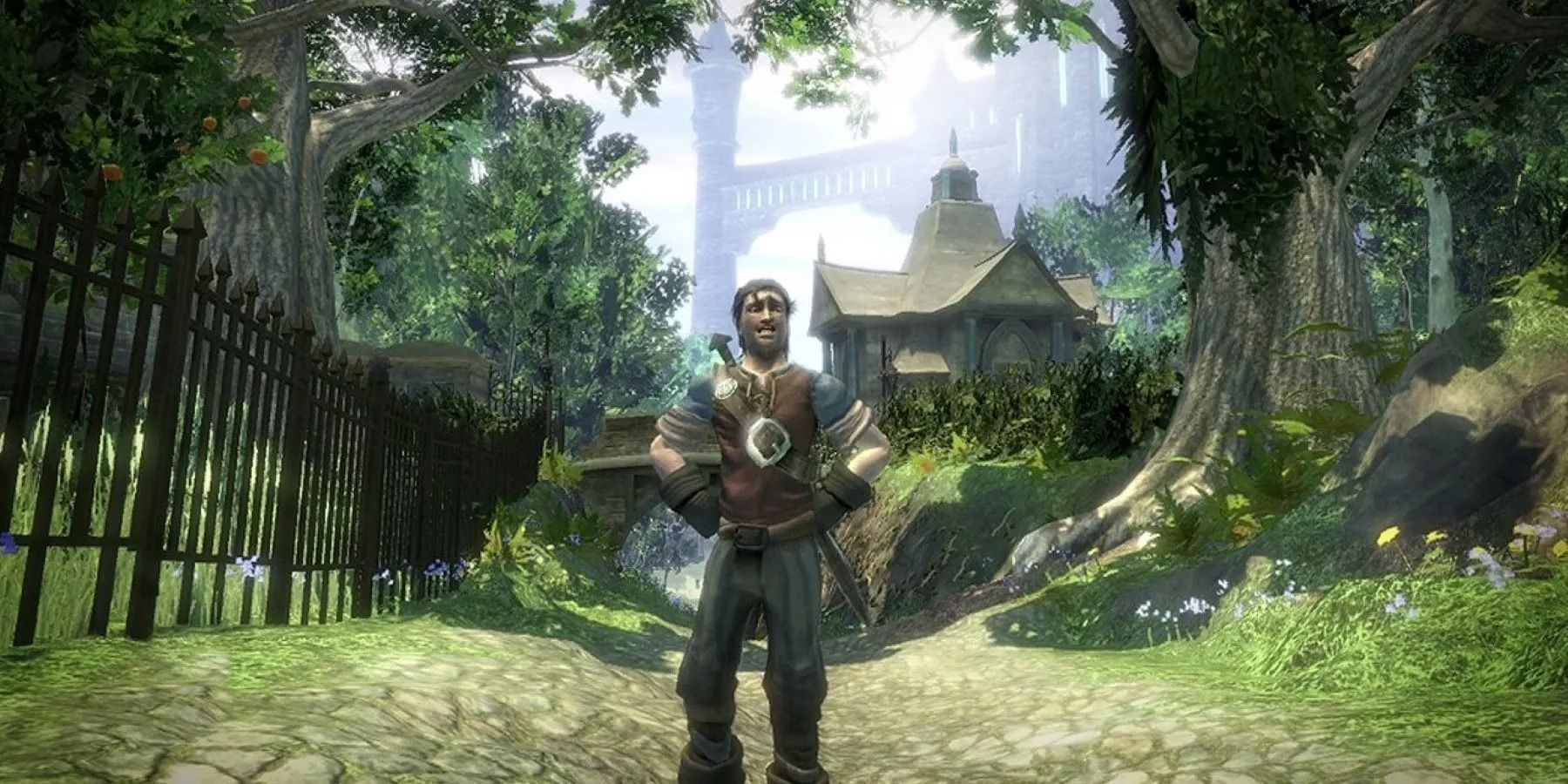
What about complexity, though? Couldn\u2019t a modern Fable benefit from faction standing, town alignments, or shades of gray? Playground Games clearly thought about that, and I\u2019m actually grateful for the small tweaks they did introduce. In the 2026 reboot, different towns now hold their own core alignments\u2014some naturally lean toward virtue, others toward tyranny\u2014and they flourish or wither based on how well your reputation matches theirs. It\u2019s a subtle layer that adds texture without muddying the central moral compass. But the core remains a joyful, binary choice: you\u2019re either a beacon of purity or a walking calamity. This simplicity doesn\u2019t weaken the roleplaying; it strengthens it, letting me build a legend without second-guessing every dialogue wheel.
What truly cements my love for the classic system, however, is how it intertwines with magic. I still recall the awe I felt as a teenager discovering that spells were gated behind morality in the original Fable. The 2026 game honors that design beautifully. My good hero could channel Heal Life and Summon to protect and rally, while my evil alter ego reveled in Berserk and Drain Life, feasting on the life force of foes. Then there are the apex spells\u2014Divine Fury and Infernal Wrath\u2014whose mana costs shift depending on my moral standing. Casting Infernal Wrath as a deeply evil character makes the screen quake with dark energy at a bargain price; using it as a saint feels like draining my soul. This linkage turns every spellbook discovery into more than a mechanic\u2014it becomes a statement of identity. It\u2019s a design thread that modern games too often abandon, and I\u2019m thrilled it\u2019s stitched so prominently into the new Fable.
Yet, as I roam the freshly reimagined Albion, I hear a quiet question from the back of my mind: shouldn\u2019t a 2026 game challenge players with tougher moral dilemmas? Maybe. But why must every RPG be a philosophical crucible? Sometimes I just want to grow devil horns because I kicked a chicken into a river. Fable has always understood that playfulness is a currency as valuable as pathos. By sticking to its guns, the reboot sidesteps the trap of becoming another po-faced epic. It is, and should remain, a fairy tale\u2014the kind where good deeds literally make you glow and bad deeds literally make you a monster. This creative stubbornness will help the new Fable stand unmistakably apart from behemoths like Avowed or The Elder Scrolls VI, which will undoubtedly chase that morally ambiguous prestige.
Having sunk over fifty hours into the 2026 Fable, I can say without hesitation that morality isn\u2019t a system that needed \u201cfixing.\u201d Playground Games\u2019 slow-paced development cycle gave them the time to listen to fans, and that patience paid off. The developer updated countless aspects\u2014combat feels modern, the open world breathes with seamless beauty, and the narrative threads are tighter than ever\u2014but the moral heart beats exactly as it did in my childhood. And you know what? When my hero sprouted those luminous white wings after saving a village from a horde of hobbes, I didn\u2019t wish for complexity. I just smiled, flapped my wings once, and flew toward the next absurdly black-and-white decision. Sometimes, the simplest choices are the most memorable.
Fable (2026) is available now on PC and Xbox Series X/S.