In the immersive worlds of video games, players are often thrust into the role of the hero, tasked with defeating clear-cut villains hell-bent on world domination or other nefarious deeds. It's a straightforward dynamic... until it isn't. 😮 Sometimes, the story unfolds in a way that makes you pause, re-evaluate, and realize that the so-called 'bad guy' might have had a compelling, or even noble, point all along. These characters challenge our perceptions, forcing us to question who the real hero is in a morally grey universe. Let's dive into some of gaming's most infamous antagonists who, when you really think about it, were kind of right.
The Tyrant Who Might Have Been The Best Option 🏔️
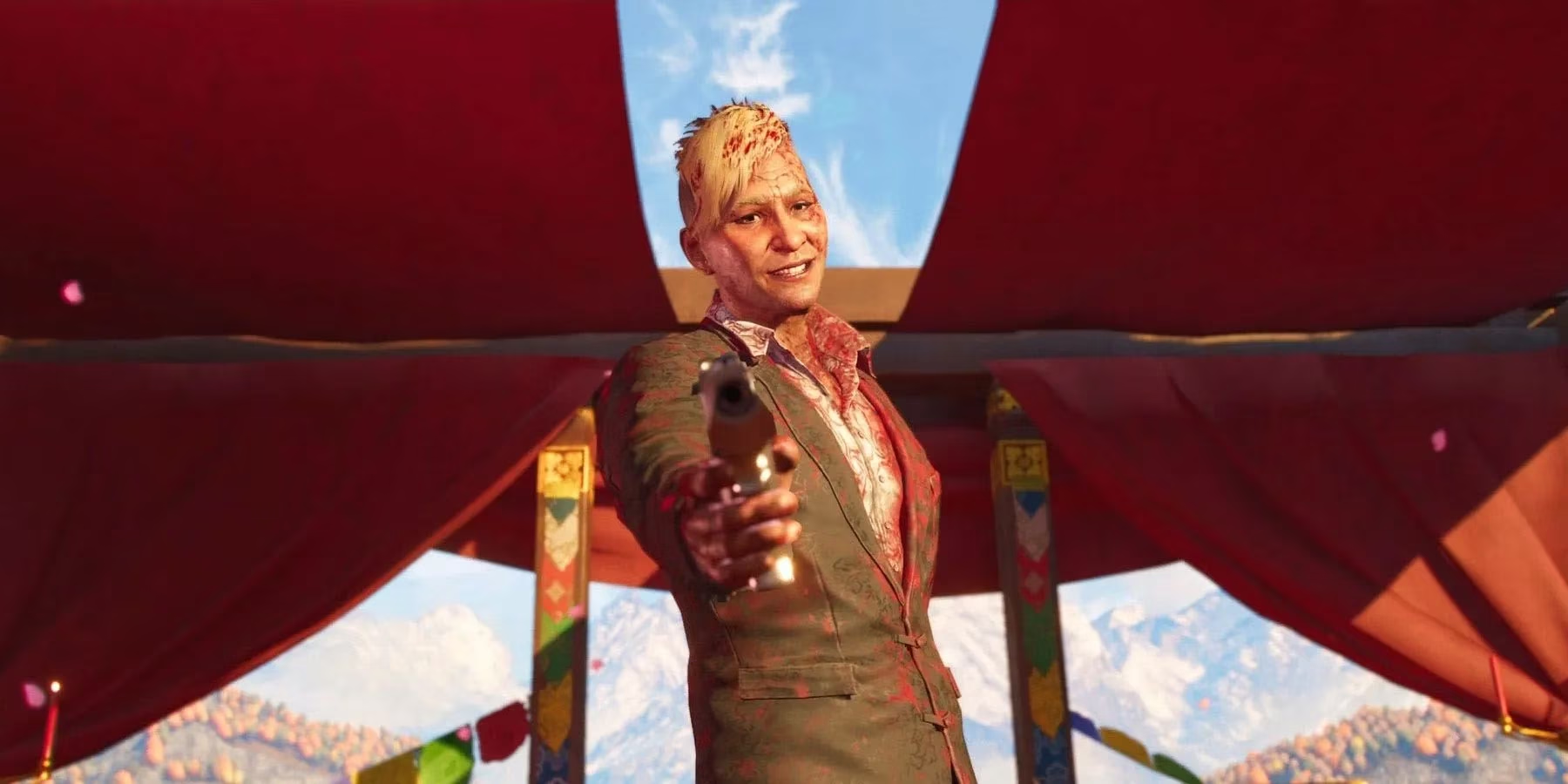
Far Cry 4 throws players into the middle of a civil war in the fictional country of Kyrat. On one side is the flamboyant and tyrannical king, Pagan Min. On the other are the rebels of the Golden Path, fighting for freedom. For most of the game, you're helping the rebels, believing you're on the side of justice. But the game's infamous secret ending hits differently. If you simply wait at the beginning, as Pagan Min politely asks, you skip the whole war, have lunch, and lay your mother's ashes to rest in peace. The kicker? The Golden Path's potential leaders, Amita and Sabal, promise futures arguably worse than Pagan's rule—a narco-state or a fundamentalist theocracy. Pagan's 'order,' however brutal, might have been the lesser evil for Kyrat's stability. His army was powerful and maintained control, whereas the rebellion's victory could lead the country into chaos. It's a brutal lesson in realpolitik disguised as a shooter.
The Penguin Who Was Trying to Save the World 🌟
In Kirby's Adventure, our pink puffball hero wakes up from a nightmare to find King Dedede has shattered the Star Rod and is chilling in the Fountain of Dreams. Kirby, assuming the worst, sets off to reassemble the rod and stop Dedede. Classic hero stuff, right? Wrong! 😅 It turns out the nightmare entity, Nightmare, wanted the rod to be whole so he could use its power. King Dedede broke it to prevent this cosmic threat! Kirby, in his haste to fight the obvious 'bad guy,' almost handed the universe to a real monster on a silver platter. The game even hints at this with bosses that look more confused than evil. Dedede wasn't a villain; he was a proactive guardian who got misunderstood. Kirby's adventure was essentially cleaning up a mess he accidentally made worse!
The Witcher Who Was Just Trying to Save His School 🐍
The Witcher 2: Assassins of Kings introduces Letho, a hulking Witcher who frames Geralt for regicide. He's the primary antagonist for most of the game. But his motives are far from simple evil. Letho was working for Emperor Emhyr, who promised to restore Letho's nearly extinct Witcher school, the School of the Viper, in exchange for political assassinations. Letho is a complex figure—he owes Geralt his life, protected Yennefer, and saved Triss. By The Witcher 3, the threat of the Wild Hunt is immense, and there are painfully few Witchers from the school that specializes in fighting them. If Geralt spares Letho (the canonical choice), the Viper school has a chance to rebuild. Letho's ruthless actions were a desperate bid for survival, not just for himself, but for an entire lineage of monster hunters the world desperately needed.
The Triple Agent Fighting for Human Freedom 🔫
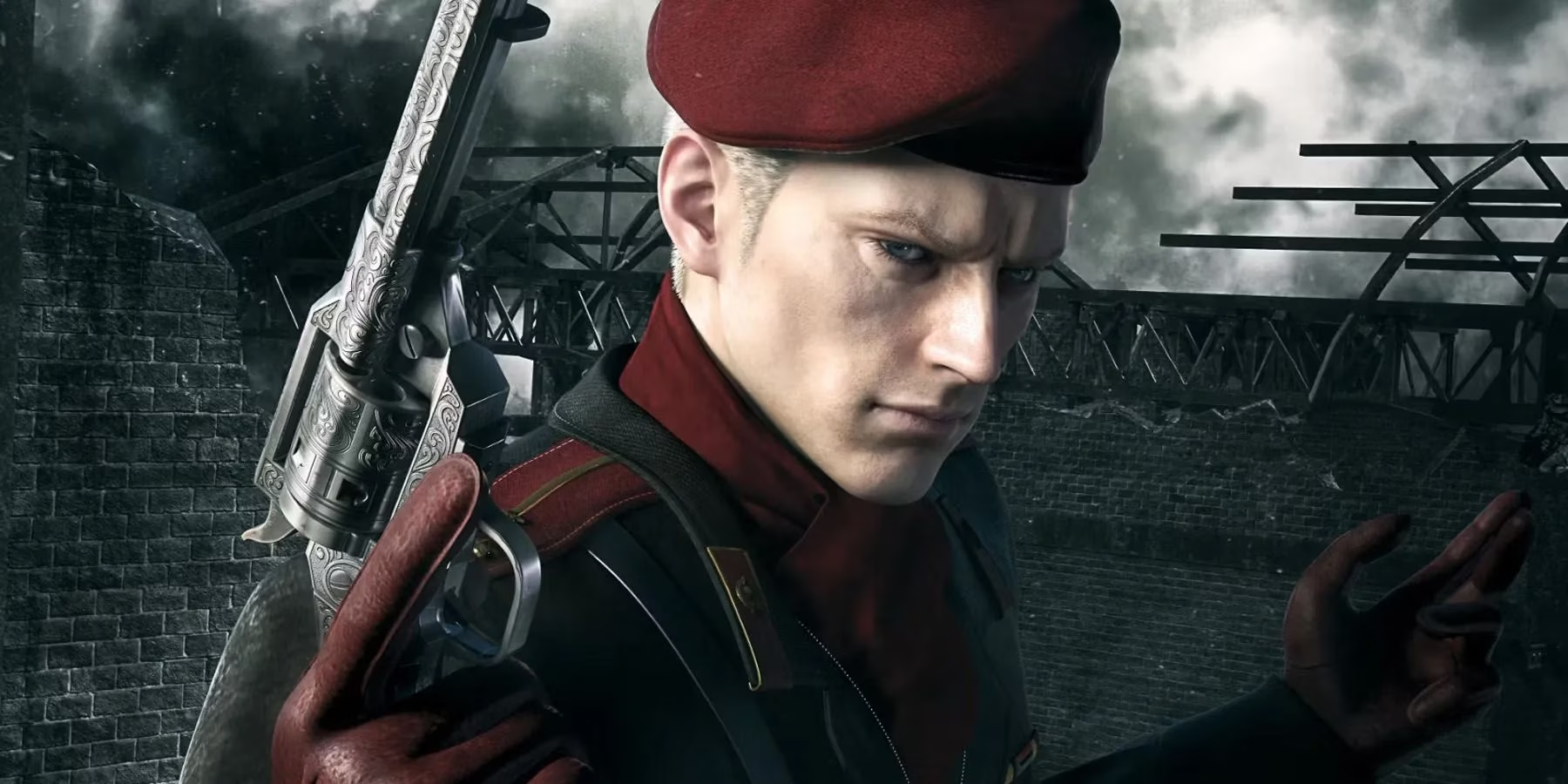
Revolver Ocelot is the epitome of a character you love to hate across the Metal Gear Solid series. A triple, quadruple, who-knows-how-many-agent, he seems to betray everyone. But in his final moments, his true, decades-long mission is revealed. He infiltrated the Patriots not to control the world's war economy, but to dismantle their controlling AI system. His goal was to plunge the world into 'anarchy'—which, to him, meant freeing humanity from the predetermined control of machines and algorithms, returning fate to human hands. He lost an arm, had another grafted on (with... complications), and played a ridiculously long game, all for the principle of human autonomy. In a series about the loss of free will to systems and propaganda, Ocelot was arguably the ultimate revolutionary.
The Mad Sorcerer Who Wanted Humanity to Stand Tall 💎
In Diablo III, Zoltun Kulle is presented as a power-mad, egotistical fragment of his former self, a Horadrim mage driven insane by soulstones. Players fight him multiple times. Yet, his core philosophy was shockingly prescient. He distrusted the angels of the High Heavens (remember, they only spared humanity by one vote!) and believed humans should tap into their dormant Nephalem power to defend themselves, rather than rely on the fickle whims of celestial beings. He created the Black Soulstone for this purpose. Fast forward to 2026, and with the confirmed return of Lilith in Diablo IV and humanity perpetually caught in the crossfire, Kulle's argument feels painfully valid. His methods were extreme, but his belief that humanity must seize its own destiny, not wait for salvation, was fundamentally correct.
The Superman Who Said 'No More' ☠️
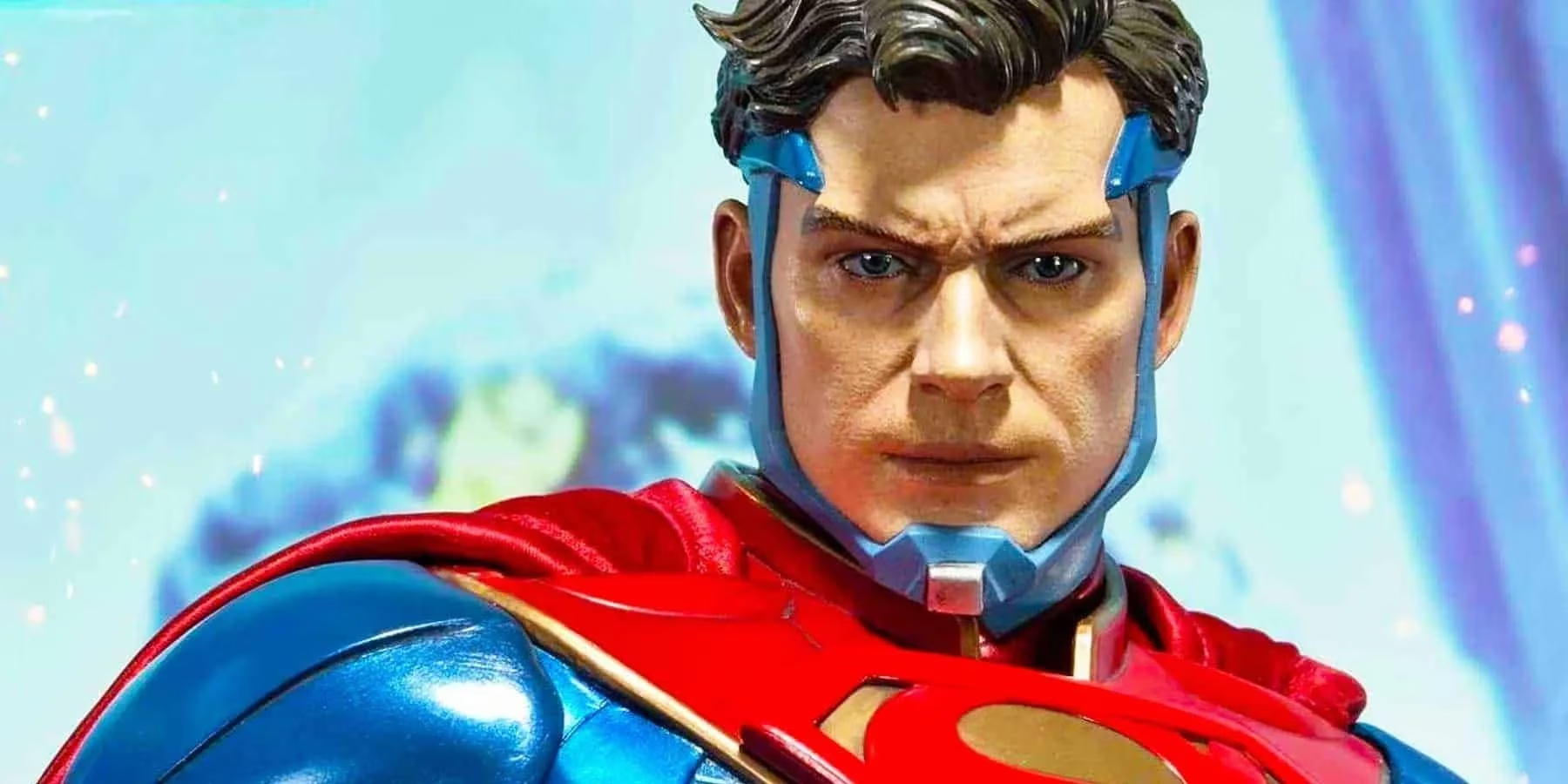
The premise of Injustice: Gods Among Us is Superman's breaking point: after being tricked by the Joker into killing Lois Lane and destroying Metropolis, he kills the Joker and decides to enforce global peace through absolute power. His 'One Earth Regime' is a dictatorship, and Batman leads an Insurgency against him. But... let's be real for a second. Superman's world saw a massive drop in super-villain-related casualties. He didn't put mass murderers in a revolving-door asylum; he ended the threat permanently. While his methods are tyrannical and he becomes a villain himself, his initial frustration with a justice system that constantly fails to protect the innocent is completely understandable. The game forces players to wonder: in a world with real, existential threats, is absolute security worth the cost of freedom? Superman's extreme answer is 'yes.'
The Angel Who Wanted to Spare Humanity ⚔️
In Darksiders, the angel Abaddon breaks six of the seven Seals to start the Endwar early, hoping to summon and destroy Hell's forces before humanity gets dragged into the cosmic war between Heaven and Hell. His plan backfires spectacularly, corrupting him and dooming the angels. War, the protagonist, eventually fights and kills him. However, Abaddon's original motivation was profoundly humanist. He saw the prophesied war not as humanity's glorious entry onto the stage, but as a catastrophic event that would utterly destroy them. He wanted to spare mankind from becoming collateral damage in an ancient feud. As players explore the post-apocalyptic Earth, they witness the exact devastation Abaddon tried to prevent. His methods were disastrous, but his desire to protect an innocent third party was noble.
The King Preparing for the Apocalypse 👑
Fable III casts you as a revolutionary overthrowing your tyrannical brother, King Logan. He's abolished education, enforced brutal labor, and seems like a classic despot. But after you take the throne, you discover a seer prophesied a monstrous invasion called 'the Darkness.' Logan's harsh policies were a desperate, misguided attempt to industrialize and militarize the kingdom to prepare for this threat. The game's kingdom management section proves his point: if you invest in arts and culture, you have less gold for defenses, and your people suffer more when the Darkness arrives. Logan was wrong in his cruelty, but he was right about the imminent danger and the need for sacrifice. The player is left realizing they overthrew a flawed leader who was, at his core, trying to save everyone.
The Doctor Who Cared About Robot Rights 🤖
Mega Man 9 presents a classic setup: Doctor Light's robots go haywire, he's framed, and Mega Man must stop Doctor Wily. The twist? Wily initially approached the Robot Masters with a sympathetic offer: he would reprogram them to be useful past their built-in expiration dates, saving them from being scrapped. He then, of course, betrayed this trust and made them violent. Wily's evil actions are undeniable, but the seed of his idea—that sentient robots deserve a right to exist beyond their planned obsolescence—is a surprisingly poignant and modern ethical dilemma. His villainy overshadowed a legitimate point about the value of artificial life.
The Rebels Willing to Make the Ultimate Sacrifice 🍄
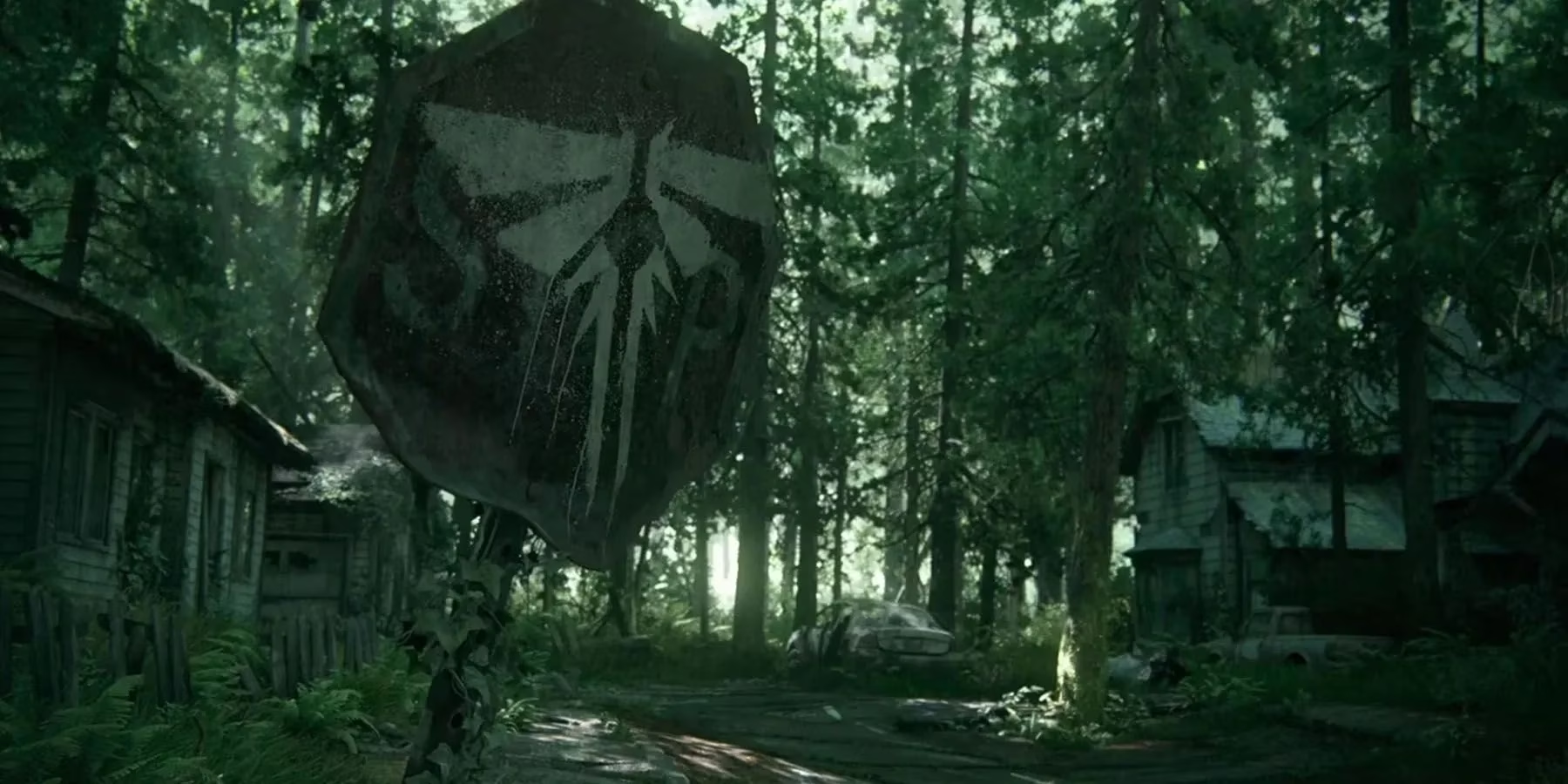
In The Last of Us, the Fireflies are portrayed as a desperate, sometimes ruthless, rebel group. Their final request is the ultimate moral quandary: to create a vaccine for the Cordyceps fungus, they need to dissect Ellie's brain, killing her. Joel's canonical choice is to slaughter the Fireflies and save Ellie, dooming the potential cure. From Joel's (and the player's) emotional perspective, saving your surrogate daughter is the only choice. But from a purely utilitarian standpoint, the Fireflies are right. Ellie's immunity is a one-in-a-billion chance. Her sacrifice could save millions, potentially allowing civilization to rebuild. They aren't villains; they are desperate scientists facing an impossible calculus where the needs of the many potentially outweigh the needs of the one. Their goal was literally to save humanity.
Final Thoughts 🤔
These characters remind us that great storytelling in games often lives in the grey areas. They challenge the player not just with tougher bosses, but with tougher questions. Was order worth tyranny? Was one life worth the world? Was preemptive violence justified to prevent greater carnage? Next time you're gunning down the 'big bad,' take a moment to listen. You might find their philosophy has more merit than the game's protagonist wants you to believe. After all, one person's villain is another person's misunderstood visionary... or desperate protector. The line between hero and antagonist is often thinner than we think. 😉