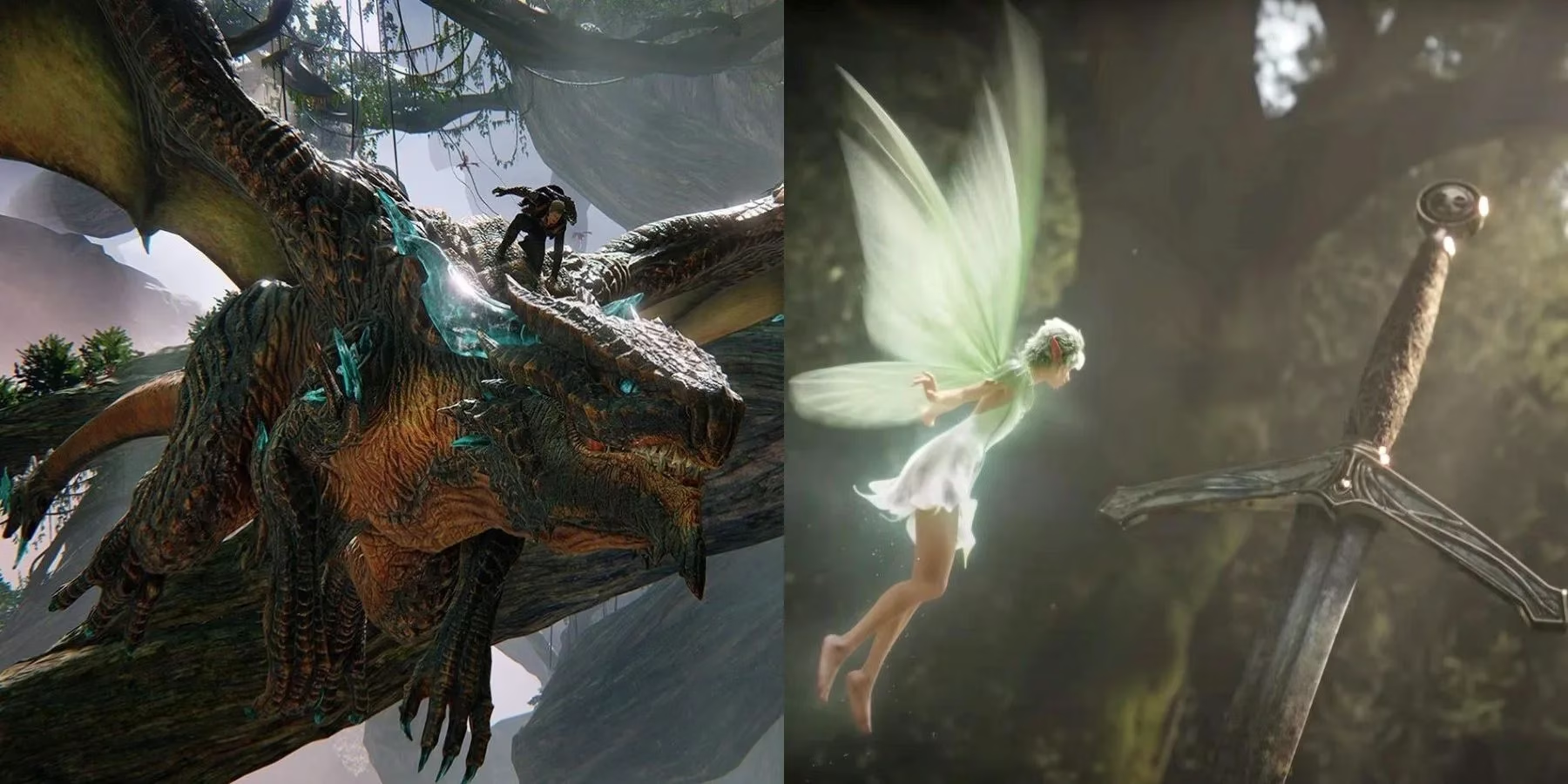
Even in 2026, asking Playground Games about the new Fable feels like interrogating an oyster for the secret of its pearl. They won't budge. Six years have shuffled by since that teasing 2020 reveal, and the studio\u2014masters of sun-drenched Mexican roads in Forza Horizon\u2014guards its fantasy RPG like a dragon hoarding a single glowing manuscript. The silence isn\u2019t merely stubbornness; it\u2019s a survival tactic carved from the bones of a very different beast. To understand why every Fable tidbit must be extracted by psychic archaeology, you must first stare into the ghost of Scalebound.
The current state of affairs is a deliciously maddening paradox. On one hand, Playground\u2019s careers page reads like the recruitment drive for a digital Renaissance: quest designers, combat animators, narrative sorcerers. It suggests a project still simmering in its crucible, not yet ready to be poured. Yet whispers, as persistent as morning mist, insist the game has been in some form of development for well over four years\u2014possibly even before the announcement. If that\u2019s true, the Fable kitchen has been baking a cake of titanic proportions while steadfastly refusing to crack the oven door even an inch. Fans, doomed to salivate on the outside, can only press their noses against invisible glass, interpreting every new job listing as a Morse code signal from a distant continent.
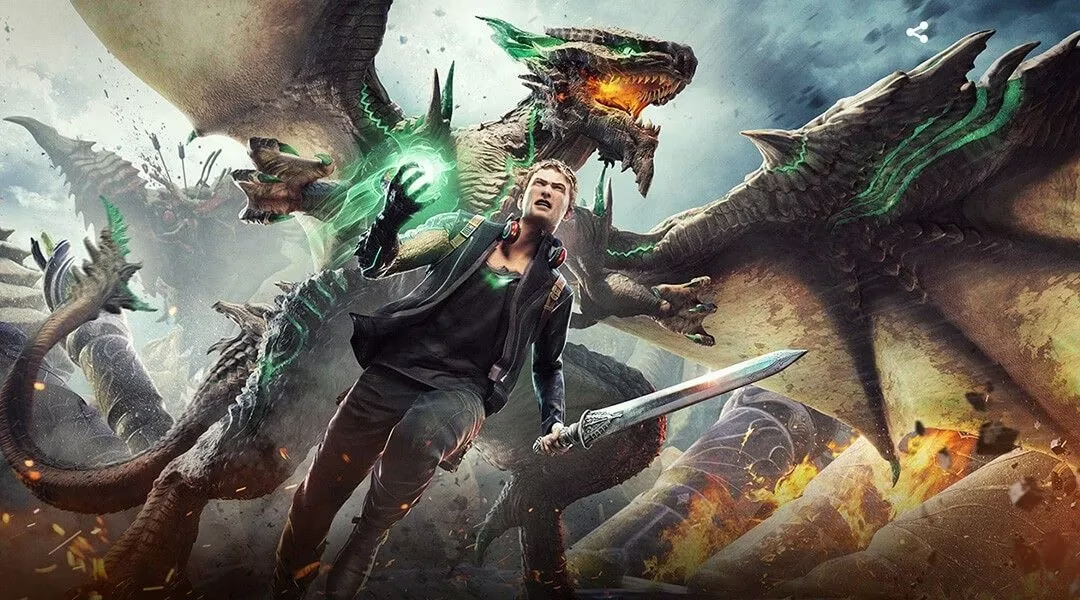
That paranoid secrecy is no accident; it's a direct inheritance from Scalebound, the action-RPG that spectacularly self-immolated on the launchpad. For those who blinked and missed it, Scalebound was PlatinumGames\u2019 swing-for-the-fences dream: players would control Drew, a cocky hero bonded to Thuban, a dragon whose scales gleamed like polished obsidian. You\u2019d wield dragon-themed magic, command your winged ally in battle, and even take direct control of the beast during fightsthat looked like a M\u00f6bius strip of claws and lightning. Co-op promised four players, four dragons, and colossal bosses that made Godzilla look petite. The hype didn\u2019t build; it metastasized. It was a meteor shower of gameplay demos, each more dazzling than the last, each one piling heaps of expectations onto a foundation that, as it turned out, was still wet concrete.
The project collapsed in early 2017, a supernova that blinked out before it could properly ignite. Xbox chief Phil Spencer later reflected that the constant early showcases had placed Platinum under the sort of pressure that could crush a diamond into dust. Internally, the bar kept rising, fed by the very publicity meant to celebrate the project. The game became a mythic beast that no team could realistically saddle. Eventually, both Platinum and Microsoft agreed the only humane thing was to pull the plug. Spencer called the early reveal a mistake, a lesson in how premature trumpets could deafen a studio rather than inspire it. The dragon didn\u2019t fly; it plummeted into the valley of cancellations, and its ghost has haunted every first-party Xbox reveal since. The memory works like a cold compress on the forehead of any PR executive reaching for the announcement button.
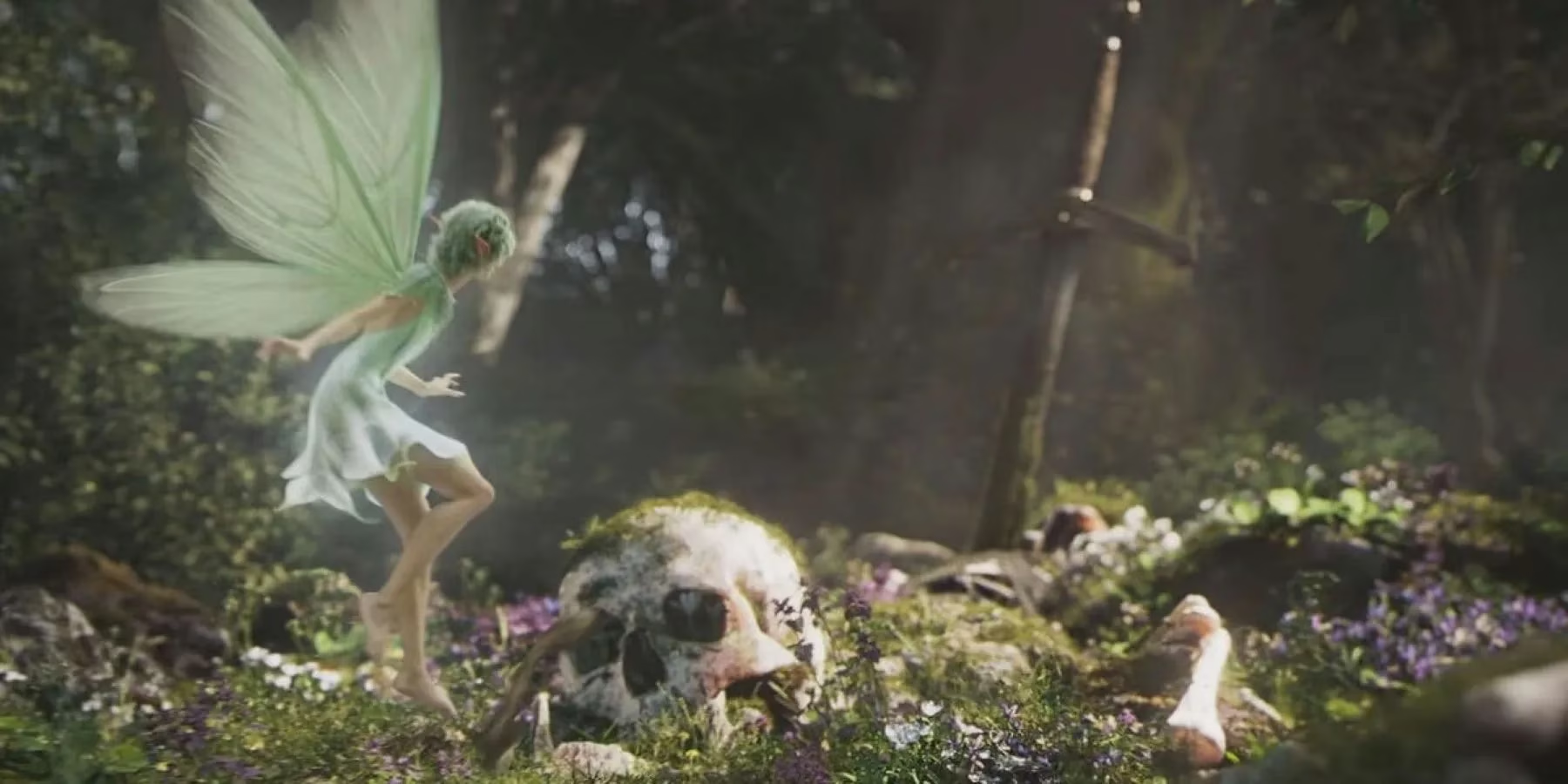
With this gothic tale in mind, Playground\u2019s radio silence transforms from neglect into wisdom, like a ship captain who has witnessed a funnel cloud and now steers far wide of any weather fronts. Fable might be a reincarnation of a beloved franchise, but it\u2019s also a colossal exorcism: Lionhead\u2019s 2016 cancellation of Fable Legends left Albion in limbo, and the new game must resurrect not just a world but the trust of a fanbase that has been stung before. Talking about it too loudly, too soon, would be like attempting to conduct a symphony while the orchestra is still assembling its instruments. A single discordant note\u2014a misunderstood feature, an overhyped promise\u2014could spiral into a cacophony. Instead, Playground seems to be treating the project as a medieval monk treats an illuminated manuscript: work in silence, let the art speak only when the ink is dry.
This approach is doubly crucial because Playground is morphing into a creature entirely outside its evolutionary niche. The studio\u2019s DNA is soaked in gasoline and burnt rubber, the alchemy that turns automotive physics into joy. Forza Horizon games are masterpieces of breezy accessibility, where a button press rewinds a bad turn and the only morality system is whether you choose a Ferrari or a Lamborghini. Now, the team is building an RPG with moral dimensions, reactive storytelling, and combat systems that demand a dancer\u2019s grace rather than a driver\u2019s precision. It\u2019s a genre leap comparable to a master chef suddenly deciding to open a virology lab. The learning curve must be immense, and the margin for error razor-thin. Every week spent out of the spotlight is a week spent refining a spell effect, massaging a dialogue tree, or testing whether that chicken-kicking joke still lands. \ud83d\udc14
There\u2019s a perverse irony here: the very silence that frustrates fans is the most tangible sign that Microsoft has absorbed the Scalebound tragedy into its corporate marrow. It\u2019s a lesson written in the language of not doing things. Instead of fanning the flames of hype with a yearly trailer, they\u2019re letting the embers stay warm and controlled. The modern games industry is littered with the wreckage of titles that announced too early, promised the universe, and delivered a suburban bungalow. Fable\u2019s quiet development is essentially a pressure-release valve disguised as a locked door. \ud83d\udeaa
Even the occasional trademark renewal or a fleeting mention on a developer\u2019s LinkedIn profile becomes, for the starving faithful, a minor religious event. Every hiring wave is parsed like a cryptic tea-leaf reading: three quest designers? That means the main campaign is being built out! A senior lighting artist? Albion is going to look like a Turner painting! It\u2019s the gaming equivalent of tracking a mythical creature through footprints in the snow, footprints that might just lead to a spectacular reveal\u2014or another cold, empty cave. But after over a decade of longing, the Fable faithful have become connoisseurs of this exquisite torture. \ud83d\udd75\ufe0f\u200d\u2642\ufe0f
Scalebound\u2019s cancellation was a raw wound, but it also served as a sacrificial lamb. Its demise taught Microsoft that a game revealed in embryonic form is essentially a vow written on a wet napkin. The Fable reboot, whenever it finally emerges, will hopefully be all the stronger for its silent gestation. It\u2019s a slow-brewed potion, not an energy drink shotgunned for a quick rush. Maybe in 2027, we\u2019ll finally see Albion\u2019s rolling hills again, rendered with the kind of meticulous care that only years of concealed labor can produce. Until then, the silence remains golden, and the dragon\u2019s ghost keeps its vigilant watch over the oven door. \ud83c\udf1f