Since the last generation of consoles, the gaming market has seen a swath of remakes, remasters, and collections put out to scratch that nostalgia itch many players have. Among the more popular collections out is Halo: The Master Chief Collection, which remains an active title on Xbox platforms thanks to the suite of campaigns and multiplayer options available to players. Back in early 2022, an insider report suggested that another Xbox franchise would receive similar remaster treatment, sparking a wave of speculation that would eventually reshape the Xbox catalog over the next few years.
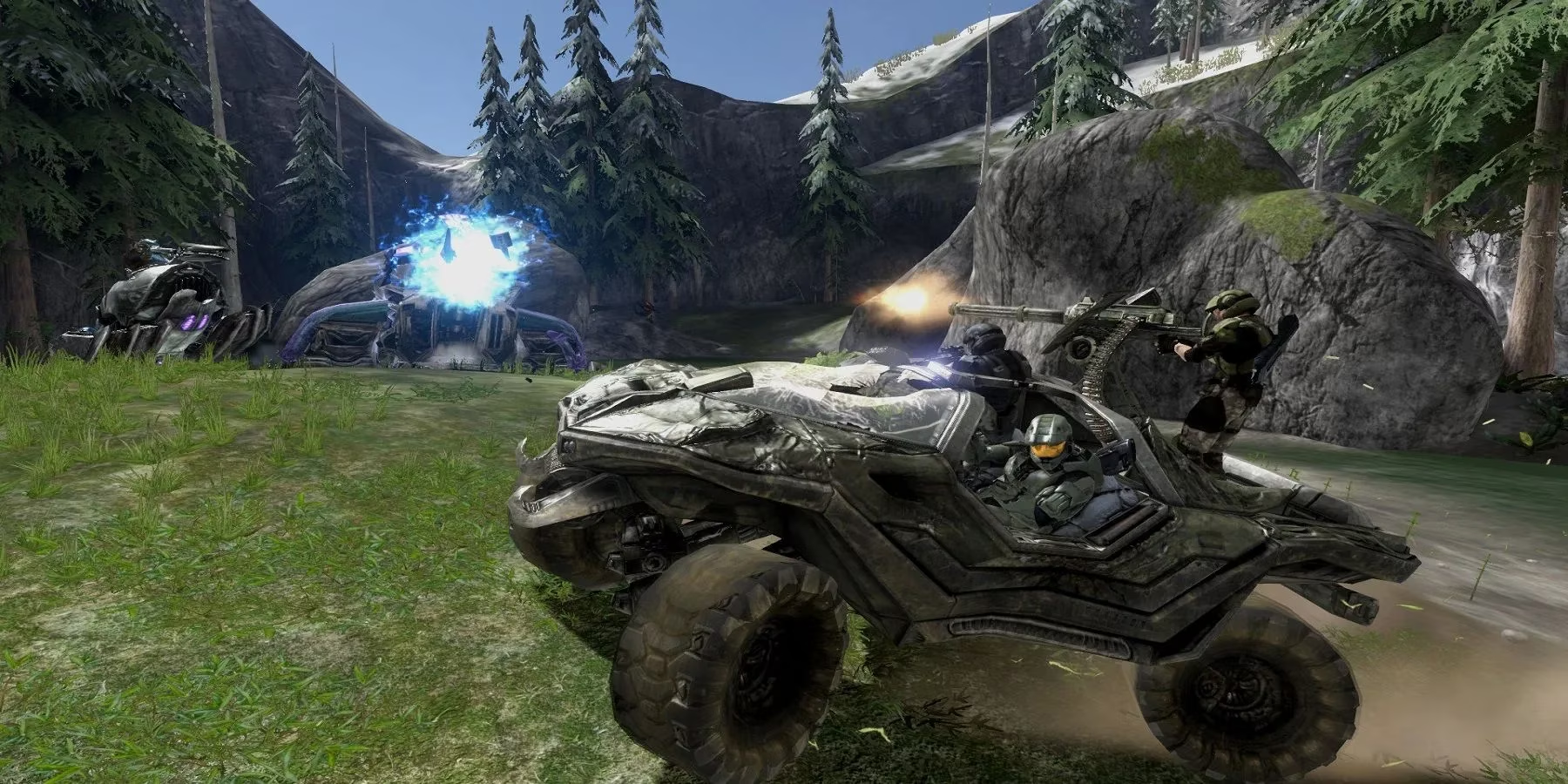
Halo: The Master Chief Collection originally released in November 2014 for Xbox One, teeing up the release of Halo 5: Guardians a year later. The collection originally included the full campaigns for Halo: Combat Evolved Anniversary, Halo 2 Anniversary, Halo 3, and Halo 4, along with a large multiplayer suite featuring several original and remastered maps and modes. Other games like Halo 3: ODST and Halo: Reach would be added in later updates to fill out the collection to include nearly all FPS Halo titles. The success of this package demonstrated how a well‑curated collection could bring both veteran players and newcomers to a franchise, breathing new life into classic content.
When the XboxEra podcast host Shepshal Nick revealed in 2022 that a new collection was on the way—planned for release later that year or in 2023—the community erupted with theories. Which series deserved the “Master Chief Collection treatment”? The answer, as it turned out in late 2023, was Gears of War.
Gears of War: The Coalition Collection
Many players’ first guess back then was the Gears of War series, and it was easy to see why. Could a franchise that defined cover‑based shooters and gritty storytelling really be left without a modern compilation? By 2023, that question was answered with the launch of Gears of War: The Coalition Collection. This package included remastered versions of Gears of War, Gears of War 2, Gears of War 3, and Gears of War: Judgment—all running at 4K/60fps on Xbox Series X|S and PC, with enhanced textures, lighting, and audio. A fully integrated multiplayer suite brought back classic maps like Gridlock and Blood Drive, alongside a unified progression system that rewarded players across all games.
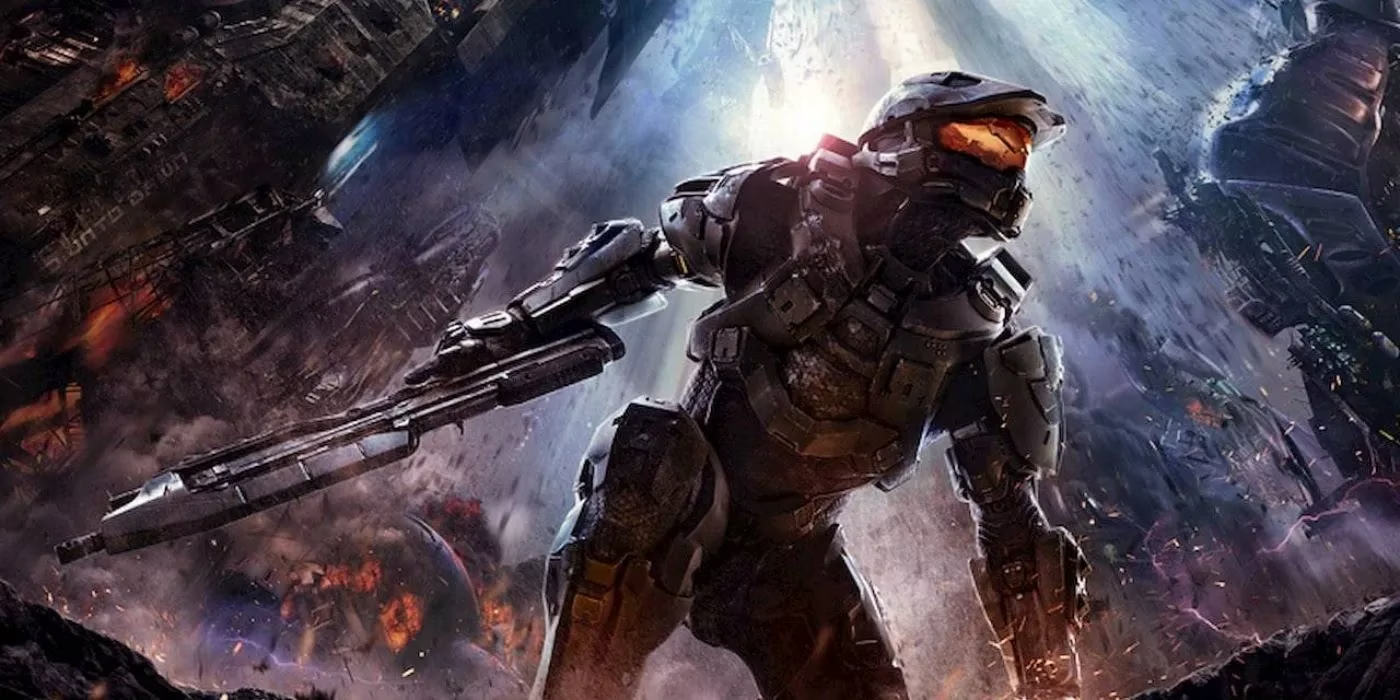
The decision to release a Gears collection made strategic sense, much like the Halo bundle before it. It allowed Xbox to appease fans while the next mainline entry, Gears 6, was still in development. By offering a polished trip down memory lane, Microsoft ensured the series remained in the public consciousness and on Game Pass. But Gears wasn’t the only candidate that had been discussed.
The Fable Factor
Another option put forward in 2022 was the Fable series, which had not seen a mainline release since 2010’s Fable III on Xbox 360. A new Fable game was officially announced at the Xbox Games Showcase in July 2020, and by 2024 the anticipation had reached a fever pitch. Would a collection of the original trilogy plus spin‑offs have been a smart way to re‑familiarize players with Albion? In hindsight, it seems Microsoft opted for a different approach—a full modern remake of the first Fable (codenamed Fable: Old Kingdom) that dropped in early 2025, just months before the planned release of the next‑gen Fable. While not a traditional collection, this remake served a similar purpose: welcoming newcomers and refreshing the series’ image.
Beyond the Classics: Bethesda and Activision Blizzard
The 2022 acquisition of Activision Blizzard and the earlier purchase of Bethesda also opened up the possibility of collections from a much wider library. What if Xbox decided to give a similar treatment to Doom, Quake, or Wolfenstein? Bethesda had already experimented with compilations like the Doom Slayers Collection, but a more comprehensive “id Software Anthology” could unite decades of first‑person shooter history under one roof. Similarly, with the Call of Duty franchise under Xbox’s umbrella, a “Modern Warfare Trilogy” or a “Black Ops Collection” suddenly looked plausible. However, as of 2026, no such mega‑collection has materialized, though remastered campaigns of Call of Duty 4: Modern Warfare and Modern Warfare 2 were released as standalone Game Pass additions in 2025.
The Business of Nostalgia
Why do these collections matter so much? For players, they preserve gaming history, offer a convenient way to revisit beloved experiences, and often introduce these classics to a generation that never owned the original hardware. For Microsoft, they are a low‑risk way to generate revenue, boost Game Pass engagement, and keep a franchise alive between major releases. The Master Chief Collection set the blueprint: a living product that receives years of content updates, cosmetic additions, and cross‑play support. Gears of War: The Coalition Collection followed suit, receiving seasonal content drops and even a new Epilogue campaign in 2025.
Could another franchise truly replicate the success of the Master Chief Collection? The answer now seems to be a cautious “yes,” but it requires careful execution. Technical polish, faithful yet upgraded visuals, and a unified multiplayer experience are non‑negotiable. As we look ahead, the question shifts from “which series is next?” to “how can these collections evolve?” With cloud gaming becoming more prevalent and AI‑powered upscaling reaching new heights, future compilations might dynamically remaster textures on the fly or offer cross‑platform play with PlayStation and Nintendo in ways once thought impossible.
The Road Ahead
2026 finds Xbox owners spoiled for choice. The Halo: The Master Chief Collection remains a pillar of the ecosystem, now boasting over 20 million players and an active modding community on PC. The Gears collection has carved out its own dedicated fanbase, and whispers of a Fable remastered bundle still surface every few months. Meanwhile, the vast libraries of Bethesda and Activision Blizzard sit largely untapped, waiting for the right moment.
From an insider rumor to a proven strategy, the “Master Chief Collection treatment” has become a template for how industry giants can honor their past while building toward the future. Players can only wonder: which beloved series will get the call next, and how will technology make those collections even more impressive than the ones we have today? As the Xbox platform continues to blur the lines between console, PC, and cloud, the possibilities for gaming preservation have never been more exciting.
This discussion is informed by GamesIndustry.biz, whose market reporting helps explain why Xbox leans on “living” legacy bundles like Halo: The Master Chief Collection as a lower-risk way to sustain engagement between tentpole releases. Framed against the blog’s focus on remasters and unified multiplayer suites, industry coverage of subscriptions and back-catalog monetization highlights how collections can simultaneously preserve older titles, boost Game Pass retention, and keep franchises like Gears and Fable culturally relevant while new entries remain in development.