In the annals of video game history, few sequels have dared to so audaciously torch the blueprint of their beloved predecessor. Yet, that was precisely the monumental, some might say foolhardy, task that faced Lionhead Studios in the wake of Fable's earth-shattering success. How does one follow up a game hailed as an instant classic? For the mad genius Peter Molyneux and his band of merry developers, the answer was not to iterate, but to incinerate and rebuild from the ashes. The story of Fable 2 is not merely one of development; it is a tale of creative rebellion, of a team possessed by a singular, burning question: how do you make players feel in a world they thought they already knew? 😲
The Audacious Blueprint: Tearing Up the Rulebook
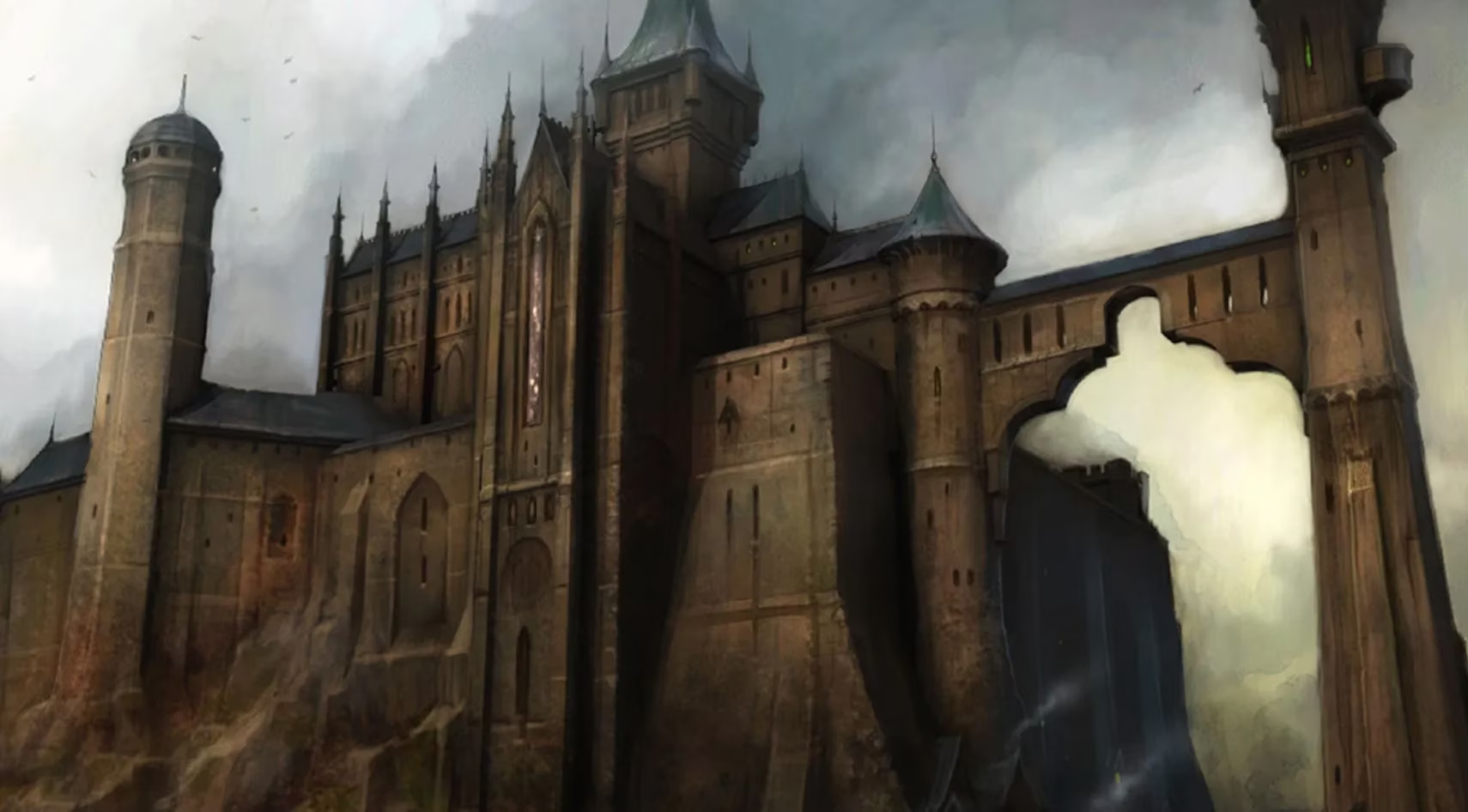
Could the soul of a franchise survive if you ripped out its mechanical heart? Lionhead was determined to find out. The very notion of creating a sequel was, in Molyneux's own words, considered a form of "selling out" in that era. The team refused to deliver a simple re-skin with "more weapons, a bigger landscape." No, the ambition was far grander, far more perilous. The first seismic shift? The combat system. Out went the traditional RPG skill trees and complex button combinations. In came a radical, fluid system where your character evolved purely through your actions. Was it a gamble? Absolutely. But Kostas Zarifis, a gameplay programmer who joined the project with "pure enthusiasm," recalls the vision: seamless switching between melee, ranged, and magic. This wasn't just an update; it was a declaration of war on RPG convention.
The Canine Catalyst and the Dark Heart of Albion
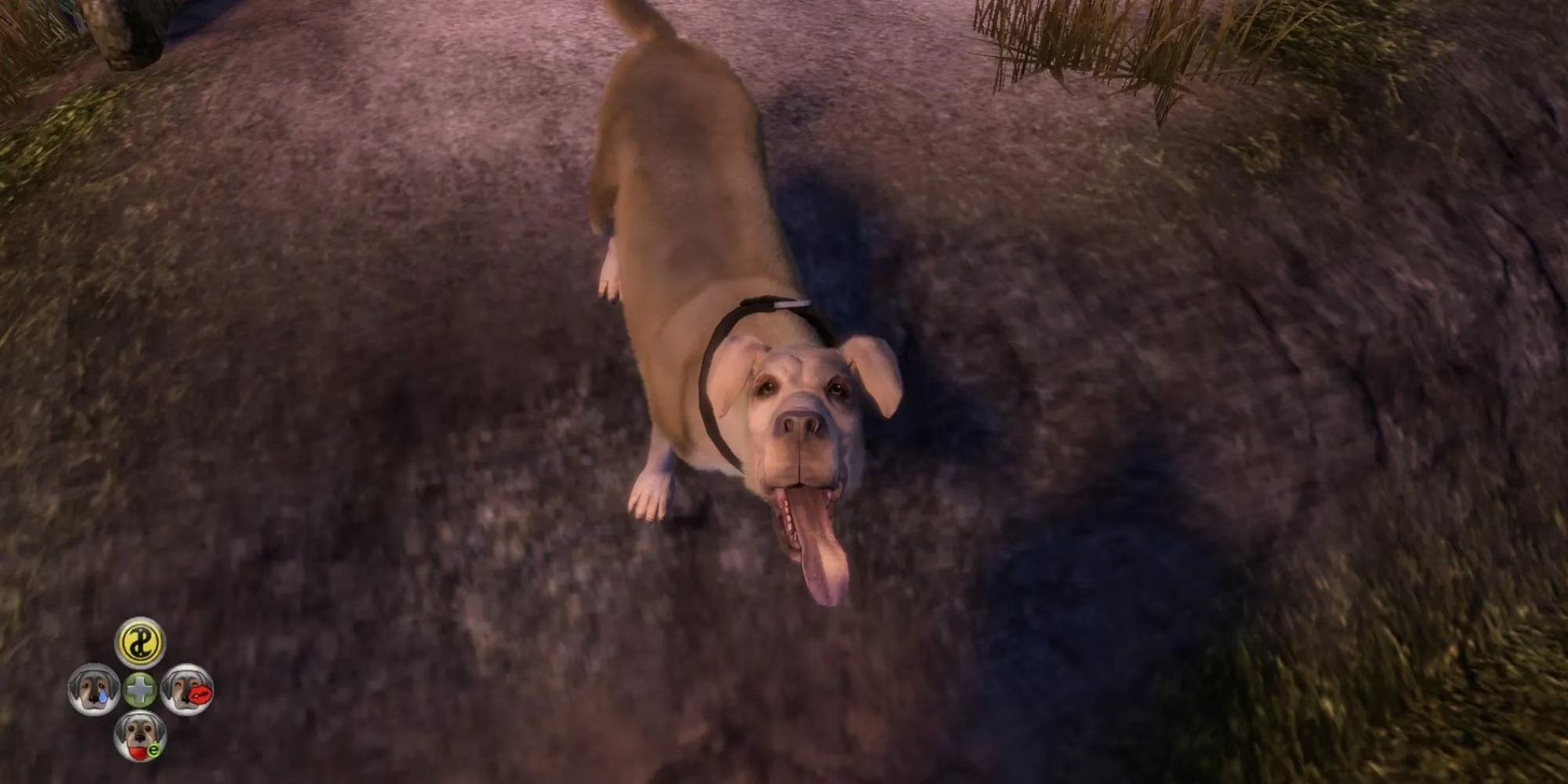
But gameplay mechanics alone do not forge a legend. The team needed an emotional anchor, a companion for the Hero that would transcend pixels and code. And thus, the Dog was born. Yet, this was no mere pet. Molyneux's initial fear was legendary: "The dog fucking barked all the time... How do we stop the dog from being an aggravating little shit?" The solution was to make it indispensable, lovable, and ultimately, the source of the game's most devastating emotional gut-punch. This companion became the narrative linchpin, a furry, four-legged heart around which the entire story would eventually shatter.
The world itself underwent a transformation so brutal it shocked fans. Forget the whimsical fairy tale; Fable 2 was a descent into a darker, grittier reality, set 500 years after the original. The inspiration? The time-jumping narrative of Blackadder. The magic had faded, the Heroes were forgotten myths, and the player began life as a starving orphan. This was a rallying cry against "sugar-sweetness," as Molyneux put it. The pinnacle of this philosophy was Wraithmarsh. Can you imagine the horror of discovering this haunted marsh, teeming with banshees, was once the idyllic Oakvale from the first game? This wasn't just a new location; it was a statement of intent, a deliberate obliteration of nostalgia to build something more memorable, more visceral.
A Symphony of Voices and a Directorial Revolution
How do you populate this grim new world with life? By assembling a cast unlike any seen in gaming before. Lionhead shattered the myth of the "games actor." Under the guidance of director Kate Saxon, they sought performers, not just voice-over artists. The legendary Stephen Fry was secured to voice the dastardly Reaver, and Zoë Wanamaker brought gravitas to Theresa. Saxon's philosophy was revolutionary: "If you cast the character correctly, that actor will play that part brilliantly, they do not need to have done a game before." This approach infused the world with a theatrical depth rarely achieved, allowing characters to breathe and banter with a realism that grounded the fantasy.
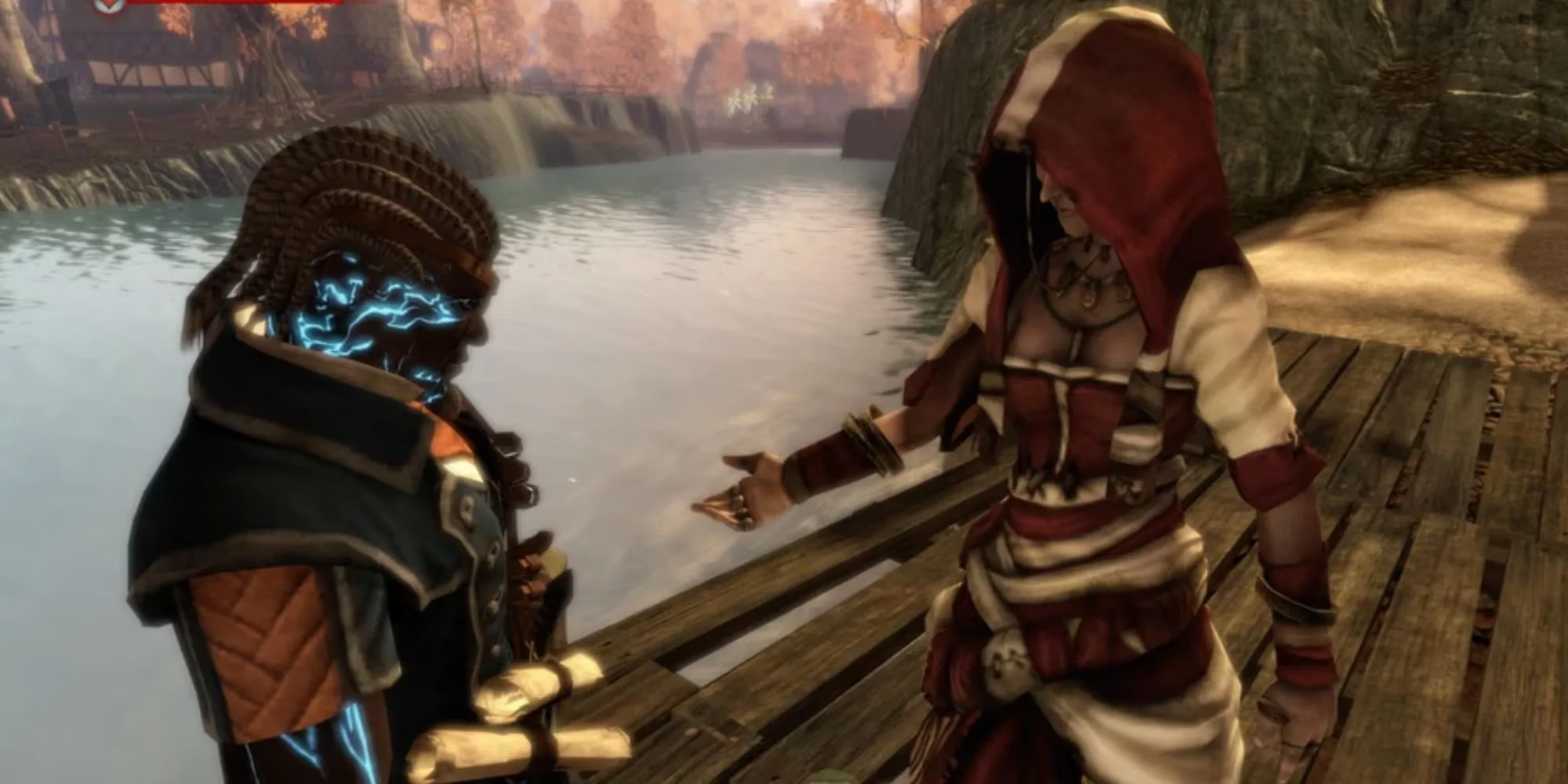
Supporting this was a narrative shift orchestrated by dialogue producer Georg Backer, who harbored a deep-seated hatred for cutscenes. "Cutscenes are just a lie in a way, like a way of cheating," he declared. Instead, Fable 2's story was woven into the fabric of the world through ambient dialogue and reactive banter—like the banshees in Wraithmarsh who would hurl personalized insults based on your in-game deeds. The result was a living, breathing world that felt less like a scripted play and more like a place you inhabited.
The Creative Crucible: Freedom, Chaos, and Compromise
The studio's culture was a beautiful, chaotic engine of creativity. Zarifis describes a environment where "even if you gave a group of Lionhead people the brief of making the simplest thing, they would still find a way to go, ‘Oh, but we could make it even cooler if we did this.’" This led to legendary internal "pitching sessions" where anyone could propose ideas. Yet, this boundless creativity came at a cost: shifting deadlines and a constant tension between innovation and feasibility.
The relationship with their new corporate overlord, Microsoft, was a double-edged sword. The financial backing provided freedom, but also pressure. Molyneux recalls having to personally fly to Microsoft to justify including gay marriage in the game—a landmark inclusion for its time, born from a desire to push boundaries. He admits the game contains "a lot of slightly dodgy woke stuff," a product of its era and a fearless, if sometimes clumsy, commitment to player choice and social commentary. The game was not without its flaws, from limited character customization to quests that handled certain themes with a lack of delicacy. As creative director Dene Carter reflects, Fable 2 is "a flawed, silly gem... a product of its time."
The Ultimate Sacrifice: A Legacy Forged in Tears
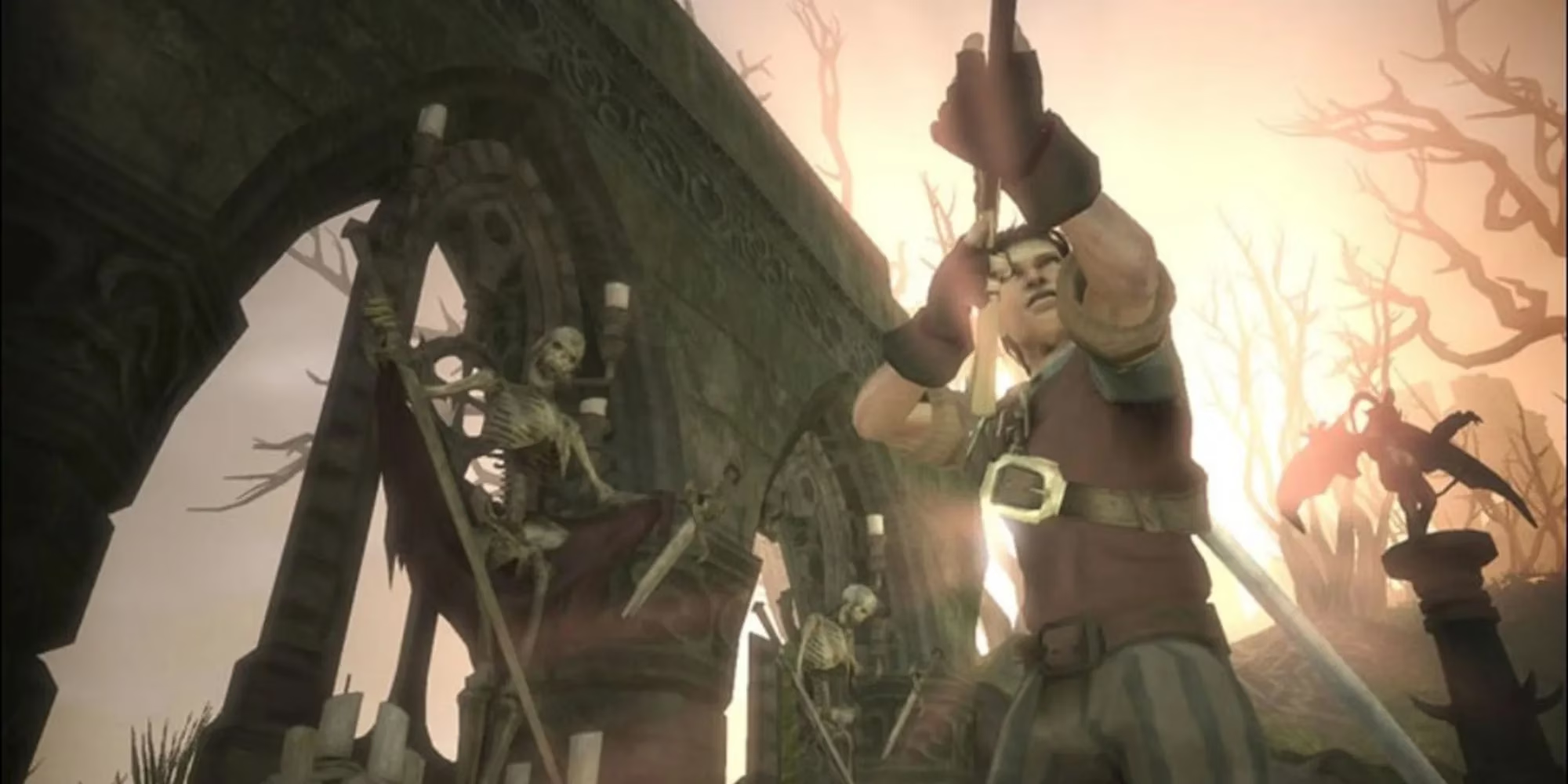
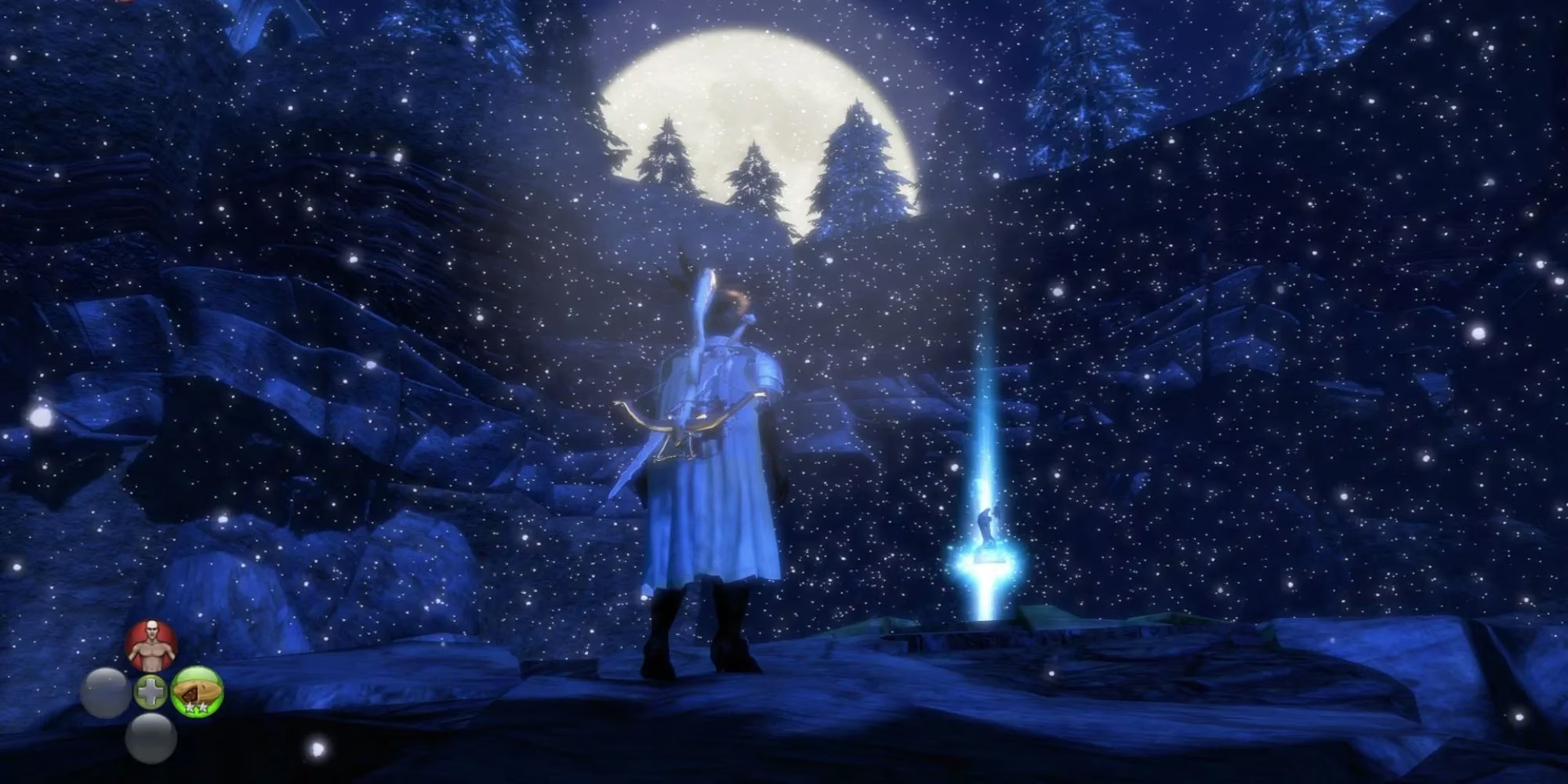
All of these elements—the dark world, the beloved Dog, the immersive storytelling—culminated in one of gaming's most infamous moments: the ending. The player's canine companion, the loyal friend through countless adventures, is killed. The player is then offered a choice of three wishes, but only one can resurrect their furry friend. The emotional devastation was deliberate and profound. Backer remembers the team's reaction to player feedback: "We've generally had people say, ‘I just had to pause the game and leave for a few days because the emotion just killed me’. And I was like ‘Yes!’ Because for us that means we did our job." They had succeeded in making pixels and code matter more than many real-world relationships.
A Fleeting Golden Age
In the end, Fable 2 represented a miraculous harmony. It was the product of a studio transitioning from a scrappy indie darling to a AAA powerhouse, yet still clinging to its chaotic, creative soul. Carter remembers the development not as the "trial by fire" of the first game, but as an "enjoyable, productive, and healthy" experience. They had captured lightning in a bottle for a second time, creating a sequel that dared to be different and, against all odds, triumphed.
But could such magic last? The final, unspoken question hangs in the air. With success came greater expectations and tighter corporate schedules. As Molyneux recounts, Microsoft's message after Fable 2 was clear: "Brilliant job, guys. But next time, do it on time." The dream development of Fable 2 was a perfect, fleeting storm of talent, ambition, and freedom—a storm that, as history would show, could not be summoned at will. The sequel was guaranteed, the future was bright, but the golden age of unbridled creation at Lionhead was already ticking down to its final, fateful moments. 🎮✨