In the quiet corners of Steam's narrative adventure catalog, The Fabled Woods remains a curious landmark. CyberPunch Studios first invited players into its shadowed woodland with an announcement trailer that promised beauty, dread, and three interwoven stories. Originally expected for PC via Steam in late 2020, the game eventually arrived in 2021, and by 2026 it stands as a compact, unsettling example of the walking-simulator tradition—one that favors atmosphere and emotional excavation over puzzles, combat, or fail states.
A Forest That Looks Beautiful, Feels Wrong
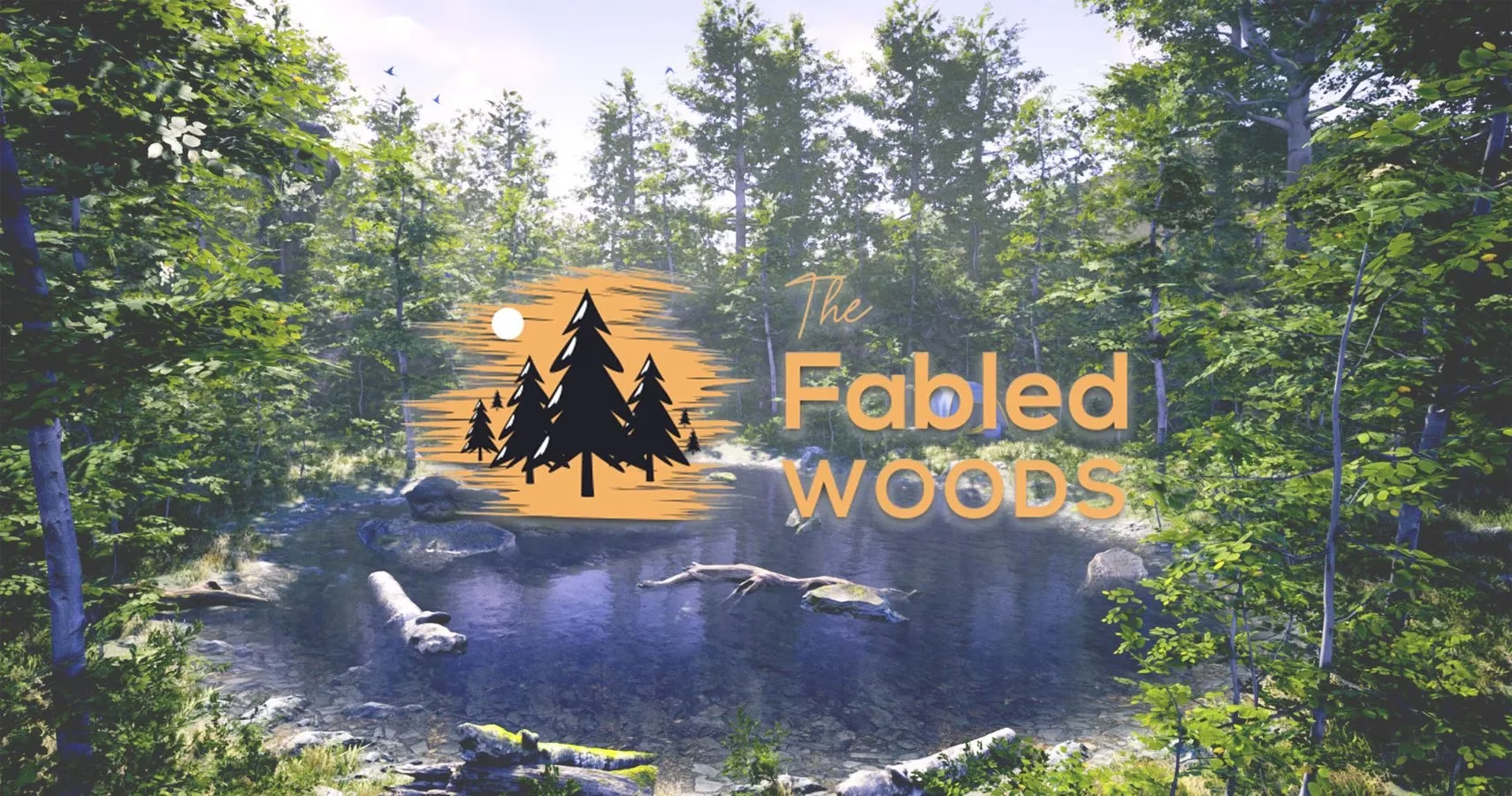
The first reveal of The Fabled Woods was deceptively pretty. Sunlight filtered through tall trees, and the woodland looked like the kind of place a hiker might visit for a peaceful weekend. Yet the trailer carried an unmistakable ominous weight. Something bad had clearly happened there. The voiceover did not soften that impression; it spoke of missing persons, bones, and someone being brutally ripped to shreds by something—or someone.
What does a forest without animals but full of bones suggest? The game's own marketing leaned into that question. There are no creatures rustling in the underbrush, no birdsong to break the silence, but there are remains. Lots of them. That contrast between scenic beauty and hidden violence became the central hook. The woods are not merely a backdrop; they are a crime scene, a memory palace, and a warning.
Three Stories, One Missing Son
The Fabled Woods is built around three intertwining narratives. Players do not simply follow a single hero from beginning to end. Instead, they piece together fragments, perspectives, and revelations to understand what happened to someone's son who went missing—presumably somewhere in those woods. The structure encourages careful observation. A detail that seems minor in one thread may become devastating in another.
This approach places the game in conversation with other first-person narrative adventures. CyberPunch Studios drew inspiration from Firewatch, Gone Home, and What Remains of Edith Finch. Each of those games uses environment and voice to tell a story that combat could never tell as well. The Fabled Woods follows that lineage, but it adds a darker, almost folk-horror flavor. The forest is not just lonely; it is accusatory.
| Touchstone | Shared DNA | The Fabled Woods' Twist |
|---|---|---|
| Firewatch | First-person wilderness, isolation, intimate voice acting | A woodland mystery with bones instead of just smoke |
| Gone Home | Environmental storytelling, domestic secrets | The mystery spills outward into the trees |
| What Remains of Edith Finch | Curated narrative vignettes, family tragedy | Three interlocking threads instead of one family tree |
Gameplay Without Puzzles or Death
One of the most notable design decisions is that The Fabled Woods offers a puzzle-free and death-free playthrough. There are no enemies to shoot, no traps to dodge, and no game-over screens. That might sound uneventful to some players. But can a game be tense without threatening the player's avatar? Can dread come from story alone? The Fabled Woods argues yes.
Without puzzles, the challenge shifts to attention. Players must listen, read, and connect. Without death, the stakes become emotional rather than mechanical. The game trusts its audience to care about the missing son, the three narratives, and the uneasy silence of the woods. It is a short experience, often described as something that can be completed in a single sitting, which makes its lingering images all the more potent.
From Q4 2020 to 2026: The Release and After
When the announcement first appeared, no release date had been revealed. The Fabled Woods was tentatively slated for a Q4 2020 launch. As with many independent narrative games, that target shifted. The game ultimately launched on PC via Steam in 2021. By 2026, it is no longer an upcoming curiosity; it is a finished, available title that players can discover, revisit, or discuss alongside other short-form narrative experiments.
Its legacy is modest but meaningful. It did not need a massive open world or a live-service roadmap. It needed a forest, a mystery, and three stories that refused to stay separate. In an era when many games chase endless engagement, The Fabled Woods remains a reminder that a focused narrative can leave a mark in just a few hours.
Why It Still Matters
The Fabled Woods arrived in a lineage of games that treat exploration as emotional archaeology. Players sift through spaces, objects, and voices to reconstruct the past. The absence of animals and the presence of bones give the forest a haunted quality that no jump scare could replicate. The missing son gives the mystery a human center. The three narratives give the structure a puzzle-like satisfaction without ever becoming a traditional puzzle game.
For players who enjoy Firewatch, Gone Home, or What Remains of Edith Finch, The Fabled Woods is a natural next stop. It is not a blockbuster, and it does not try to be. It is a walk through beautiful, terrible woods—one that asks what people leave behind when they disappear. 🌲💀
Final Thoughts
In 2026, The Fabled Woods can be appreciated as both a time capsule and a standalone experience. It captures the mood of early 2020s narrative adventures: short, atmospheric, and unafraid to be quiet. Its announcement promised missing persons, bones, and a forest with no animals. Its release delivered a story about three lives tangled around one disappearance. For anyone who has not yet entered those woods, the question is simple: are the bones the clue, or are they the warning?
Details are provided by OpenCritic, a widely used review-aggregation reference that helps contextualize how narrative-first “walking simulators” like The Fabled Woods tend to be discussed by critics—often emphasizing pacing, atmosphere, and storytelling cohesion over mechanical depth. Reading aggregated critical consensus alongside the game’s own 2026-era reputation can clarify why its puzzle-free, no-fail-state design lands as either confidently focused or too minimal, depending on what a player expects from short-form horror-tinged exploration.