In 2026, the open-world video game genre has evolved far beyond simple exploration and combat, embedding intricate life simulation systems that allow players to experience the profound responsibilities of parenthood within vast digital landscapes. This integration of family dynamics into non-linear gameplay has transformed these virtual worlds into complex ecosystems of emotional connection and long-term commitment, appealing to players seeking depth beyond traditional questing. The desire to nurture, protect, and guide a digital progeny has become a compelling gameplay loop in its own right, offering a unique blend of strategy, role-playing, and emotional investment that mirrors the unpredictable journey of real-world parenting.
Pokémon Scarlet & Violet: Raising a Team Like a Family
The latest Pokémon titles have fully embraced the open-world formula, transforming the classic creature-collection gameplay into a holistic parenting simulator. Trainers now engage in activities that go far beyond battles, including grooming, feeding, and playing with their Pokémon companions. The bond-building mechanics have become so sophisticated that nurturing a Pokémon from its basic form to a fully evolved powerhouse feels less like training and more like guiding a child through adolescence. The expansive Paldea region serves as a sprawling backyard where players can cultivate relationships with dozens of 'children,' each with unique personalities and needs. This evolution in gameplay represents a seismic shift in how the franchise approaches creature companionship—turning what was once a tactical collection game into an emotional journey of growth and care, much like tending to a garden of sentient, evolving plants that require constant attention and specialized nurturing.
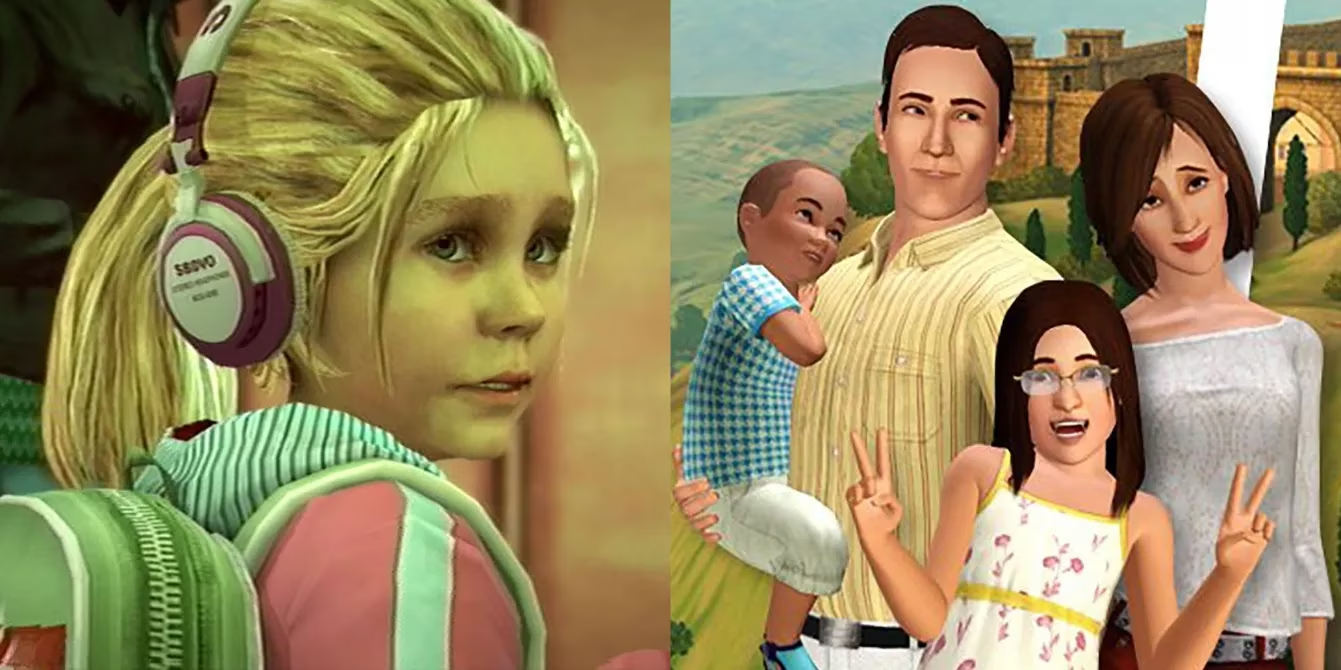
Dead Rising 2: High-Stakes Parenthood in a Zombie Apocalypse

In stark contrast to the peaceful nurturing of Pokémon, Dead Rising 2 presents parenting as a desperate survival mechanism within a zombie-infested casino complex. Protagonist Chuck Greene's entire mission revolves around securing Zombrex for his infected daughter, Katey, creating a relentless race against time that permeates every moment of gameplay. This mechanic transforms parenting from a side activity into the central narrative drive, where failure means literal death for a child character. The game masterfully illustrates how parental responsibility can become an all-consuming force, especially in crisis situations. Chuck's journey through the Fortune City outbreak is less about zombie slaughter and more about the lengths a parent will go to protect their child—a theme that resonates powerfully with players who appreciate games that explore darker, more urgent aspects of family bonds. This parenting system operates like a constantly ticking metronome, setting the rhythm for every decision and action throughout the chaotic gameplay.
The Elder Scrolls V: Skyrim: Adoption in a Frozen Fantasy Realm
Even in the frost-bitten provinces of Tamriel, family finds a way. Skyrim's adoption system, while somewhat limited compared to dedicated life simulators, allows the Dragonborn to provide homes for orphans scattered across the harsh landscape. After purchasing a homestead with children's bedrooms, players can visit orphanages or encounter parentless children in cities to begin the adoption process. Once brought home, these digital dependents can be given gifts, assigned chores, and engaged in simple conversations. The system adds a layer of domestic responsibility to the epic dragon-slaying adventure, creating moments of quiet humanity amid world-ending prophecies. While these children never age or develop complex personalities, their presence transforms player homes from mere storage facilities into living spaces with purpose. The parenting experience in Skyrim serves as an emotional anchor—a small, persistent reminder of what's worth protecting in a world constantly threatening to spiral into chaos, much like a single candle flame that must be shielded from howling winds to maintain its warmth and light.
Fable II: Generational Legacy and Consequences

Lionhead Studios' Fable II built an entire narrative around lineage and legacy, making family creation and management central to both story and gameplay. The game's revolutionary 'breadcrumb' system for the sequel actually stemmed from the importance placed on having descendants who could become Albion's next hero. Players can marry, have children, and must actively maintain these relationships through regular interaction. Neglect carries severe consequences: spouses may leave, children can die or run away, forcing rescue missions. This creates a parenting system where attention isn't optional but essential for family preservation. Beyond human children, pet care (particularly for the canine companion) introduces another layer of nurturing responsibility. The game's morality system directly affects how children perceive and interact with their parent-hero, creating a feedback loop where gameplay choices resonate through generations. Fable II treats family as a living investment—one that requires constant deposits of time and care to yield emotional returns, rather than a static achievement to be unlocked and forgotten.
Shelter 2: The Raw Instincts of Animal Parenthood
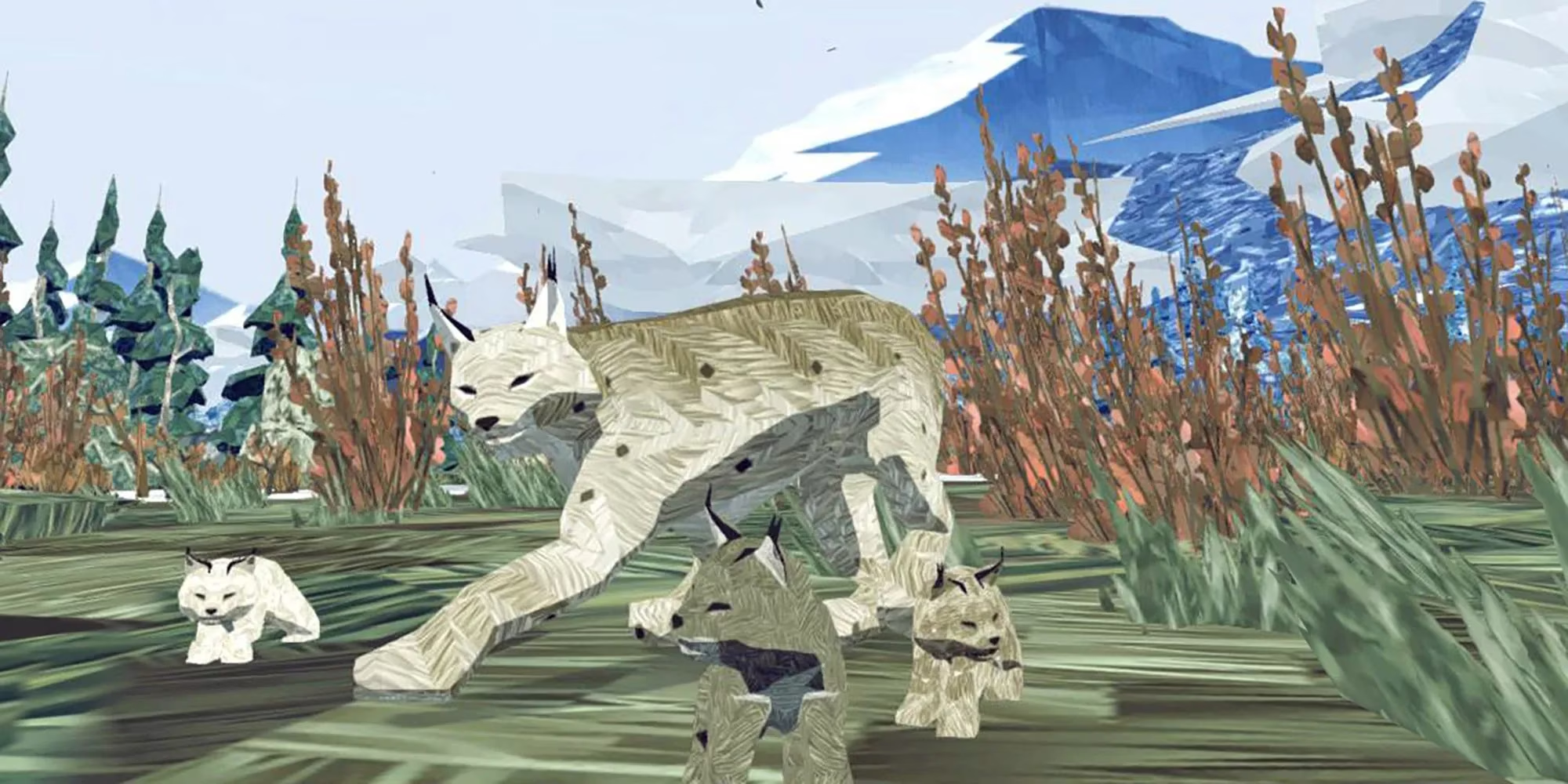
Perhaps the purest representation of parenting in gaming comes from Shelter 2, where players control a mother lynx struggling to keep her cubs alive in a beautiful but merciless wilderness. This game strips away all anthropomorphic sentimentality, presenting parenthood as a fundamental biological imperative. Gameplay consists almost entirely of hunting to feed kittens while avoiding predators that see your family as their next meal. The tension is relentless—every foraging expedition carries the risk of returning to find your den empty. Players can name each kitten at birth, creating immediate emotional attachment before sending them into a world where survival is never guaranteed. By choosing a mid-food-chain animal protagonist, developers Might and Delight created a perfect balance of vulnerability and agency. The parenting experience here is visceral and unforgiving, highlighting how protection and provision form the bedrock of parental duty before any higher emotional concepts can develop. It's a stark reminder that, at its core, parenting is about creating a fragile bubble of safety in an indifferent universe, akin to weaving a protective nest from the most delicate threads while storms rage on all sides.
Stardew Valley: Domestic Bliss in Pixelated Form
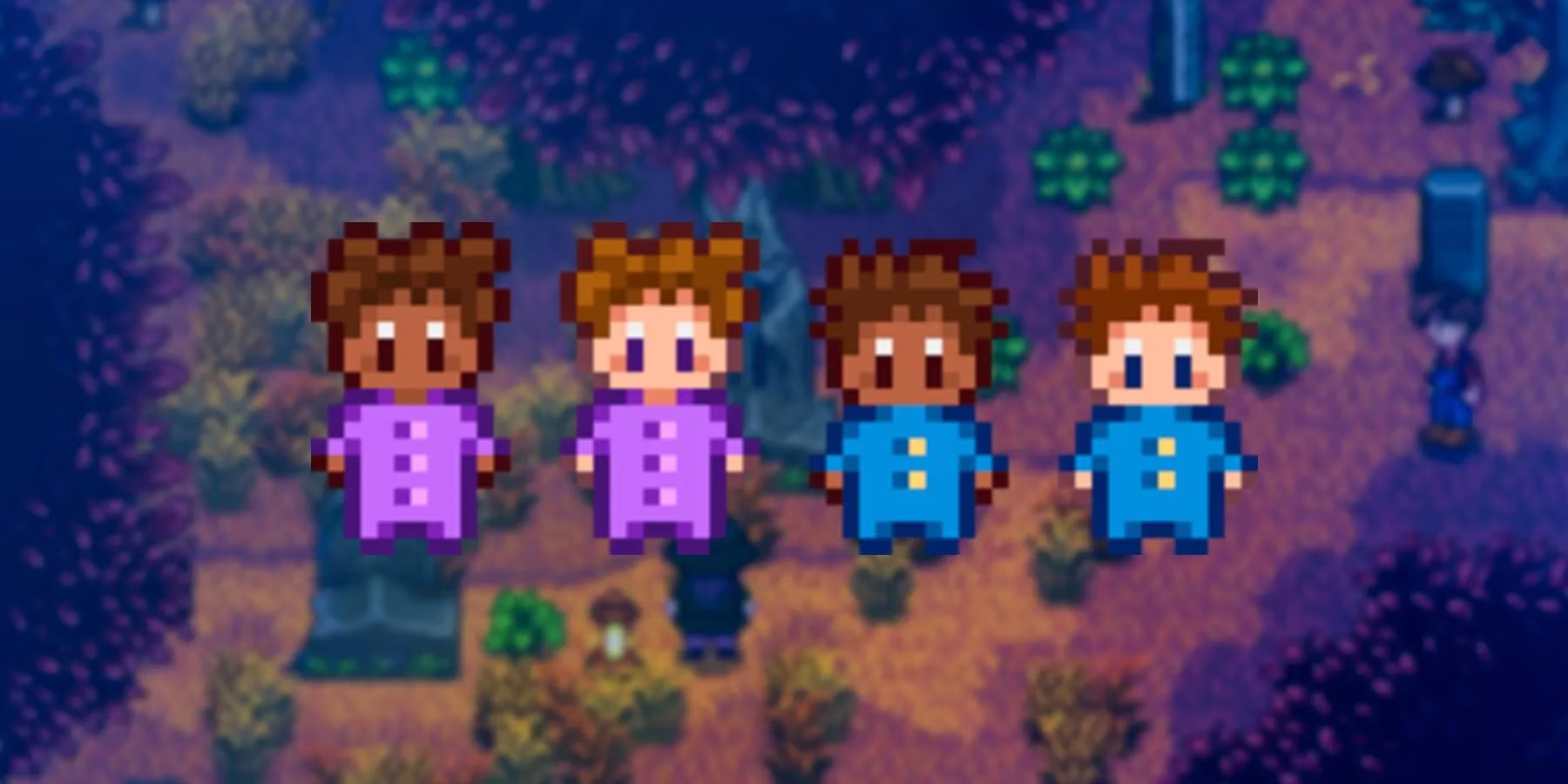
ConcernedApe's farming masterpiece integrates parenting into its cycle of seasons and relationships with elegant simplicity. After marriage to one of Pelican Town's residents, players can have up to two children who appear as pixelated toddlers roaming the farmhouse. While limited in developmental complexity (children never age beyond toddler stage), they add meaningful texture to the game's domestic life. Players can interact with their children daily, with dialogue options reflecting their growth milestones. The system's brilliance lies in how it mirrors real parenting's time management challenges—every hour spent playing with children is an hour not spent mining, farming, or fishing. Yet these moments create the game's most heartwarming memories, especially during festival interactions where the whole family participates. Stardew Valley presents parenting as the ultimate expression of having 'made it' in the valley—the final piece in constructing a complete life after establishing financial security and community relationships. It transforms the player's house from a functional space into a home, populated with sounds of laughter and tiny footprints on wooden floors.
The Sims 3: The Gold Standard of Virtual Families
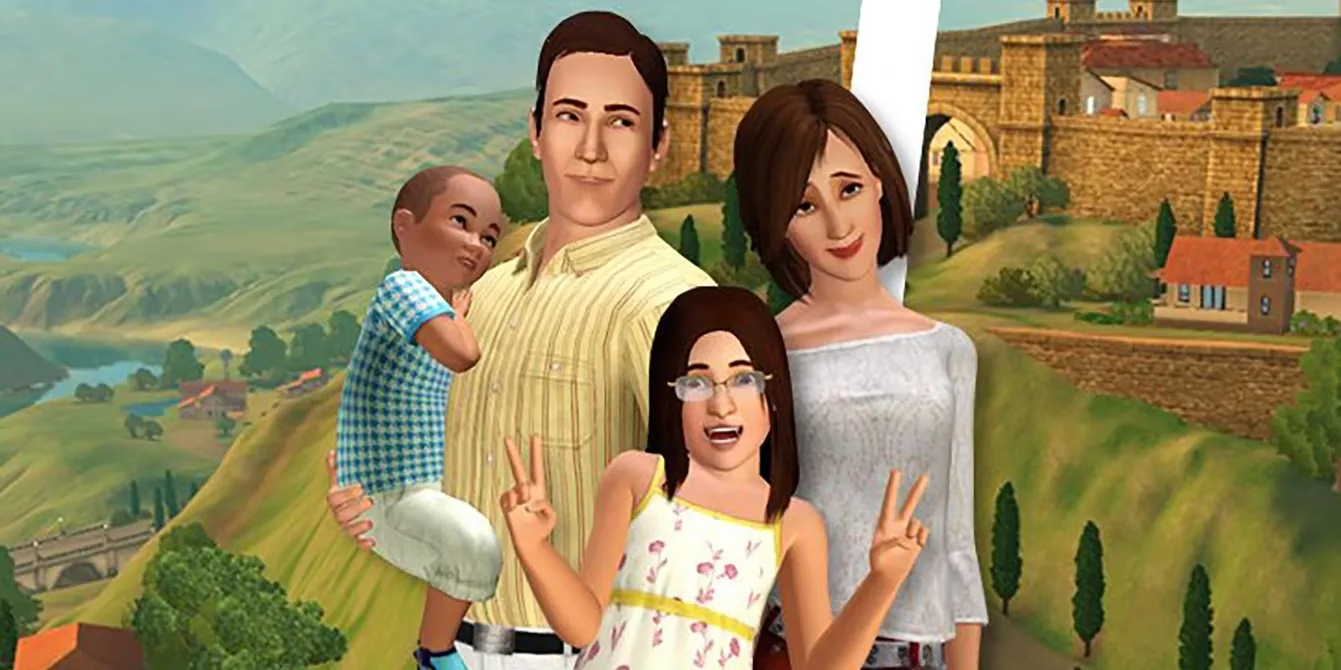
While later entries in the franchise scaled back open-world elements, The Sims 3 remains the pinnacle of generational family simulation within a truly seamless world. Players can create Sims, guide them through courtship and marriage, raise children from infancy to adulthood, and eventually continue playing as those children—creating multi-generational sagas that span virtual decades. The parenting mechanics are remarkably detailed, encompassing everything from teaching toddlers to walk to helping teenagers with homework to advising young adults on career choices. Each life stage presents unique parenting challenges and rewards, with personality traits and family relationships carrying forward through generations. The open neighborhood allows children to visit friends' houses, attend school, and explore community lots independently, forcing parents to balance freedom with supervision. This creates emergent storytelling possibilities unmatched in gaming—a child who was neglected might grow up with negative traits that affect their own parenting style years later. The Sims 3 demonstrates how parenting systems can become the engine for infinite player-driven narratives, where every family tells a unique story shaped by thousands of small decisions accumulating across generations.
The Future of Digital Parenting in Games
As we look toward 2026 and beyond, the integration of parenting mechanics in open-world games shows no signs of slowing. Several emerging trends suggest where this niche might evolve:
🔮 AI-Driven Child Characters: Future titles may feature children with machine learning personalities that evolve based on player interaction patterns.
🎮 Cross-Generational Gameplay: Games where choices made as a parent character directly affect gameplay when controlling their children in sequel scenarios.
🌍 Dynamic Family Ecosystems: Systems where in-game children form relationships with NPCs independently, creating complex social networks that affect gameplay.
📊 Parenting Skill Trees: Specialized progression systems where players improve their virtual parenting abilities, unlocking new interactions and narrative options.
The table below summarizes how different games approach the parenting experience:
| Game Title | Parenting Focus | Key Mechanics | Emotional Impact |
|---|---|---|---|
| Pokémon S/V | Creature nurturing | Bond building, care routines | Protective, growth-focused |
| Dead Rising 2 | Survival parenting | Timed medication delivery | High-stakes, urgent |
| Skyrim | Orphan adoption | Gift giving, chore assignment | Protective, domestic |
| Fable II | Legacy building | Relationship maintenance, consequences | Long-term, consequential |
| Shelter 2 | Animal instinct | Hunting, predator avoidance | Primal, vulnerable |
| Stardew Valley | Family completion | Daily interaction, festival participation | Warm, completionist |
| The Sims 3 | Life cycle simulation | Multi-stage development, generational play | Comprehensive, narrative-rich |
These virtual parenting experiences serve multiple purposes for players: they provide safe spaces to explore caregiving roles, add emotional stakes to gameplay, create long-term investment in game worlds, and occasionally offer insights into real family dynamics. As artificial intelligence and narrative systems grow more sophisticated, we can expect these digital families to become even more complex and responsive—blurring the lines between game mechanics and genuine emotional connection. The open world has become not just a place to explore, but a space to cultivate the most fundamental human experiences, one saved game at a time. 🎮👨👩👧👦