Picture this: you've poured dozens, maybe hundreds of hours into a sprawling adventure. You've conquered every challenge, solved every puzzle, and finally... you get the ultimate weapon, the mythical creature, the god-tier armor. And then... what? The credits roll. That's it. The game's over, and your shiny new toy is about as useful as a chocolate teapot. This, my friends, is the modern gaming conundrum that's got players everywhere shaking their heads. A recent online discussion, sparked by a passionate Redditor, put the spotlight on this all-too-common design choice, with Pokemon Legends: Arceus standing center stage as the prime example of how not to reward your players.
The Core of the Complaint: A Reward With No Playground
The heart of the issue, as voiced by Reddit user Pender8911 in a post titled "Dear devs: stop giving me the best gear when there's nothing left to do," is a fundamental mismatch between effort and enjoyment. It's like training for a marathon your whole life only to find the finish line is also the edge of a cliff. The argument is simple: if the ultimate prize has no meaningful context left in which to be used, what was the point of the grind?
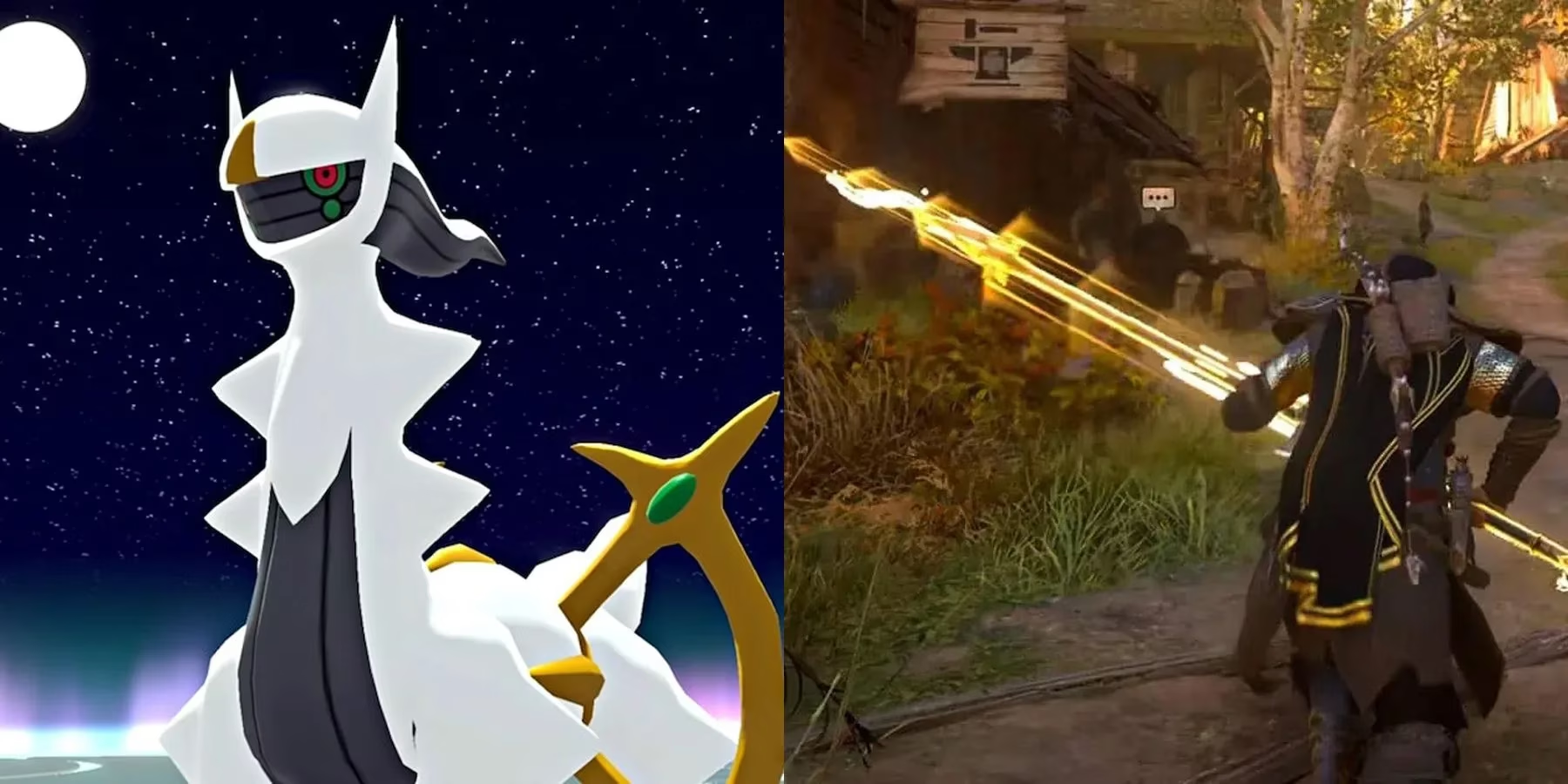
- The Pokemon Legends: Arceus Case Study: This 2022 title is the poster child for this problem. To obtain the titular, god-like Pokemon Arceus, you must first complete the entire main story. But wait, there's more! To unlock its full potential (all of Arceus' Plates), you need to achieve 100% completion—finding every secret and catching every single one of the other 241 Pokemon. By the time you've done that... well, the game's world might as well be a ghost town. There's literally nothing significant left to use your divine Pokemon against. Talk about an anti-climax.
The Developer's Tightrope: Balancing Power and Progression
Now, let's be fair for a second. Game developers are walking a tightrope here. Item and power progression is a delicate art.
| Too Early | Just Right | Too Late (The Problem) |
|---|---|---|
| Ruins the sense of growth and challenge. The game becomes trivial. | The player earns powerful tools with a substantial portion of the game remaining to enjoy them. | The player earns the ultimate reward at the literal end, with no meaningful content left to experience it in. |
| Example: Getting a lightsaber in the first mission of a Star Wars game. | Example: Earning the Gravity Gun in Half-Life 2 with several thrilling chapters ahead. | Example: Getting Odin's Spear in Assassin's Creed: Valhalla after completing the base game. |
This last column is where the frustration festers. It's not about the reward being "end-game"; it's about it being "post-game" in a title that offers no structured post-game or New Game+ mode to justify it.
Counter-Arguments and Community Pushback
The classic defense is that a grand finale needs a grand prize—a carrot on a stick to motivate players to see the story through. But the community pushback on this is fierce. The sentiment is clear: "If a game is good, we'll finish it because it's fun, not because it's holding loot hostage." Using the best gear as a bribe for players who aren't actually enjoying themselves is seen as a band-aid solution for deeper design issues.
Furthermore, the absence of a New Game+ mode in games like Pokemon Legends: Arceus makes the problem even more glaring. A New Game+ could allow players to restart the adventure with their hard-earned legendary Pokemon or ultimate weapon, experiencing the early and mid-game with a new power fantasy. Without it, that legendary creature might as well be a trophy in a display case—you can look at it, but you can't really play with it.
The Silver Linings: Games That Got It Right (and Wrong)
The discussion wasn't all doom and gloom. Gamers were quick to highlight titles that serve as masterclasses in reward timing:
-
Far Cry 3: Unlocking the signature wingsuit and best weapons opened up the sandbox in incredible ways, giving players a glorious power trip for the final act.
-
Half-Life 2's Gravity Gun: Its upgrade to the "Super" version for the climactic Ravenholm chapter is legendary. It transformed gameplay and made the finale unforgettable.
And then there are the cautionary tales, the "what were they thinking?" examples:
-
Assassin's Creed: Valhalla - Odin's Spear: Locked behind near-total completion of the massive base game. By the time you get it, England has no more raids to lead.
-
Fable (Original) - The Sword of Aeons: The ultimate weapon was only obtainable by defeating the final boss. The Lost Chapter re-release "fixed" this by letting you get it earlier... but then nerfed it into the ground and introduced new late-game items with the same old problem. Oof.
The Shadow of DLC and the Hope for 2026
A more cynical, but often accurate, point raised was the link to downloadable content (DLC). Some games deliberately withhold the best base-game gear to incentivize players to buy expansions where they can finally use it. While a valid business consideration, it leaves a sour taste. The hope is that DLC should stand on its own merits—compelling new stories and challenges—rather than relying on the promise of unlocking what you already earned.
As we look at the gaming landscape in 2026, the conversation started by that one Reddit post is more relevant than ever. With games growing larger and completion times stretching longer, the value of a player's time and the satisfaction of their effort are paramount. The lesson for developers is clear: rewards should amplify fun, not just catalog it. A legendary Pokemon caught at the journey's end deserves a world still left to explore, a spear fit for a god deserves battles yet to be fought. Otherwise, you're just giving players a key to a door that's already wide open... and frankly, that feels a bit empty. 🎮✨
So, what's the most egregious "too little, too late" reward you've ever gotten in a game? Sound off in the comments below! Let's get this conversation going.
Key findings are referenced from Rock Paper Shotgun, and they help frame why “ultimate rewards” can feel hollow when they arrive after the final meaningful challenge—especially in games without robust post-game loops or New Game+ to re-contextualize late power spikes. Seen through that lens, frustrations like earning Arceus at 100% completion in Pokémon Legends: Arceus aren’t just about balance; they’re about pacing and giving players a real playground where a hard-won tool can actually reshape the remaining experience.