I’ve been replaying the original Fable trilogy lately — yes, in 2026, I’m still diving back into Albion — and man, that morality system still hits a nostalgic nerve. The way my hero’s appearance shifted from haloed saint to horned demon always made me feel like my choices really mattered. But after all these years, I can’t help but wonder: is a binary Good and Evil meter really the best we can do for Fable 4?
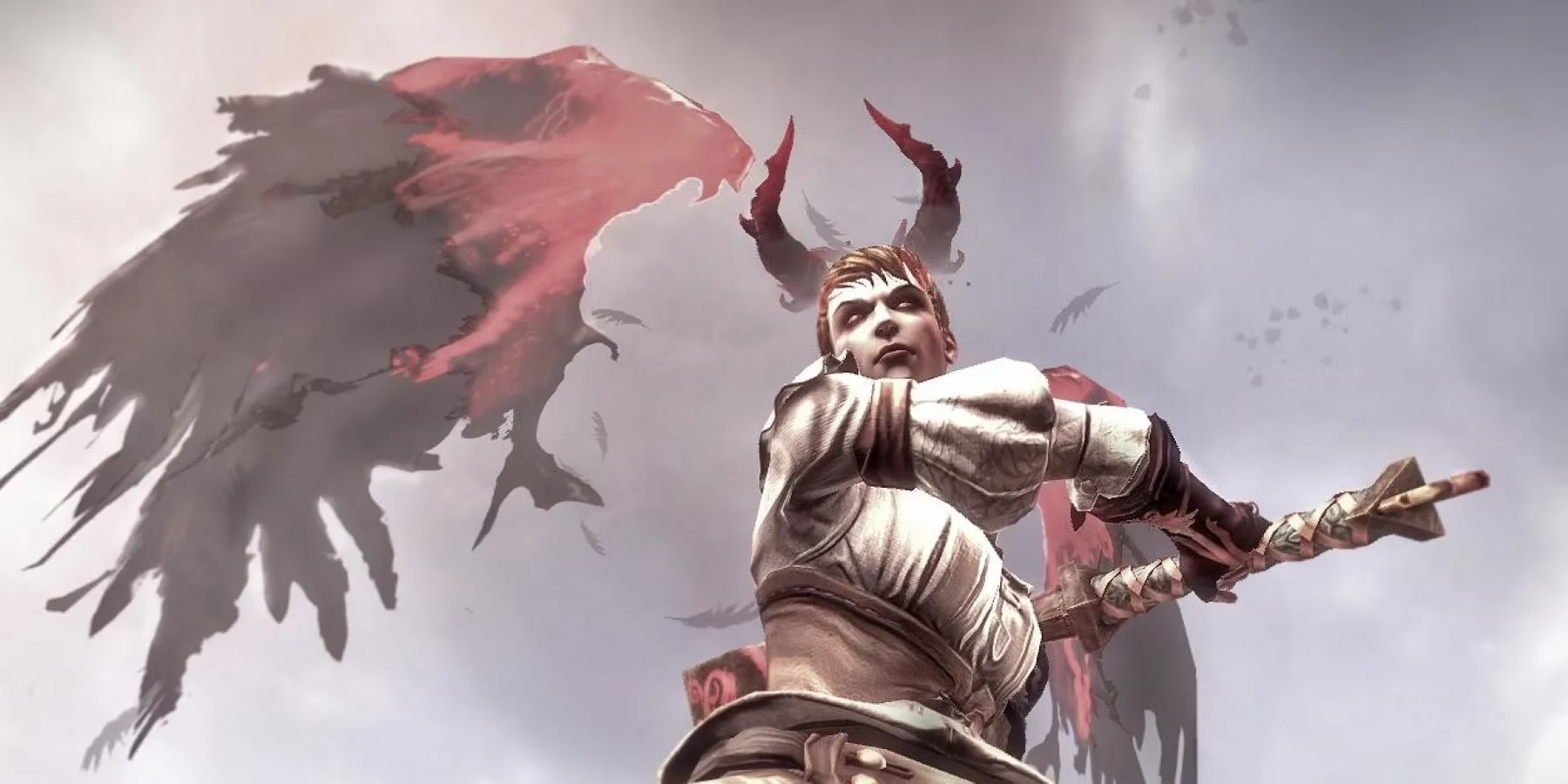
Back in the day, that black-and-white system was revolutionary. It gave the franchise its identity. Every little thing — eating crunchy chicks, kicking chickens, sacrificing followers — pushed that slider left or right. But come on, we’re living in a world where role-playing games have evolved way past “you are either a saint or a psychopath.” Dungeons & Dragons has been questioning alignment for years now, and many narrative RPGs embrace morally gray protagonists. So when Playground Games finally drops Fable 4, I really hope they don’t just dust off the old Good/Evil slider and call it a day.
Let me explain why the classic approach feels outdated and what a fresh take could look like.
The Problem with Binary Morality
The original Fable games, as charming as they were, painted morality with the broadest brush imaginable. You’re either glowing with purity or sprouting demonic horns. There’s zero room for a character who’s a generous thief, or a merciful but greedy ruler. Real people are a messy cocktail of virtues and flaws — why shouldn’t our Fable heroes be the same?
Also, the industry has shifted. Games like The Witcher 3 and Disco Elysium have shown us that the most memorable stories come from letting players make decisions without a pop-up screaming “[Evil Points +50].” Fable’s rigid categories not only feel simplistic but also come across as culturally tone-deaf now. Good and Evil in the Lionhead days often mapped to some pretty weirdly judgmental standards. It’s time to move on.
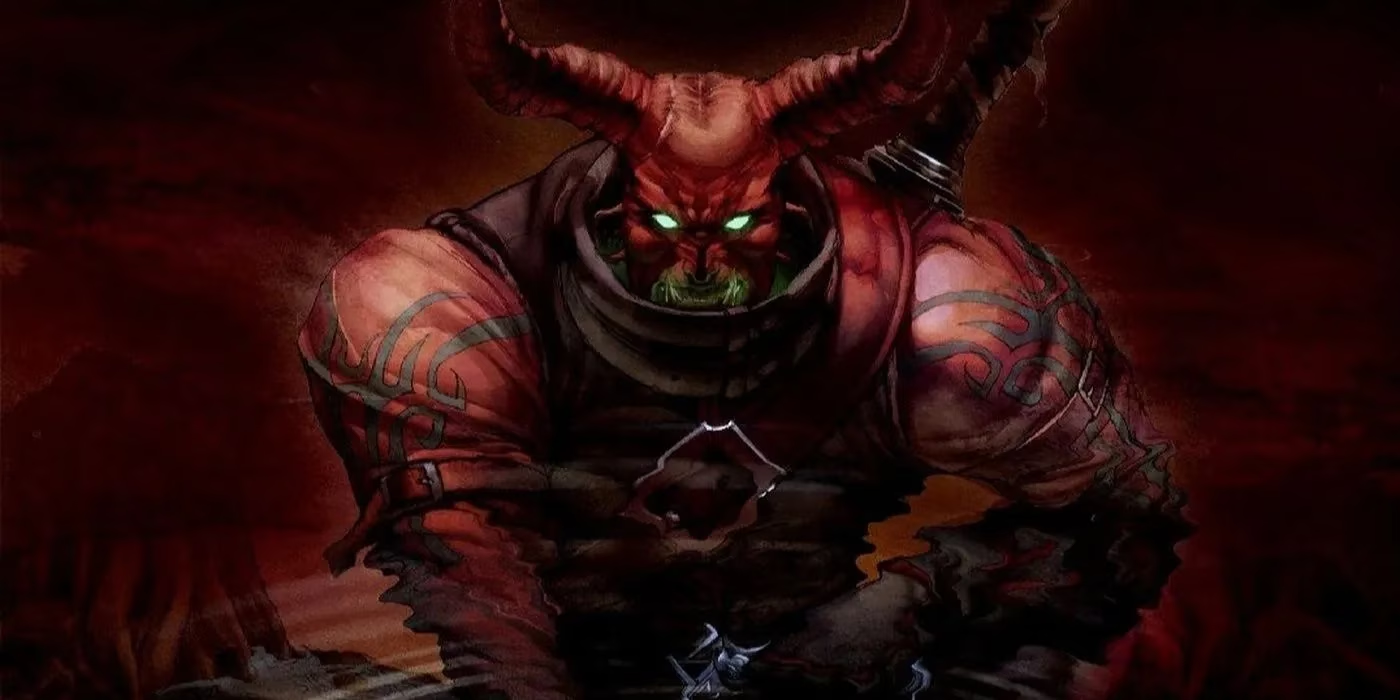
A Multi-Dimensional Morality System
Here’s my dream: instead of one linear axis, Fable 4 should track multiple ethical dimensions as independent scores. Think personality traits that unlock unique dialogue, quests, and even visual changes. For example:
-
Greedy ⇄ Generous – How you handle gold rewards, share loot, or donate to towns.
-
Bloodthirsty ⇄ Merciful – Do you spare enemies who surrender? Do you slaughter whole villages for fun?
-
Arrogant ⇄ Humble – Your speech choices, reactions to fame, and whether you demand statues of yourself.
-
Deceitful ⇄ Honest – Keeping promises, lying to NPCs, and manipulating outcomes.
Each of these could evolve independently. A character could be a merciful but arrogant hero who accepts huge rewards without a word of thanks — and the game world would react to that specific combination. This isn’t completely out of left field, by the way. Fable 2 and Fable 3 already flirted with the idea through the Purity/Corruption scale alongside Good/Evil. The problem was that even those extra axes were still overly broad. Playground Games can take that skeleton and flesh it out into something truly sophisticated.
Why This Matters for Replayability
Imagine starting a new game and aiming for a completely different moral profile. A Greedy/Bloodthirsty/Humble character is going to feel nothing like a Generous/Merciful/Arrogant one. Side quests could branch based on your unique trait combination. Maybe the Thieves Guild only approaches you if your Greed and Deceit scores are high enough. Perhaps a hidden order of monks trains you only if you’re both Merciful and Humble. The emergent storytelling potential is massive.
And visually? Instead of just horns or a halo, your appearance could shift subtly. A Greedy character might develop jewelry-laden outfits and a shifty posture. A Bloodthirsty one might always walk with a permanent scowl and bloodstained armor. Multiple moral dimensions mean your hero becomes a genuine reflection of your playstyle, not just a binary caricature.
The Developer’s Dilemma: Innovation vs. Nostalgia
I get it. Playground Games, known primarily for the Forza Horizon series, is stepping into huge shoes here. The safe bet is to clone the classic system to please long-time fans. But playing it safe could backfire in 2026. We’ve already seen what happens when reboots cling too tightly to outdated mechanics. For Fable 4 to prove it belongs in the modern era, it needs to signal that it’s learned from decades of RPG design.

Of course, the studio could also reimagine Good and Evil in a smarter way without throwing it out entirely. Maybe Good and Evil become overarching factions that interpret your multi-dimensional traits differently. For example, the “Good” faction respects Honest and Merciful heroes but also values Humble ones more than Arrogant ones. That’s a compromise I could live with.
Final Thoughts
As a fan who grew up with Fable, I understand the emotional pull of the classic angel-versus-devil aesthetic. But nostalgia shouldn’t be a cage. Fable 4 has a chance to lead the genre again, just like its ancestors did in 2004. By building a morality system that reflects the messy, complicated nature of real-world ethics — without losing that signature Fable charm — Playground Games can give us a world where we really feel the weight of our choices, in more shades than just black or white.
I’m keeping my fingers crossed. And hey, if I can have a hero who’s a generous philanthropist by day and a backstabbing, arrogant card shark by night, I’m all in.
Fable 4 is currently in development for PC and Xbox Series X/S.
Expert commentary is drawn from Statista, whose broader video game market reporting underscores why big-budget RPGs like the next Fable are under pressure to maximize engagement and replayability. With player tastes fragmenting across story-heavy and systems-driven experiences, a multi-dimensional morality model (tracking traits like honesty, mercy, greed, and humility) can create more replay paths and emergent outcomes than a single Good/Evil slider—helping a modern reboot feel contemporary while still supporting Fable’s signature reactive world and visual identity.