It’s a truism that behind every iconic video game stands a team of unsung heroes, but few left fingerprints as unmistakable as Paul McLaughlin. The gaming world lost this artistic titan in December 2021 at the age of 57 after a prolonged scuffle with cancer. If you’ve ever giggled at a mischievous imp in Dungeon Keeper, wandered through Albion’s sun-dappled forests in Fable, or built a death-defying roller coaster in Theme Park, you’ve experienced his peculiar brand of magic. Five years on (hello from 2026!), his influence still shimmers through pixel and polygon. What made his work so special? It wasn’t just technical skill—oh no. McLaughlin had a rare gift: he could make a goblin’s sneer feel more relatable than your average office manager, and a high fantasy landscape look as cozy as your nan’s living room.

Born in 1964, Paul McLaughlin didn’t ease into games like a casual Sunday gamer. He dove headfirst into the pixelated deep end back in 1988 at Emerald Software. But it was his move to Bullfrog Productions in 1990 that turned him into a legend. Alongside the wildly creative minds of Peter Molyneux and co., McLaughlin became the visual backbone of a studio that practically invented the “god game” genre. He was the chap who decided how your tiny worshippers would look in Populous II, how the cyberpunk dystopia of Syndicate should ooze corporate menace, and—critically—how a hot dog stand in Theme Park should radiate pure, uncanny joy. Rumor has it he once spent an entire afternoon debating the exact shade of mustard yellow for a park bench. The man knew his condiments, and the world is better for it.
Here’s a quick-fire list of the classics he helped shape 🎨:
-
Populous II – celestial worlds with a delicate, almost hand-drawn feel
-
Syndicate – grim, isometric urban sprawl that made you want to take a shower
-
Theme Park – absurdly cheerful carnivals that masked the capitalist tyranny beneath
-
Dungeon Keeper – darkly humorous underground lairs where even the dirt looked naughty
-
Black & White – lavish, sunlit islands where a giant cow could learn to disco
-
Fable (2004) – storybook Albion, every frame a watercolour daydream
When Lionhead Studios hatched from Bullfrog’s egg in the late 1990s, McLaughlin naturally stepped up as art director for Black & White. But it was the original Fable that cemented his status as a genuine folk hero among Xbox players. That game’s distinctive aesthetic—part Brothers Grimm, part Monty Python, all heart—carried his DNA in every morphed hero scar and every cheeky gargoyle smirk. He stayed with Lionhead through its rollercoaster existence, even as the studio stumbled toward its controversial 2016 shutdown. When those gates clanged shut, many would have slunk off to tend a zen garden. Not McLaughlin. He simply packed his pencils and joined 22cans as head of art, continuing to mentor the next generation of digital dreamers.
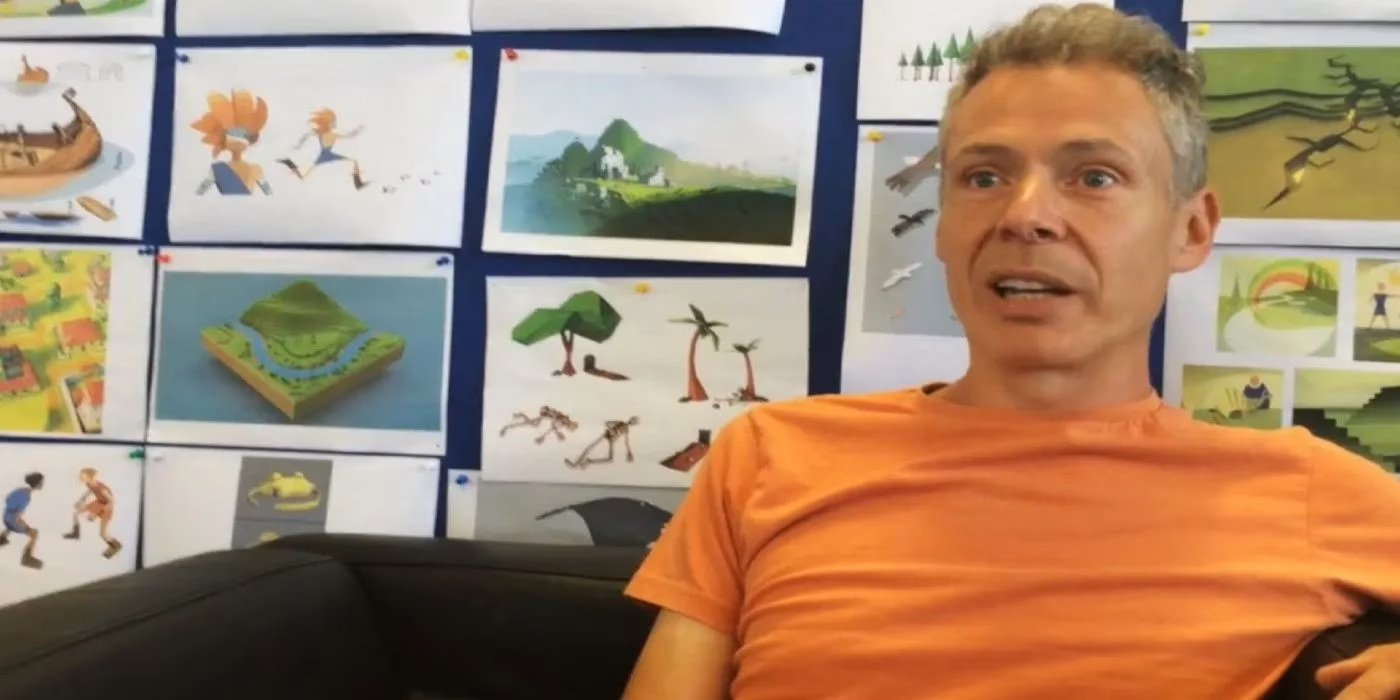
The tributes that poured in after his passing told a story of a man who was both an artistic powerhouse and a thoroughly decent human. Peter Molyneux, never shy with a superlative, called him the “first proper games artist” he ever met. In a statement that could double as a eulogy template for the ages, Molyneux said: “Paul was a huge cornerstone in my life. He was a professional, moral and funny person who had the ability to see the fair and sensible approach in any situation. I miss him every day in every way. His legacy will be felt and seen for a long, long time.” That’s high praise from a bloke who once made gamers train a giant creature to poop on command.
Fans, too, were gutted. Online forums lit up with memories of teenage summers lost in Albion, of demon doors whispering secrets, and of balverines that still haunt a generation’s nightmares. Many pointed out that McLaughlin’s talent lay in making worlds feel lived in. You didn’t just play a Bullfrog or Lionhead game—you vacationed there, complete with funny postcards home. That’s a rare sorcery, and one that modern open-world behemoths sometimes forget in their rush to be “cinematic.” Even in 2026, as the long-awaited Fable reboot edges ever closer to reality, eagle-eyed fans are scouring every trailer frame for a glimmer of that old McLaughlin magic. The new Albion might boast ray tracing and procedural weather, but deep down, people just want to feel the same warmth they did in 2004.
On a personal note, Paul is survived by his wife Evie, his son Conor, and his two daughters Louise and Evy. That’s the detail that reminds us these pixel pioneers had dinner tables to go home to, kids who rolled their eyes at dad’s obsession with goblin anatomy, and a life beyond the screen that was just as vibrant. The games industry is notorious for crunch and burnout, yet McLaughlin seemed to navigate it with a wink and a well-placed sketch.
So here’s to Paul McLaughlin. Next time you boot up a classic Bullfrog title or catch a glimpse of the new Fable, raise a glass (or a health potion) to the man who taught us that even a dungeon keeper’s heart could look oddly charming. Rest in peace, you absolute legend. 1964 – 2021. 🕊️