As a player who grew up wandering the whimsical hills of Albion, I still find myself thinking about the strange magic of the Fable series. There was something uniquely charming about those open-world RPGs, with their whimsical fairytale atmosphere and that unmistakably irreverent British humor. The original Fable, Fable II, and Fable III were not perfect, yet they offered the kind of freedom that made every session feel like a playful storybook come to life. As of 2026, with the long-awaited Fable revival from Playground Games continuing to generate excitement, I want to reflect on what made the trilogy special and where its ambitious ideas stumbled.
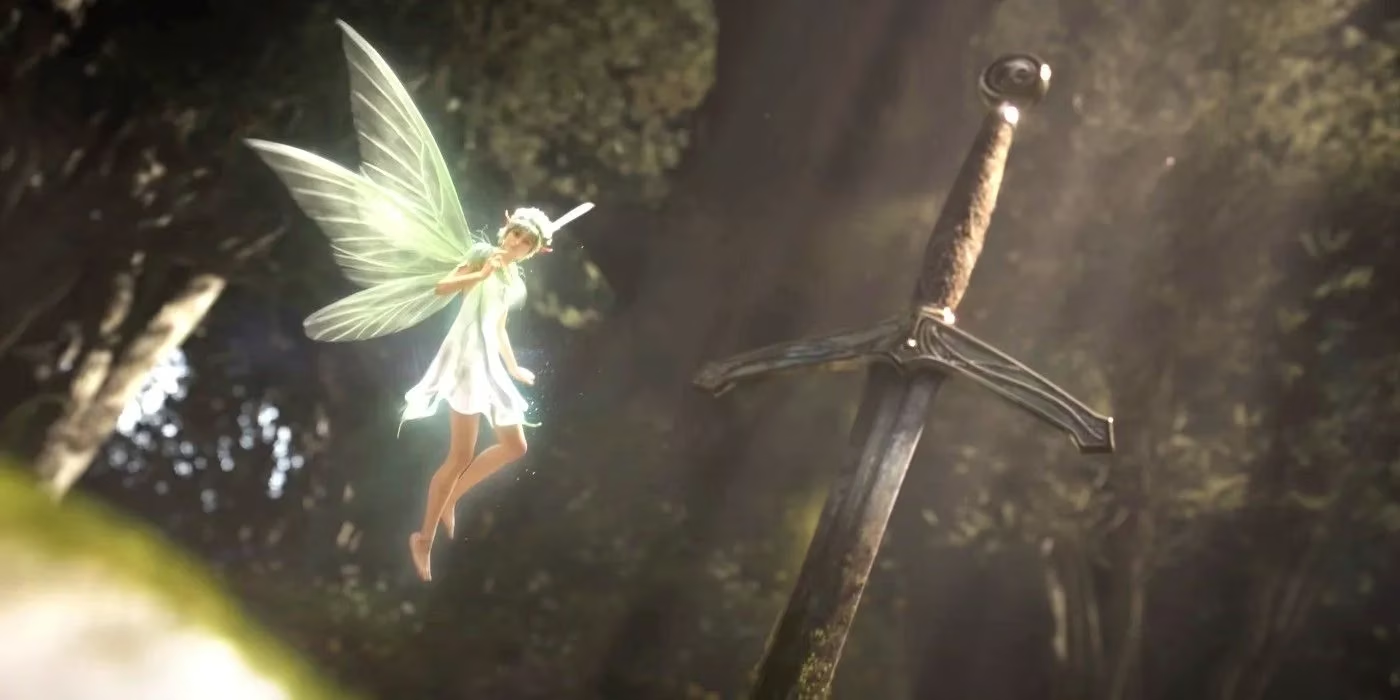
The Original Fable Trilogy Felt Special Despite Its Rough Edges
Lionhead Studios set out to create a living fairytale sandbox, and in many ways they succeeded. I could bake pies one moment, buy property the next, get married, play the lute, teach my dog tricks, or simply wander off to fart in a crowded town square. The worlds were colorful, the side quests were hilarious, and nearly every corner held some absurd little secret. Even though the first game had to cut certain open-world features, Fable II managed to restore many of them, while Fable III tried to push the narrative into more politically charged territory. Yet the trilogy also had a habit of tripping over its own ambition. Players sometimes got railroaded down story paths, and the moral mechanics often felt more like a cosmetic meter than a true role-playing system. Still, those imperfections never erased the feeling of stepping into a fairy tale that was more Monty Python than Grimms' Fairy Tales.
Moral Choices Deserve More Than Black and White
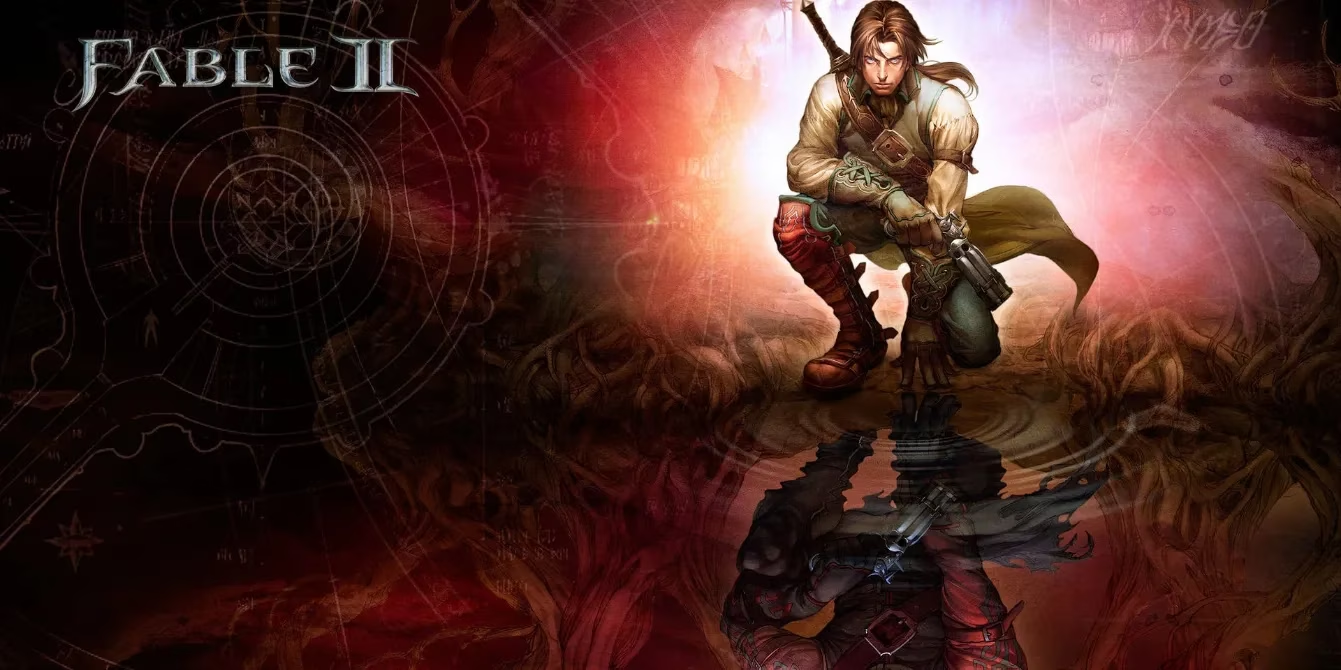
The black-and-white morality in the Fable games always fascinated me, but it also felt limiting. Good deeds made me glow with an angelic aura while bad deeds gave me horns and a demonic stare. NPCs either adored me or feared me, and there was rarely room for nuance. The problem became especially clear in Fable III, where the plot asked me to make hard decisions but often failed to show why a good character might make an ugly choice, or why a charming scoundrel might perform a heroic act. If Playground Games wants to deepen this system, I believe morality should become less of an objective value and more about reputation. Instead of a simple good-versus-evil meter, the next Fable could let the people of Albion form their own judgments based on my deeds and public image. That would allow me to play a grim hero who commits controversial acts for the greater good, or a handsome nobleman who hides wickedness behind a polished facade. Such a reputation-based approach would make every choice feel weighty without reducing me to a cartoon angel or devil.
Main Stories Must Learn to Stick the Landing
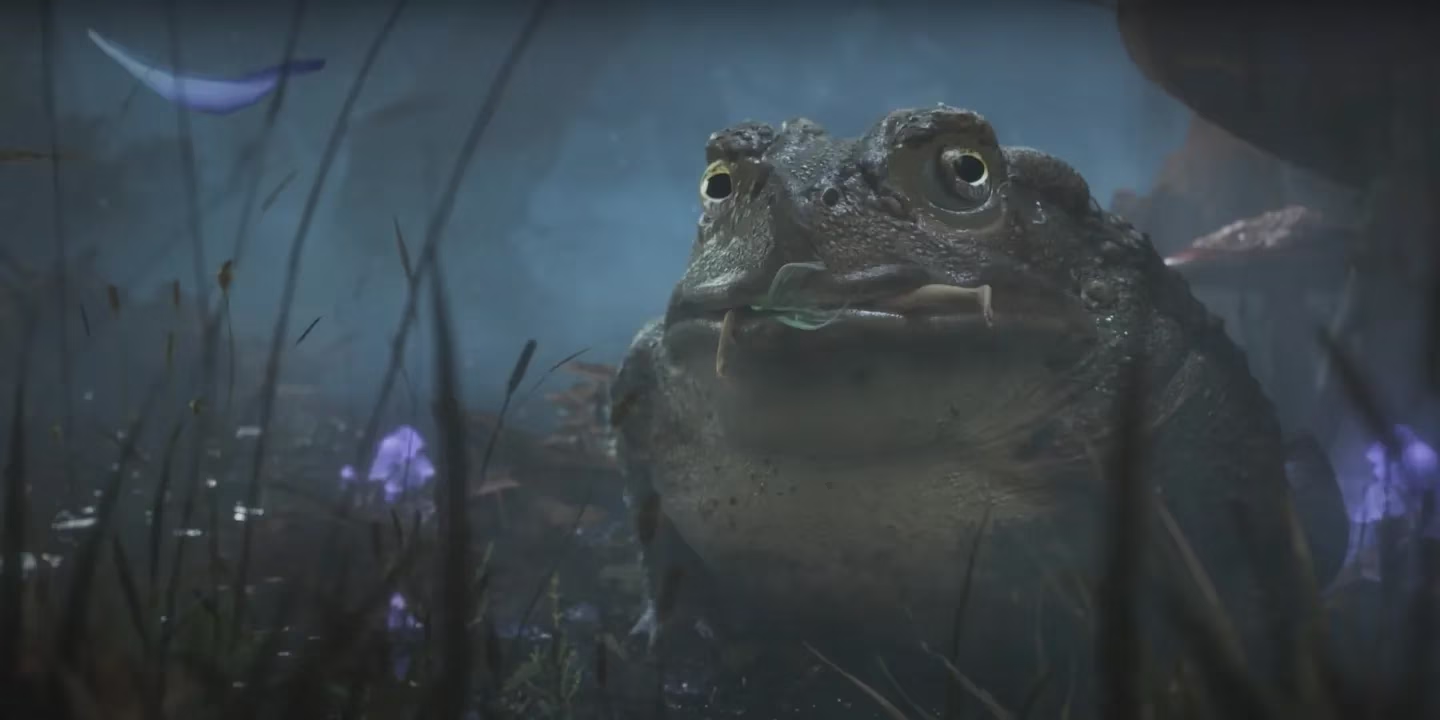
The side quests in Fable were often brilliant, filled with vividly drawn NPCs and famous British voice actors, from John Cleese to Stephen Fry. The main plots, however, leaned too heavily into grim clichés. Time after time, my hometown was doomed, my loved ones were killed in front of me, and the villain twirled a metaphorical mustache just to prove how evil he was. Then the final confrontation would arrive and feel strangely anticlimactic, resolved through a cutscene or a battle that lacked real emotional weight. I hope the new Fable gives us villains who are threatening without having to kick a dog for no reason, and a climax that actually rewards the choices and struggles I have endured along the way. A dark fairy tale can still be dark, but it should also feel earned.
My Hopes for the Playground Games Revival
As I look ahead to the next chapter in the Fable saga, I do not need technical perfection. I just want that same colorful freedom, that same sense of mischief, wrapped around smarter systems that respect my choices. If Playground Games can preserve the humor and imagination of the original trilogy while refining the open-world mechanics and narrative structure, then the Fable revival could become the definitive fairy tale RPG of this generation. For now, I will keep dreaming of Albion, with its glowing swords, mischievous dogs, and the promise of a story that finally sticks the landing. ✨