As 2026 unfolds, the gaming industry continues to buzz with anticipation for new worlds and stories. One name that consistently sparks conversation is Peter Molyneux, the co-creator of the beloved Fable series. After revealing last month that he's been diligently working on a brand new title under the codename Project MOAT, Molyneux has now managed to both intrigue and confuse fans by announcing the game will be set in a land called Albion. Isn't it curious how a single word can evoke such a powerful sense of nostalgia and mystery? Given his history with the Fable franchise, which also featured a realm named Albion, players are left wondering: is this a return to familiar grounds, or is Molyneux charting a completely new course?
What Do We Know About This New Albion?
The details, much like a misty English moor, are shrouded in secrecy. Molyneux revealed this key piece of information through a social media post, where he also promised to share regular blog updates about the development journey. He plans to delve into his experiences crafting iconic games like Fable, Black & White, and Dungeon Keeper during his tenures at Lionhead and Bullfrog Studios. Yet, he notably omitted any explanation for why this new setting bears the name Albion. Could it be a deliberate callback, or merely a fondness for the poetic name? The term 'Albion' itself is not a fictional invention; it's an ancient name for Great Britain, used long before Roman occupation. This gives Molyneux every right to use it, but it certainly sets expectations humming among his fanbase.
Is This Albion Connected to Fable?
This is the million-dollar question, isn't it? Legally, it presents a significant hurdle. Microsoft holds the intellectual property rights to the Fable series and its version of Albion. Molyneux is developing Project MOAT with his independent studio, 22 Cans. It is therefore highly improbable that he is using the exact same setting. The more logical conclusion is that this is a fresh, original world that simply shares a name with its legendary predecessor. Why would a veteran designer reuse a name with such baggage? Perhaps it's a thematic homage, or maybe it represents a desire to explore similar concepts of choice, consequence, and morality in a wholly new context. The ambiguity is undoubtedly part of the marketing strategy, but it leaves fans parsing every word for clues.
Following the Development Journey
For those fascinated by game design, Molyneux's blog offers a rare, personal window into a creator's process. He has committed to chronicling the highs and lows of bringing Project MOAT to life. However, he has also made a very deliberate choice: comments are disabled. Citing "haters and [his] fragile mental state," Molyneux has created a one-way channel of communication. This raises an interesting point about modern development: how do creators balance transparency with self-preservation in an often-critical online environment? While fans cannot directly interact, they are invited to be silent observers on a journey that promises to be as unpredictable as the man himself.
Molyneux's Views on Modern Game Development
To understand where Project MOAT might be headed, it's worth looking at Molyneux's recent reflections on the industry. He has been vocal about his belief that contemporary game releases have become far too "risk averse." He criticizes the trend of sequelized franchises playing it safe, prioritizing guaranteed returns over bold innovation. Doesn't this sentiment hint at what he might be trying to achieve with his new project? He longs for the days of daring creativity, and Project MOAT could be his vessel to recapture that spirit. Furthermore, he has shared insightful behind-the-scenes stories, such as the "fight" to keep gay marriage in the Fable series, which required him to personally justify its inclusion to Microsoft's senior management. This underscores his historical commitment to progressive themes and player agency—elements that will likely influence the ethos of his new Albion.
What Can We Expect from Project MOAT?
While concrete details are scarce, we can extrapolate from Molyneux's philosophy and past work. We might anticipate:
-
A Narrative-Driven Experience: Story and character have always been central to his games.
-
Moral Choice Systems: The legacy of Fable's good/evil mechanics will probably evolve in new ways.
-
A Living World: Whether fantasy or something else, the world of Albion will likely react to the player's actions.
-
Innovation Over Convention: True to his criticism, he will likely avoid well-trodden paths.
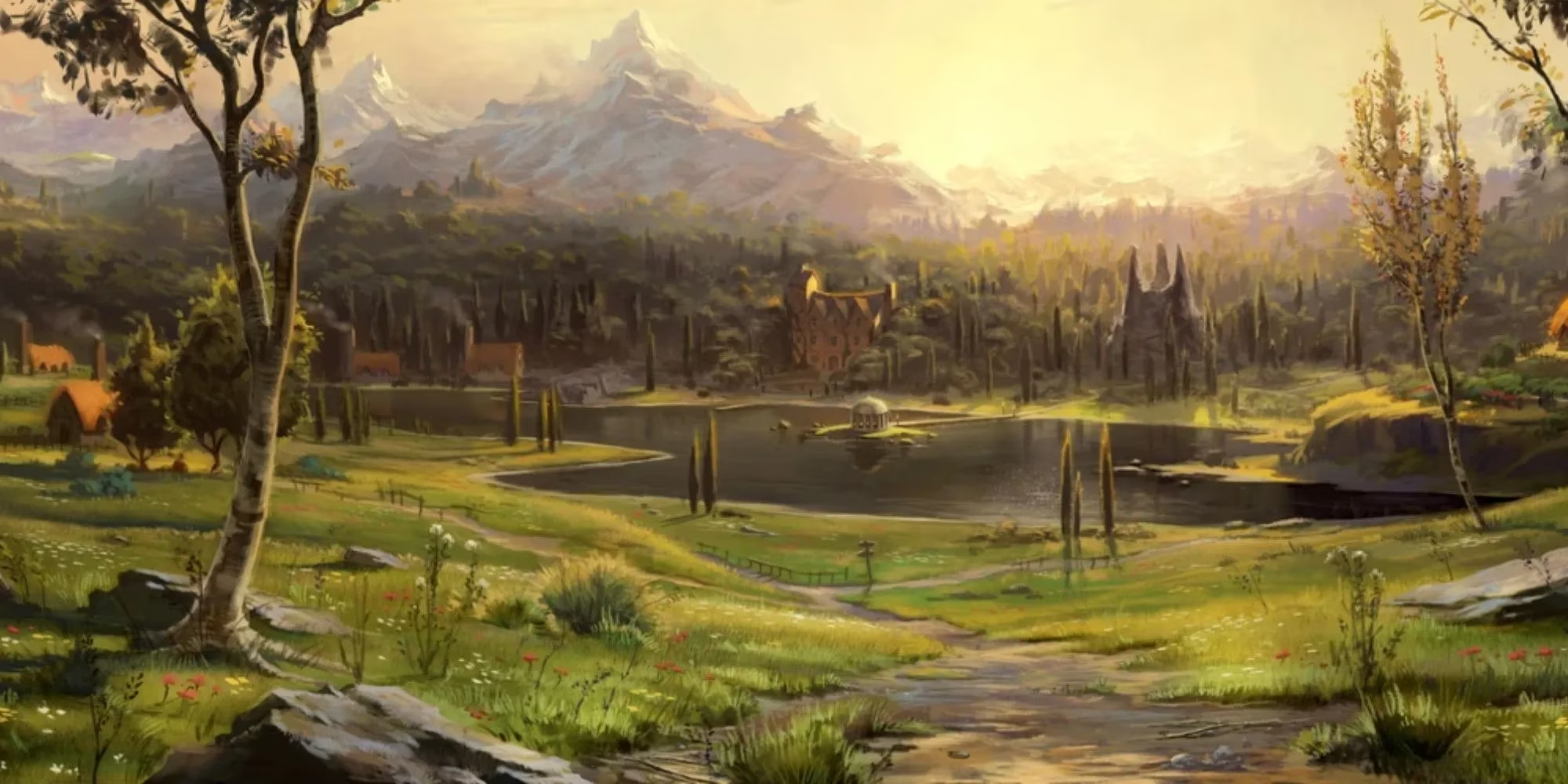
The revealed concept art suggests a world with a familiar, almost mythic British fantasy aesthetic, yet it remains distinct. It's a visual promise of something both comfortingly familiar and excitingly unknown.
The Bigger Picture in 2026
Project MOAT enters a gaming landscape in 2026 that is vastly different from the era that birthed Fable. With the monumental Xbox-Activision Blizzard deal now years in the past, the industry is dominated by massive franchises and live-service models. In this climate, an auteur-driven project like Molyneux's feels like a deliberate counterpoint. It's a venture fueled by one man's specific vision, for better or worse. Will it be a triumphant return to form, or a cautionary tale about overpromising? Only time will tell. But one thing is certain: the story of Albion, in whatever form it takes, is once again being written, and the gaming world is watching with bated breath to see what legend Peter Molyneux will craft this time.
Insights are sourced from The Verge - Gaming, whose reporting on modern release strategies and platform-holder incentives helps frame why an auteur-led project like Project MOAT can feel like a deliberate pushback against today’s risk-averse, franchise-driven market; viewed through that lens, Peter Molyneux reusing the name “Albion” reads less like a literal Fable connection and more like a signal of tone—mythic British fantasy, player consequence, and a deliberately provocative branding choice meant to invite comparison while remaining legally and creatively distinct.