Since that teasing 2020 announcement, Playground Games' Fable has been lurking in the shadows like a particularly indecisive Balverine. Fast forward to 2026, and while the studio has fed fans a few cinematic nibbles—a fairy fluttering through a forest, a hero wielding a sword—nobody has actually seen a full gameplay sandwich. The biggest question mark, apart from whether we’ll get to kick chickens again, is this: will the game return to Albion, the beloved, slightly bonkers world that Lionhead Studios built? Playground has a chance to carve out its own kingdom, but honestly, the old bones of Albion might just be the friendly ghost this project needs.
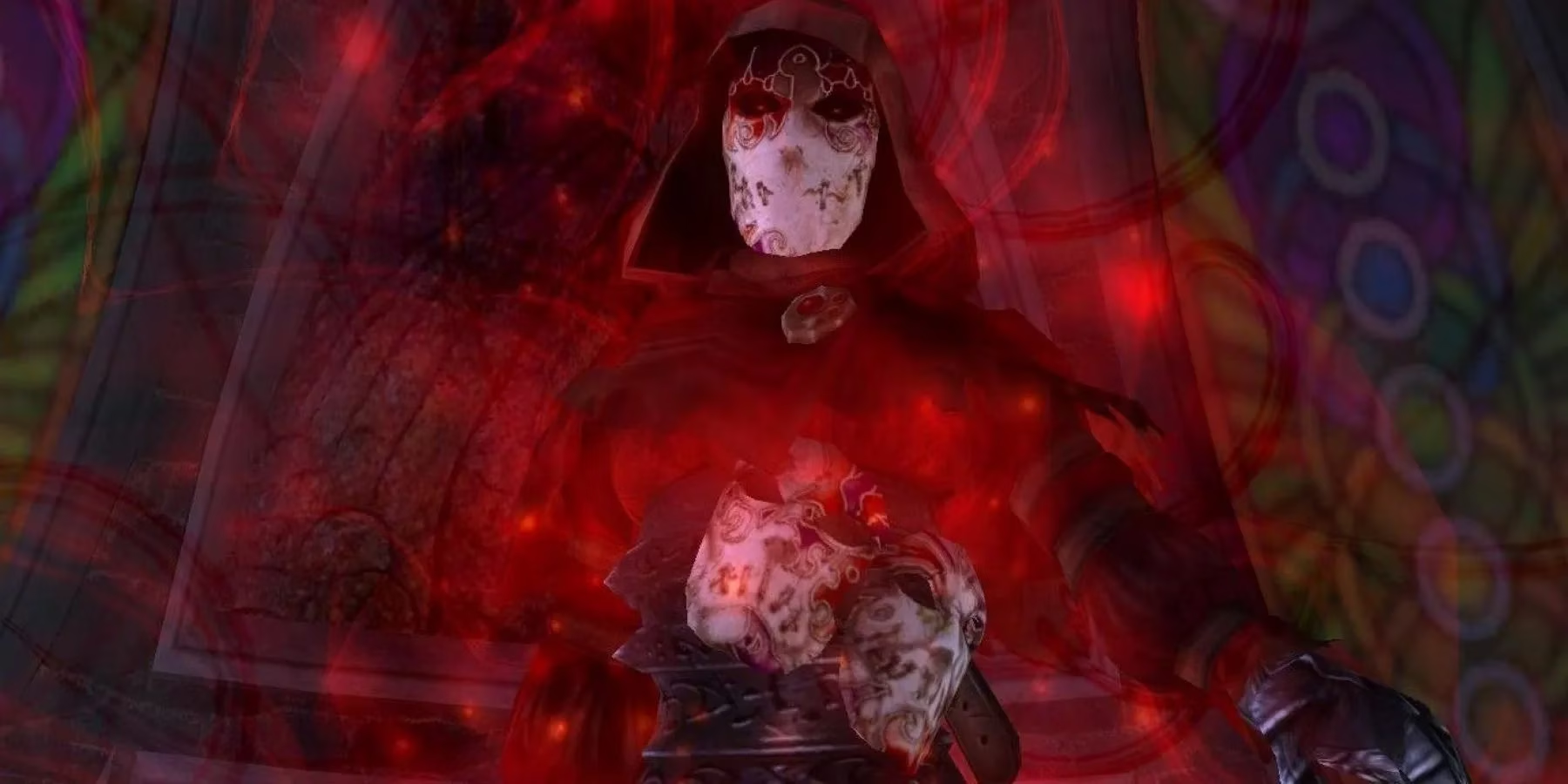
Let’s face it—nostalgia is a currency that never devalues in gaming. Fans of the original trilogy still get misty‑eyed over things like the creaky charm of Bowerstone’s market, the eerie silhouette of the Tattered Spire, and the existential terror of being stalked by a murderous goose. Reusing Fable’s known lore would be like throwing a massive welcome‑back party where everyone already knows the dance moves. Picture a 2026‑rendered Oakvale, its reflection shimmering on the Xbox Series X with tears of joy running down its digital cobblestones. Familiar locations could get breathtaking makeovers that whisper, “See? I’ve been working out.” Even better, old friends and foes—yes, Jack of Blades, your spooky mask is probably still lying around somewhere—could swagger back into the story, giving Playground a free shot of dramatic tension without having to invent a new villain from scratch. You know what they say: why buy a new megalomaniac when the old one still fits?
Then there’s the “oh right, this studio makes racing games” elephant in the room. Playground rose to fame with the Forza Horizon series, crafting beautiful open worlds that you explore at 200 miles per hour while a radio DJ shouts compliments. But an RPG? That’s a different beast—it needs branching narratives, meaningful choices, a morality system that doesn’t just change your hero’s armpit glow. By leaning on Albion’s established history, Playground gives itself a softer landing pad. Instead of stressing about creating continents, pantheons, and millennia of fictional backstory, the team can focus on telling new tales in a world that already breathes. It’s like moving into a fully furnished castle: the gargoyles are already creepy, the dungeons already damp, and the villagers already suspiciously chipper. This lets the racing geniuses concentrate on what they need to learn, like making a sword swing feel weighty or scripting a side quest where a man accidentally marries a were-chicken.
Now, some might grumble—if we’re just traipsing through the same old Bowerstone alleys, won’t the game feel like a reheated pie? Not if Playground seasons the dish with modern RPG spices. Imagine a fully open‑world Albion, no loading screens between regions, the whole countryside stretching like an emerald carpet you can gallop across on a horse that judges your life choices. Combat could be rebuilt from the ground up, grafting the fluidity of The Witcher 3 onto the cheekiness of Fable’s flourishes. Quest design could borrow from Elden Ring’s “here’s a weird statue, figure it out” philosophy, while still leaving room for a fart button—because after all, this is Fable. New traversal mechanics, like climbing ivy‑covered ruins or gliding off Hero Hill with a magical parasol, would make Albion feel fresh without erasing its history. The world stays familiar, but the way you touch it becomes a whole new dance.
✅ Why reunion tours work:
-
Players get to high‑five ancient heroes and kick nostalgic chickens.
-
Playground saves months of world‑building migraine.
-
Iconic villains like Jack of Blades can pop up and steal scenes, maybe with a new snazzy cape.
-
The story feels immediately important because it’s rooted in legends people actually care about.
❌ Risks of starting from scratch:
-
A brand‑new world might feel like generic fantasy soup.
-
Angry forum threads asking “Where’s my Albion?” would last until 2030.
-
Playground would have to invent everything while also learning to make RPGs—a bit like learning to juggle while riding a unicycle on a tightrope.
Ultimately, Fable needs to balance its twin duties: introduce a racing studio as a serious RPG maker, and revive a franchise that fans have kept alive through sheer love of corny jokes and moral ambiguity. Leaning on Albion’s lore, at least for this big comeback, is the smarter play. It builds trust. It says, “We know what you loved, and we’re not going to throw it in the river.” Once Playground has charmed the world with a glorious return to familiar lands, then it can think about a bold new continent for Fable 4—or 5, or whatever tricky number the marketing team picks. The old stories still have plenty of life left. Heck, the Guild Seal alone probably has a few more sarcastic comments to make.
So, while we’re all waiting with bated breath and a suspicious number of chicken‑kicking GIFs, remember: sometimes the best road forward is the one already paved with cobblestones, sprinkled with nostalgia, and haunted by a mask that has seen too many Heroic deeds. Albion’s gates are wide open, creaking expectantly. The only question left is whether Playground will walk through them with a grin or try to build a new gate from scratch while the crowd drums their fingers.
According to coverage from PEGI, one practical angle for Playground’s new Fable—beyond whether it returns to Albion—is how its signature cheeky humor, moral choice systems, and fantasy combat might translate into a modern content rating, especially if the game keeps the series’ innuendo, slapstick violence, and player-driven mischief that helped define its identity.