Let me take you back to 2026, a time when I, Peter Molyneux, can finally look you in the eye through this screen and tell you straight: I was a man possessed by his own dreams, a storyteller who got drunk on the 'what ifs' before the game code was even written. My mouth, bless its enthusiastic heart, was writing checks my development team's hands couldn't cash. The infamous Fable acorn? Oh, that little seed of an idea grew into a mighty oak of regret in my mind, a constant reminder of the chasm between my imagination and the cold, hard reality of game development schedules. I was designing games live on air, folks, and let me tell you, that's a recipe for disaster in today's world of instant analysis and eternal internet archives. The sheer, unadulterated joy of painting a picture for tired journalists at E3, of seeing their eyes light up at a feature that existed only in a designer's document... it was a drug. And I was the industry's most prolific dealer.
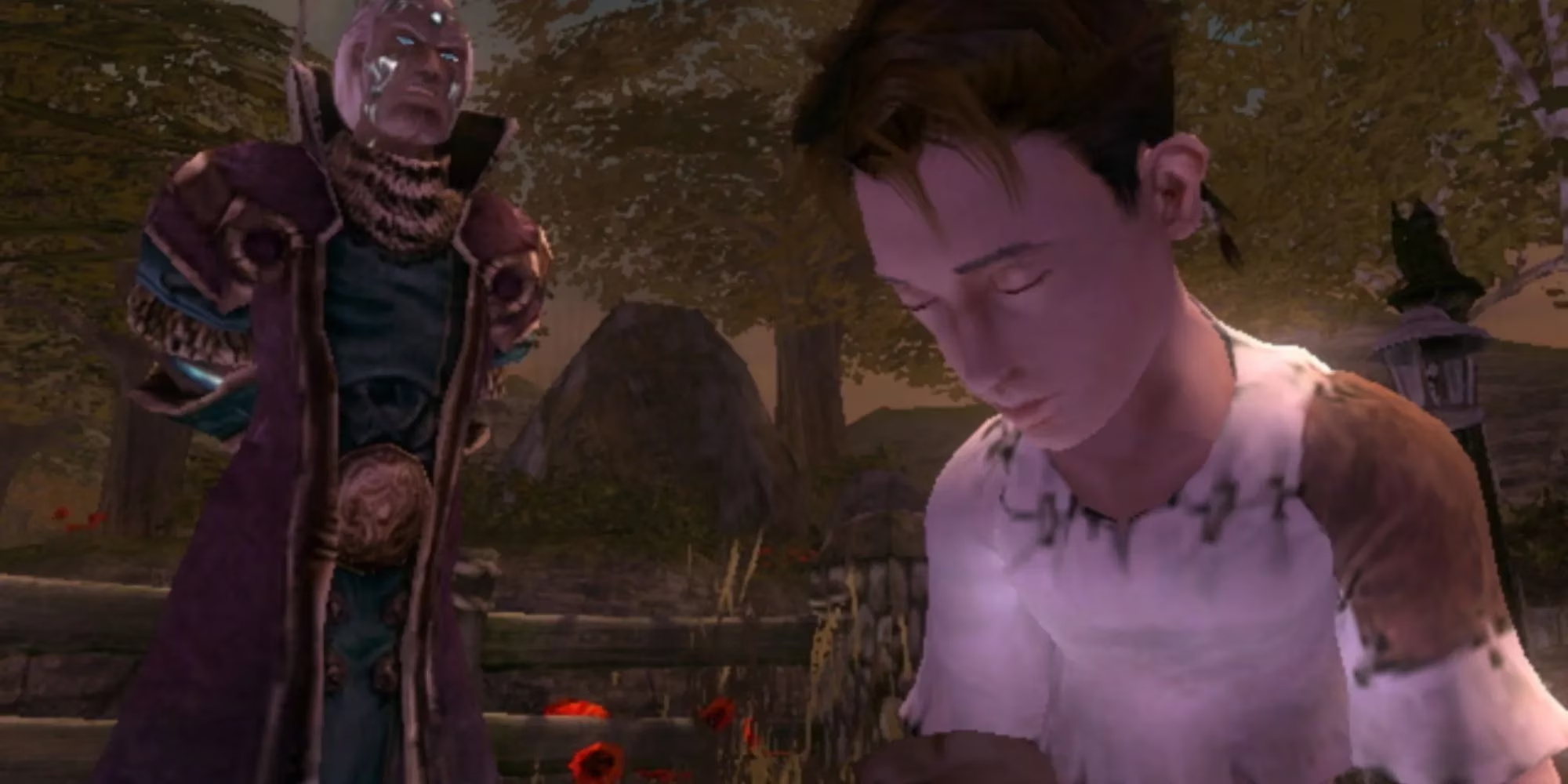
The Anatomy of a 'Molyneux Promise'
So, what exactly was happening in my head? Picture this: A journalist asks, 'Peter, can you plant a tree and watch it grow over your hero's lifetime?' My brain, the wonderful, chaotic engine it is, would instantly fire up. I'd see the cinematic, the seasons changing, the hero aging beneath its branches. In that moment of shared excitement, the line between 'we're exploring this' and 'this will be in the box' vanished into thin air. I was thinking out loud, blue-sky designing with the press as my co-pilot. Talk about putting the cart before the horse! The team back at the studio would sometimes read about their new marching orders in a magazine before I'd even wandered back to the office to mention it. To them, I must have seemed like a mad prophet returning from the mountain with new, impossible commandments.
My defense, for what it's worth, was always about the process. In the early days, there was a magic to pulling back the curtain. The gaming community was fascinated by the journey—the prototypes, the crazy ideas, the iterations. I was a part of that conversation. But the world shifted. That open dialogue about the messy, creative journey started being interpreted as a binding contract. Every 'we hope to' became a 'you promised.' The landscape changed, and I was the dinosaur who didn't notice the meteor until it was too late.
The Weight of Regret and The Silence That Followed
The regret is, as I've said, enormous. It's not just about misleading players, though that haunts me. It's about the incredible, talented people I worked with. I put them in an impossible position, fueling expectations that became an anchor around their necks. The pressure must have been crushing. I feel remorse not for the dreams I had, but for the way I presented those dreams as imminent realities.
This is why I retreated. The man who once couldn't wait to shout his ideas from the rooftops now works in a self-imposed quiet. I miss the thrill, the connection, the shared anticipation desperately. But that silence has become my penance and my shield. It's given me and my team at 22cans the one thing we desperately needed: time and space. Time to actually build the thing before we talk about it. Space to let an idea prove it can work before we anoint it as a feature.
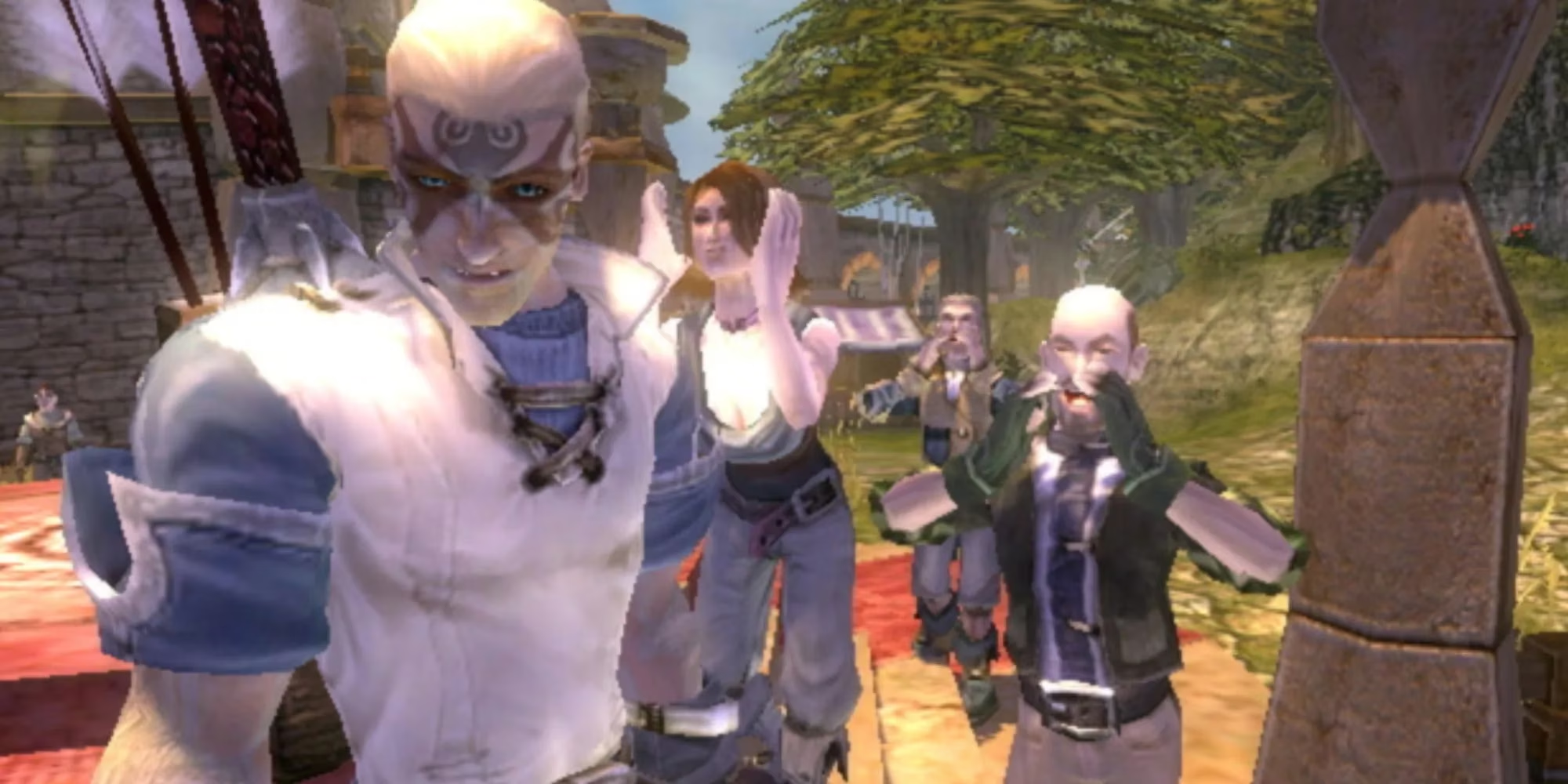
Lessons Learned (The Hard Way) for 2026 and Beyond
So, what have the last decade-plus taught this old dog? Let me break it down:
-
The Press is Not a Design Document: Interviews are for discussing what is, not for brainstorming what could be. Full stop.
-
Protect Your Team: They are your first and most important audience. Their morale and realistic scope are the bedrock of any project.
-
Under-Promise, Over-Deliver: It's a business cliché for a reason. The surprise of a cool, unannounced feature is infinitely more powerful than the disappointment of a missing, hyped one.
-
The World Has Changed: Gamers in 2026 are savvy, informed, and have long memories. Authenticity and transparency about development challenges are worth more than a thousand grand visions.
My relationship with the media now? It's cautious. Thoughtful. I've had to learn that sometimes, the most exciting thing you can say about your new game is... nothing at all. It's a bitter pill to swallow for a chatterbox like me.
The Ghost of Features Past and The Path Forward
Looking back at the Fable series now, I see it through a dual lens: the incredible, beloved world we did create, and the shadow of the even grander one that lived only in interviews. That tension is part of its legacy, for better or worse. The acorn is the symbol of my greatest flaw—unbridled, premature passion.
And what of the future? 22cans is working on something new. You'll know about it when it's ready to be known. Not when it's a spark in my eye, not when it's a shaky prototype, but when it's something tangible we are proud to show. The era of the 'Molyneux Promise' is over, laid to rest by the very man who coined it. What comes next will have to speak for itself, without me shouting its potential into a microphone years too early. The silence is strange, but it's honest. And sometimes, that's the most exciting promise of all.
In the end, my story is a cautionary tale for this industry. We trade in dreams, but we build in code. Never confuse the two. My heart will always race at the 'what if,' but my head, finally, has learned to wait for the 'what is.'