In the vast, often predictable landscape of video game heroes, where muscle-bound soldiers and chosen ones roam free, indie developers have carved out a sanctuary for the weird, the wonderful, and the deeply human. While blockbuster titles often relegate their protagonists to being mere avatars for player action, indie studios treat their central characters with a different kind of reverence. They craft them not as flawless vehicles for power fantasies, but as complex, flawed, and sometimes downright chaotic individuals whose journeys resonate on a profoundly personal level. These aren't just characters you control; they're characters you feel for, argue with, and ultimately remember long after the credits roll. Let's dive into the vibrant gallery of indie game protagonists who redefine what it means to be a hero.
10. Hat Kid - A Hat in Time
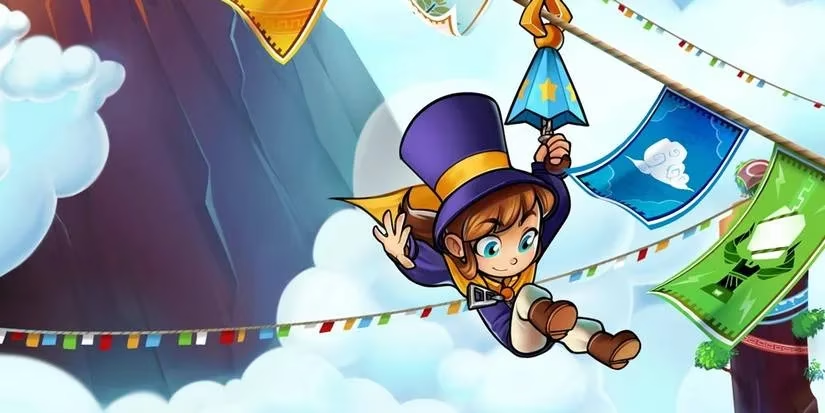
Sometimes, a protagonist doesn't need a Shakespearean monologue to steal your heart. Sometimes, all they need is an oversized top hat and a penchant for playful mischief. Enter Hat Kid, the pint-sized extraterrestrial explorer from A Hat in Time. In a genre often populated by silent, stoic heroes, Hat Kid proves that personality can be conveyed through a well-timed smirk, a triumphant pose, and a few perfectly delivered, chaotic giggles. She's the embodiment of whimsical charm in a world already bursting with color and creativity. Her narrative role is simple—she's collecting magical timepieces to fuel her spaceship—but her presence is anything but. Through expressive animations and cheeky, wordless interactions, she establishes herself as a lovable scamp whose adventurous spirit is utterly infectious.
9. Sunny - Omori
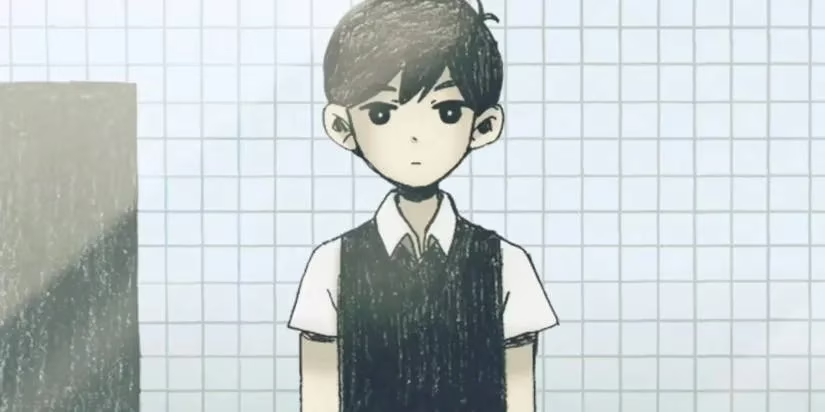
Crafting a compelling silent protagonist is one of gaming's great challenges. Omori doesn't just meet this challenge; it uses it as the foundation for one of the most psychologically intricate character studies in the medium. Sunny, the game's mute lead, is a testament to the power of environmental storytelling and symbolic narrative. The game masterfully juxtaposes the vibrant, fantastical world of his dreams (Headspace) with the bleak, haunting reality of his waking life. You don't learn about Sunny through dialogue trees; you learn about him through the friends he imagines, the monsters he conjures, and the stark, unsettling contrasts between these two realms. His inner turmoil, guilt, and trauma are painted across the game's canvas, making him a profoundly resonant and complex figure whose silence speaks volumes.
8. Vi - Bug Fables: The Everlasting Sapling
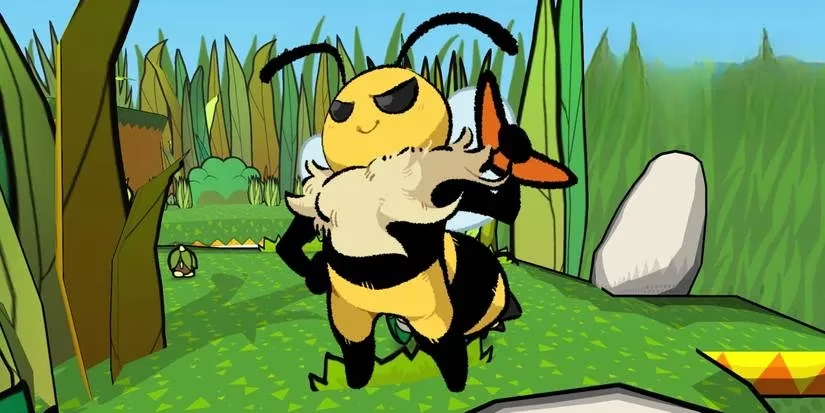
Forget the selfless paragon of virtue. Vi, the Bee adventurer from Bug Fables, is here to get paid, and she won't let pesky things like sentiment or danger get in her way. In a triumphant subversion of RPG hero tropes, Vi is gloriously, unapologetically greedy, sarcastic, and self-interested. Her primary motivation isn't to save the kingdom or uncover a grand mystery; it's to secure the fattest paycheck possible. This could easily make her insufferable, but thanks to the game's sharp, witty writing, she becomes an absolute delight. Her constant bickering with the more noble Kabbu and her deadpan delivery of brutally honest (and hilarious) commentary provide endless entertainment. The real magic, however, is witnessing the slow, grudging thaw of her icy exterior as genuine camaraderie and care for her companions begin to chip away at her mercenary shell.
7. Zagreus - Hades
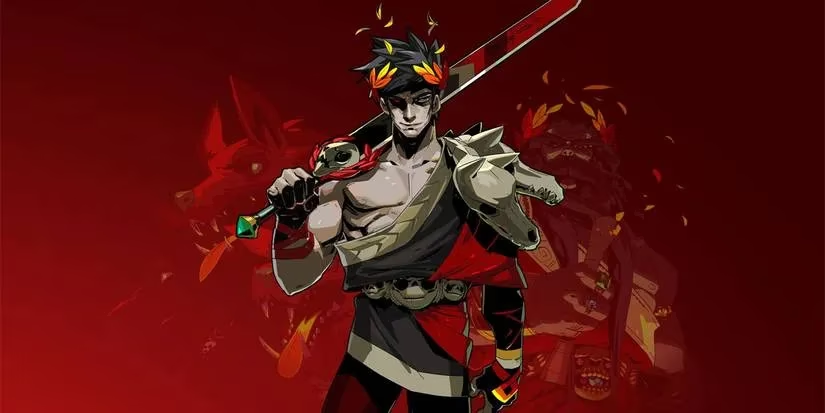
When Supergiant Games finally decided to give their protagonist a full voice, they didn't just create a character; they created a legend. Zagreus, the rebellious son of Hades, is a masterclass in charismatic writing and performance. His endless quest to escape the Underworld is fueled not just by gameplay, but by an overflowing well of personality. He's brimming with sass, dripping with sarcasm, and possesses a rebellious streak a mile wide, delivering withering quips to gods and shades alike. What makes him truly special is how he evolves. Each failed escape attempt (and there will be many) is peppered with new, context-aware dialogue, building relationships, uncovering family drama, and revealing layers of vulnerability beneath his confident exterior. He's not just fighting his way out; he's talking his way into your heart, one snarky remark at a time.
6. Niko - OneShot
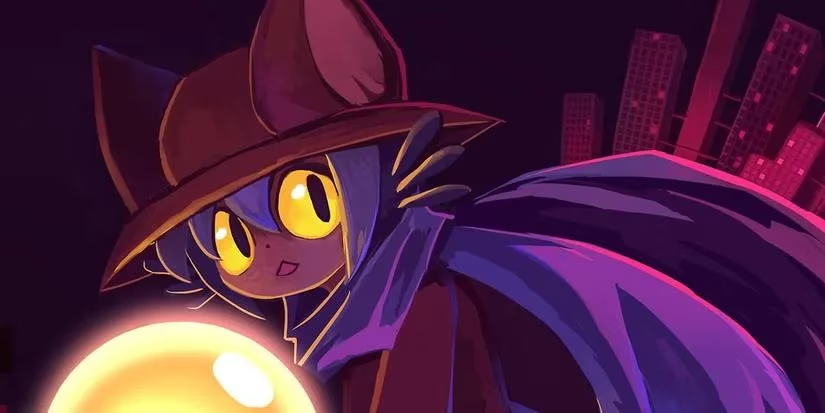
OneShot achieves a rare feat: it makes the player an active, diegetic participant in the story, and its protagonist, Niko, is the bridge. Niko isn't just a character on a screen; they are a character who knows you are there. They speak directly to the player, ask for your help, share their fears, and bond over simple, shared moments. This meta-narrative technique forges an immediate and powerful connection. Niko themself is a beacon of naive optimism in a dying, sunless world. They are a child burdened with a seemingly impossible task, whose spirit is constantly tested by despair and loneliness. Watching Niko struggle, hope, and persevere, all while maintaining that heartfelt connection with you, creates an emotional bond few other games can match. It's a relationship, not just a role-playing exercise.
5. Brad Armstrong - Lisa: The Painful
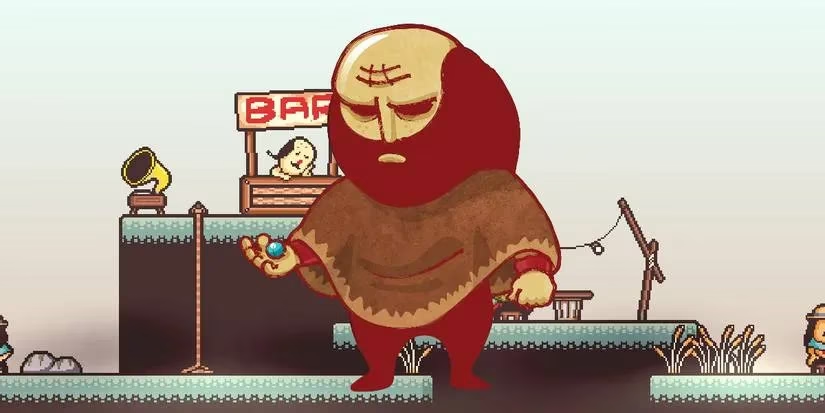
A protagonist doesn't have to be a hero. In fact, some of the most compelling stories are about people who are fundamentally broken. Brad Armstrong from Lisa: The Painful is a monument to human failure, a tragic figure sculpted from trauma, addiction, and desperate, toxic love. In a post-apocalyptic world devoid of women, Brad's chance to protect a young girl—the last hope—becomes a spiral of horrific choices. He is selfish, violent, and willing to sacrifice anything and anyone, including his own body and sanity. The game doesn't ask you to like Brad; it asks you to understand him. Through flashbacks and subtle storytelling, it peels back the layers of his pain, revealing the abused child within the monstrous man. He is a devastating deconstruction of the "lone survivor" trope, a cautionary tale about the cost of obsession, and an unforgettable character precisely because he is so deeply, tragically flawed.
4. The Bard - Wandersong
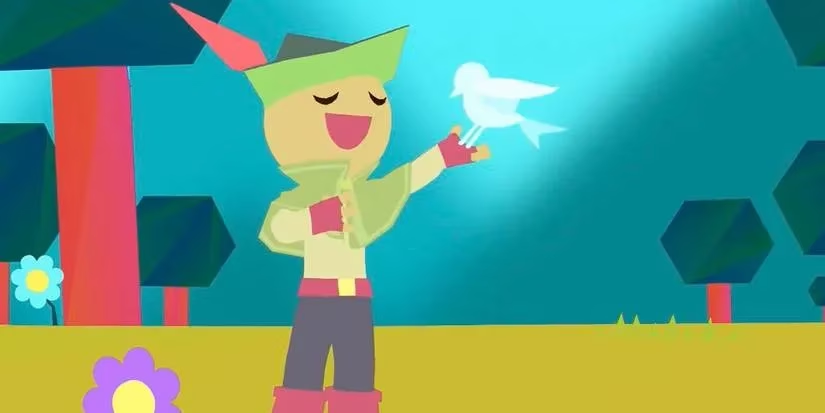
What happens when the prophecy isn't about you? In Wandersong, you play as The Bard, a cheerful, optimistic little puppet who is explicitly told they are not the chosen hero destined to save the world from an apocalyptic choir. The real hero is someone else—someone more capable, more dramatic, more... heroic. Instead of accepting this sidelining, The Bard does what they do best: they sing. Their weapon is kindness; their strategy is empathy. In a medium obsessed with power fantasy, The Bard's journey is a radical act of pacifist optimism. They choose to save the world not through strength, but through understanding, communication, and unshakeable joy. This creates a powerful and moving dichotomy: a character whose internal light grows brighter as the external world grows darker, proving that heroism isn't about destiny—it's about choice.
3. Harry Du Bois - Disco Elysium
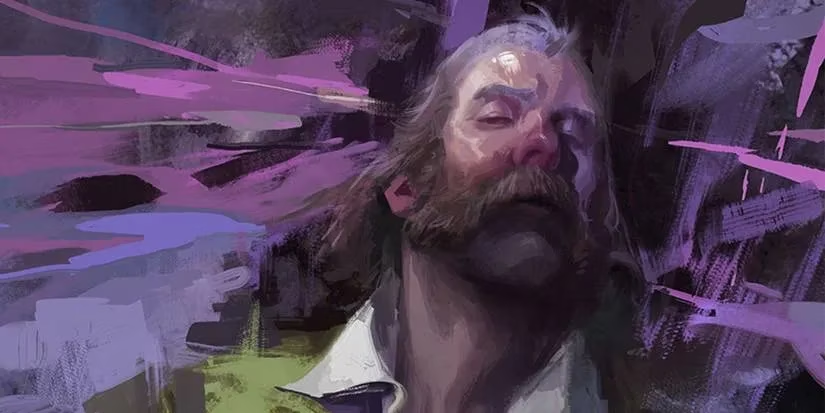
Disco Elysium solves the "player choice vs. defined character" paradox with sheer, unadulterated brilliance. You are Harry Du Bois, a detective with a world-class hangover and a case of amnesia so severe he can't remember his own name. The game gives you an astounding amount of freedom to shape Harry's skills, beliefs, and dialogue. You can be a superstar cop, a communist art critic, an apocalypse cultist, or a combination of all three. Yet, through this labyrinth of choice, a consistent, unforgettable character emerges. Whether you're failing a skill check spectacularly or having a deep conversation with your own necktie, Harry's core personality—a beautifully tragic mix of brashness, profound stupidity, self-destructive tendencies, and a buried, desperate desire to be good—shines through. He is a hilarious, heartbreaking mess, and navigating the wreckage of his mind to find the man within is one of gaming's greatest role-playing experiences.
2. Mae Borowski - Night in the Woods
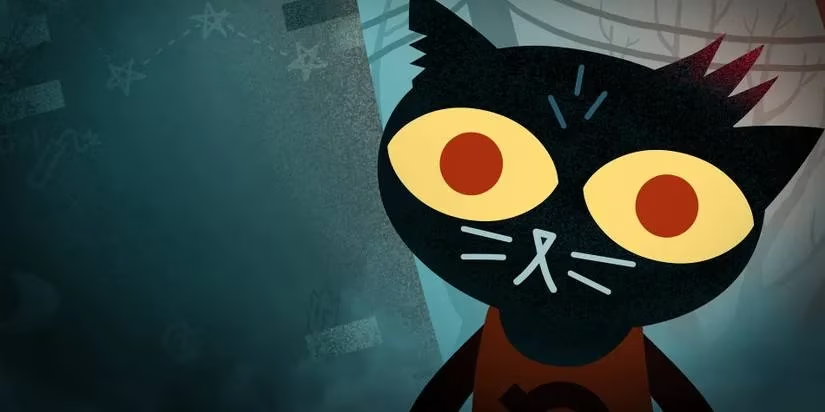
Mae Borowski is a mood. She's the anxiety of returning to your hometown after dropping out of college. She's the restless energy of not knowing what to do with your life. She's the fierce loyalty to old friends and the frustration when those friendships feel like they're changing. In short, Mae is real. Night in the Woods doesn't present a hero on an epic quest; it presents a young adult grappling with mental health, aimlessness, and the slow, sometimes painful process of self-discovery. Mae can be witty and insightful one moment, and frustratingly immature or detached the next. She's a bundle of contradictions—an aspiring artist who rarely draws, a bass player who can barely keep rhythm, a caring friend who often says the wrong thing. Her journey isn't about saving the world; it's about understanding herself and her place in it, making her one of the most authentically human characters ever pixelated.
1. Madeline - Celeste
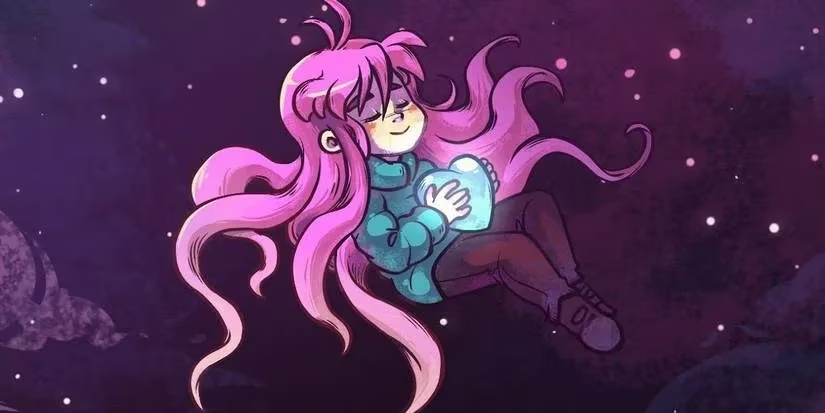
The pinnacle of the indie protagonist isn't just a well-written character; it's a character whose struggle is inextricably woven into the very fabric of the gameplay. Madeline from Celeste achieves this sublime synthesis. On the surface, she's a stubborn, slightly sarcastic young woman attempting to climb a treacherous mountain. But her real climb is internal, a battle against anxiety, self-doubt, and depression, physically manifested as her sinister doppelgänger, Badeline. The game's famously challenging platforming is not arbitrary difficulty; it is the language of Madeline's struggle. Each precise jump, each death and retry, mirrors her feelings of frustration, hopelessness, and eventual perseverance. As you, the player, struggle, learn, and ultimately conquer the mountain's brutal peaks, you are directly participating in Madeline's journey of self-acceptance and mental fortitude. She is not just a character you watch overcome her demons; through the interactive magic of the medium, you overcome them with her. Madeline stands as a powerful testament to how games can uniquely explore profound human experiences, making her not just a great indie protagonist, but one of gaming's most important and inspiring characters period.
The Legacy Lives On 🎮
From chaotic bees to anxious cats, from silent dreamers to talking amnesiacs, this vibrant roster proves that the heart of gaming's narrative innovation beats strongest in the indie scene. These characters reject archetypes in favor of authenticity, trading epic destinies for personal battles, and in doing so, they leave a far more lasting impression. They remind us that the most powerful stories aren't about saving the world, but about saving—or simply understanding—yourself. As we look to the future of gaming in 2026 and beyond, the legacy of these unforgettable icons ensures that the bar for character writing, in all its flawed and fabulous glory, remains thrillingly high.