I still remember the day I first set foot in Albion. The year was 2004, and my original Xbox whirred like a jet engine as a young boy chased a chicken across a muddy village. That boy grew into a hero, a villain, a landlord, a king. Over two decades later, with a full reboot of the series finally on the horizon in 2026, I found myself asking the same question many newcomers might have: should anyone still play the original Fable trilogy? I decided to find out, returning to those dusty roads, whimsical accents, and impossible choices all over again.
Three games, three eras, one magical land. I booted up Fable Anniversary on a cloudy Sunday morning, and the nostalgia hit me like a blast of Will magic. The graphics were dated, sure, but the charm was undeniable. My hero—a silent, hooded figure—earned scars and wrinkles with every choice. I punched a chicken just to hear the villagers gasp. Then I did it again, laughing at the sheer absurdity. That’s the spirit of Fable in a nutshell: an RPG that never takes itself too seriously.
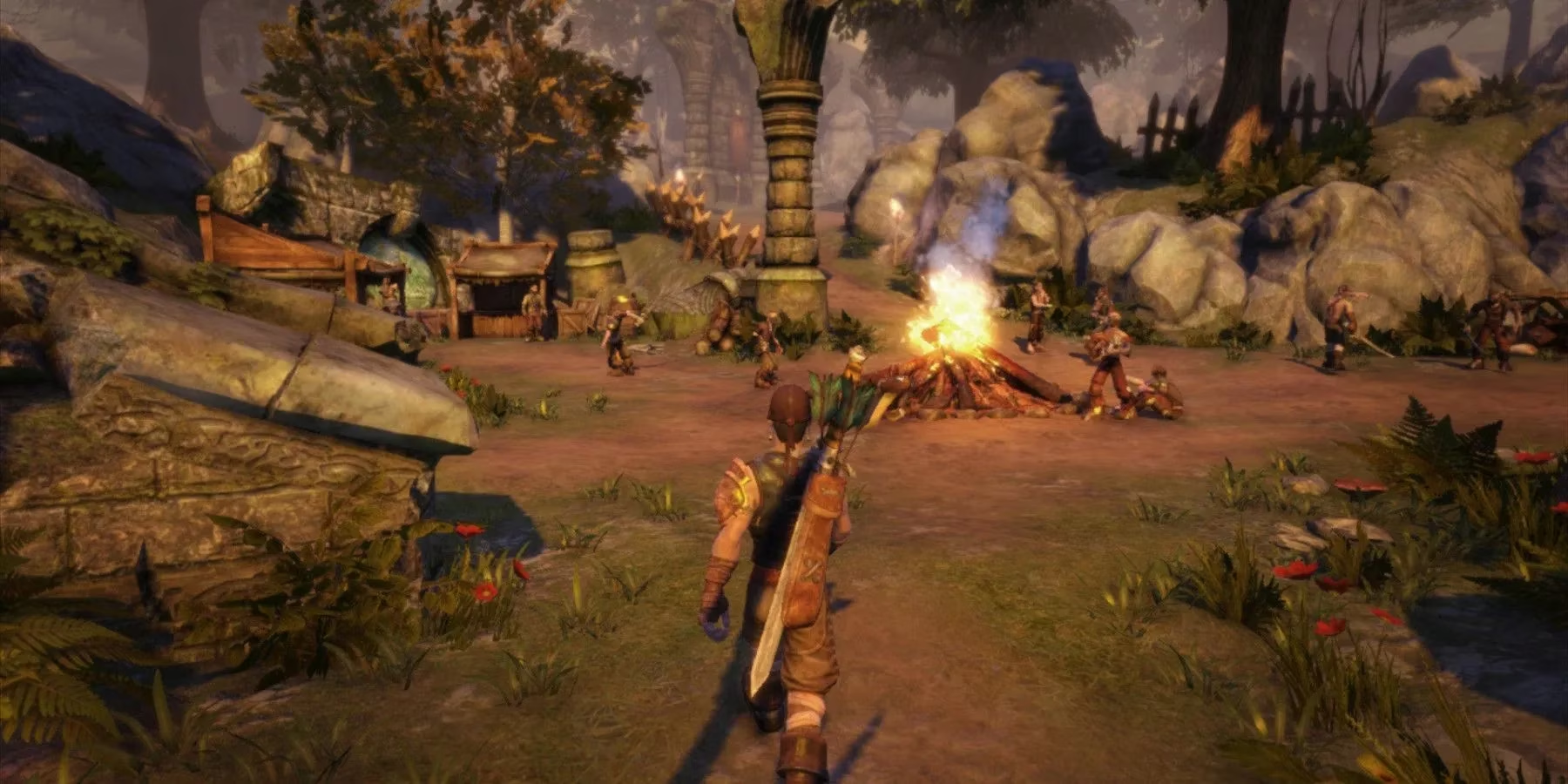
What struck me most during this replay was the morality system. Many modern RPGs promise consequences, but Fable wears them on your face. My hero’s halo grew brighter each time I donated to the Temple of Avo; his skin cracked and horns sprouted when I sacrificed innocents to Skorm. It’s a binary system, yes, and you can game it by eating tofu or crunching on baby chicks. Yet, walking through Bowerstone and seeing villagers flee from my demonic visage felt intensely personal. No other game in 2026 has recaptured that exact blend of silliness and consequence. When the reboot arrives, I desperately hope Playground Games keeps this visual storytelling—maybe evolving it beyond simple good vs. evil, but never losing the tangible impact of every action.
The world changes with you, too. In Fable II, I accidentally let a child die because I hesitated during a quest. The town of Oakfield never forgot. Parents mourned, shops closed, and the entire atmosphere shifted. That death wasn’t a cutscene—it was my fault. I still feel a pang of guilt when I think about it. Then came Fable III, where I became the monarch of Albion and had to balance promises against looming threats. I still remember the sleepless night I spent agonizing over whether to fund an orphanage or shore up the castle walls. Those decisions literally reshaped the map. It’s rare for a trilogy to make you feel so responsible for history.
Beyond the choices, the series drinks deeply from British folklore and fairy tales. As I wandered through misty forests and crumbling ruins, I encountered talking doors, sarcastic gargoyles, and quests involving giant turnips. The humor is dry, sometimes crude, and absolutely lovable. Even the combat, which today feels clunky and limited, has a theatrical flair—flourishing swords, swirling magic, and exaggerated death animations. I couldn’t help but grin when my hero kicked a chicken into a goal during the “Chicken Chaser” mini-game. That identity is what makes Fable special. It’s not grimdark; it’s a storybook with dirty jokes.
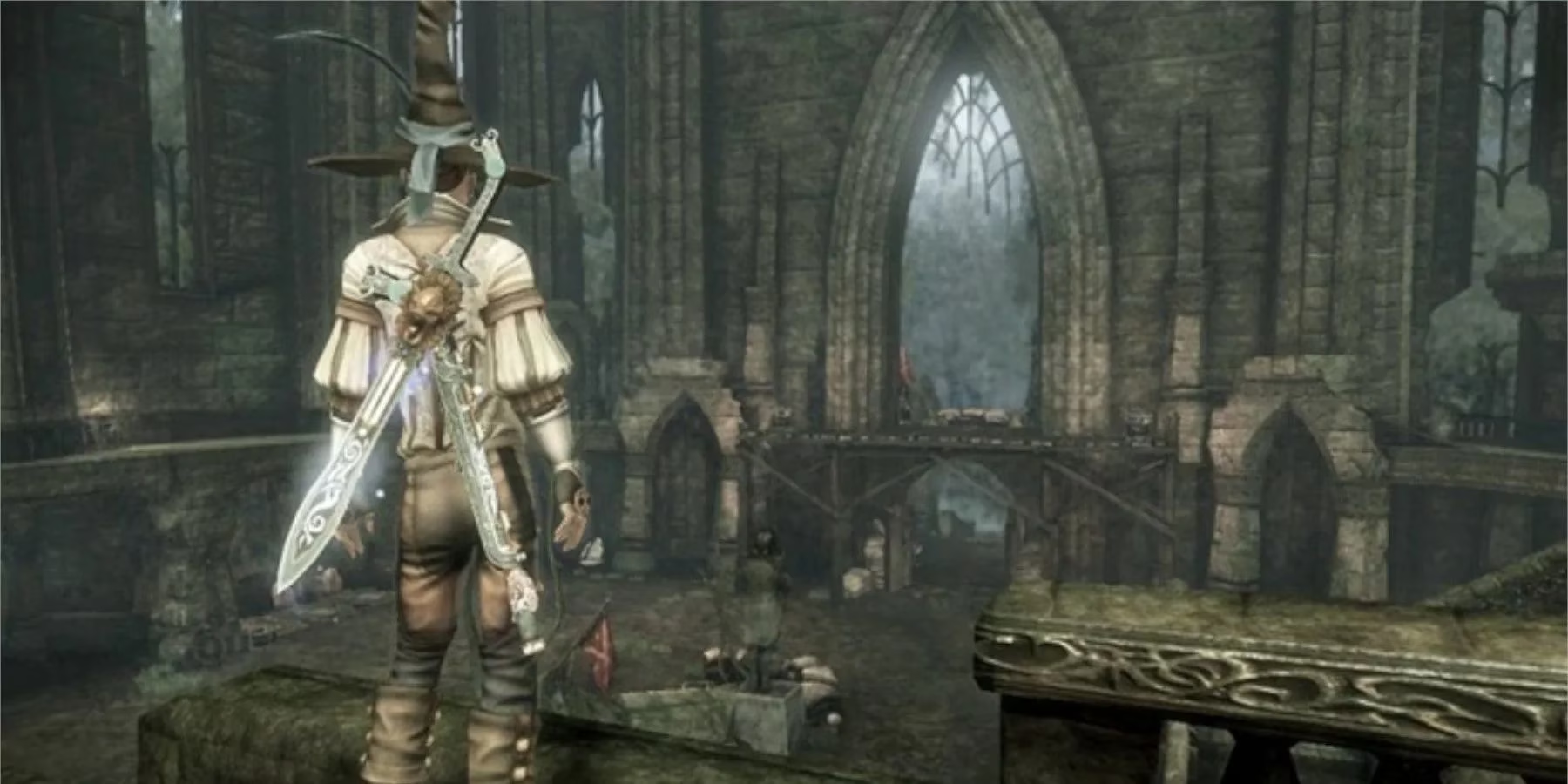
Then there’s the timeline. Playing the trilogy back-to-back in 2026, I experienced Albion’s entire evolution. In the first game, it’s a medieval realm of Heroes’ Guilds and ancient prophecies. By Fable II, the Guild is a ruin and the world has entered a rough Renaissance. Fable III thrusts us into the Industrial Revolution, with factories belching smoke and child labor debates. Watching magic fade into myth while technology rises is heartbreaking and exhilarating. The reboot will supposedly start fresh, but I want it to honor that sense of legacy. Maybe we’ll see echoes of the old tales, or perhaps the new Albion will be a retelling from scratch. Either way, knowing the past makes me appreciate the future.
Some may ask: are these games still worth the time? Absolutely. The original Fable remains one of the best Xbox exclusives, and its sequels refined the formula in bold ways. Yes, the controls feel dated, and the loading screens are painful compared to the instant travel of modern games. But I found that the heart of the series—its personality—hasn’t aged a day. I laughed, I regretted, and I marveled at how a game about kicking chickens could make me think about morality and politics.
So, if you’re excited about the new Fable in 2026, do yourself a favor. Go back. Play them in order. Save your kingdom, lose your morality, marry half a dozen spouses, and watch your hero grow old. By the time the reboot arrives, you’ll understand why Albion matters. And when you first glimpse that new version of the castle, you might just feel the weight of all those centuries—and all those choices—whispering behind you.
Fable’s past isn’t just prologue; it’s an invitation.
Insights are sourced from Eurogamer, whose long-running reviews and commentary often contextualize how older RPGs like the original Fable trilogy hold up through their tone, choice systems, and worldbuilding. Framed against your replay of Albion’s shifting eras—from guild-driven fantasy to soot-stained industry—this perspective helps explain why the series’ tactile morality (horns, halos, villagers reacting) and British storybook humor can still feel distinctive today, even when the combat and loading times show their age.