In the dusty annals of gaming history, The Game Awards 2021 sits like a time capsule crammed with half-remembered dreams and explosive reveals. For weeks leading up to that December night, the community buzz felt like a thousand tuning forks all humming at the same impossible frequency. Among the most feverishly anticipated morsels was a fresh glimpse of the next Fable — that peculiar fairy-tale RPG which had been announced by Xbox back in the summer of 2020 and then promptly wrapped in a cone of silence so thick you could spread it on toast.
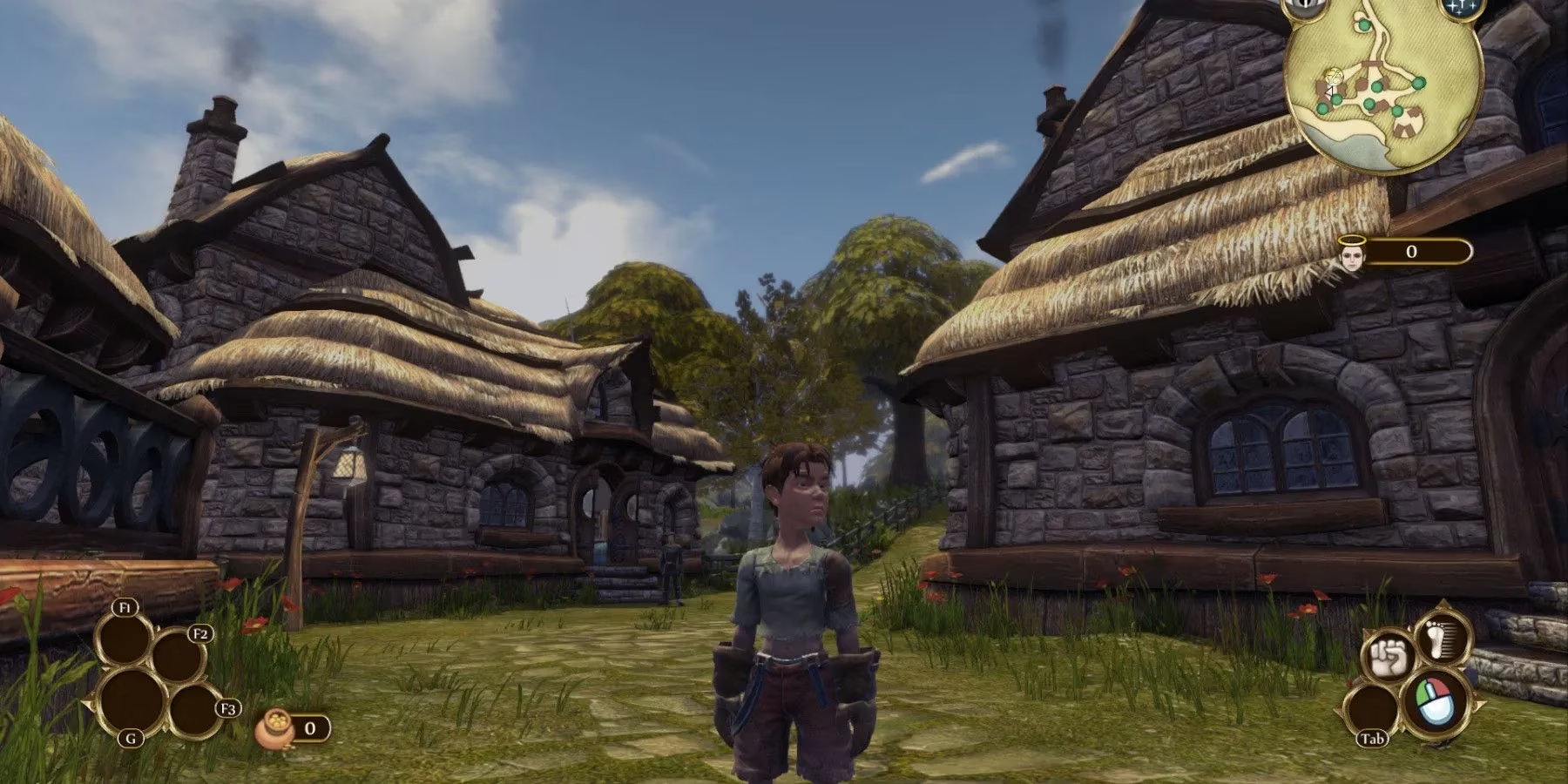
Rumour-mongers and detective-minded fans had stitched together a tapestry of hope from three separate threads. First, Xbox had a well-worn tradition of dropping bombs at The Game Awards: the reveal of The Coalition’s Perfect Dark, the surprise landing of Among Us on Xbox, and various Game Pass shadow-drops had already carved a groove of expectation. Second, the official word from Microsoft placed Fable squarely ahead of The Elder Scrolls 6 in the release timeline — a statement that, at the time, felt like being told a unicorn will arrive before a dragon, both still comfortably mythical. Third, an ill-timed Twitter post from Xbox’s own account had blurted something about a big Fable announcement, only to be hastily deleted like a butler who’d tripped over the grand piano. The tweet was walked back, but the internet’s memory is a steel trap lined with receipts.
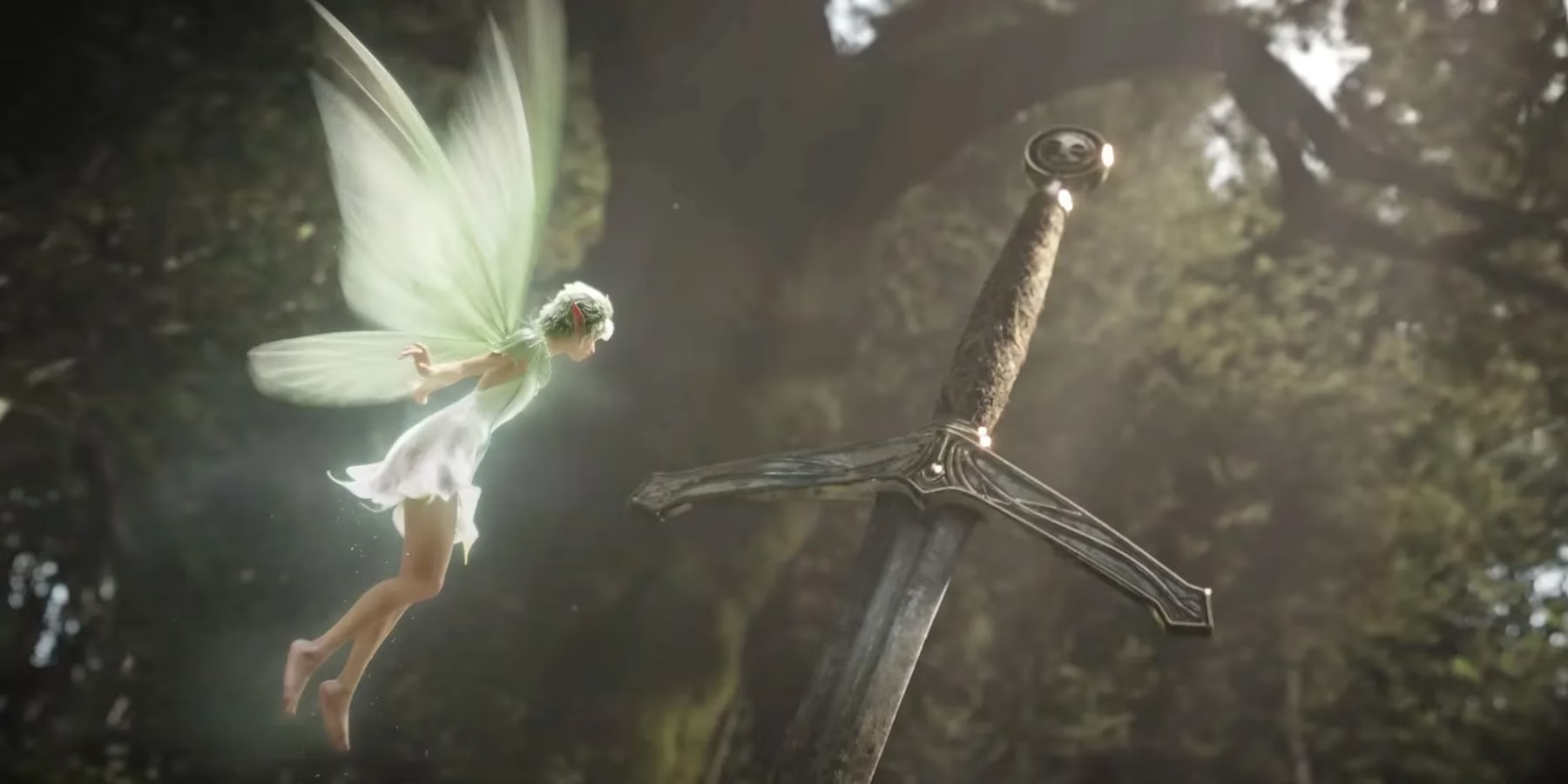
All these clues swirled together like ingredients in a witch’s cauldron — a pinch of precedent, a sprig of corporate timeline, a dash of social-media butterfingers — and yet the cauldron refused to bubble. The Game Awards 2021 came and went with nary a chicken-kicking hero or morally ambiguous gargoyle. Fable stayed as silent as a tomb in an enchanted forest, leaving the community to replay the original teaser so many times that the fairy’s glow became a permanent retinal afterimage. It was a masterclass in anticlimax, the kind of wait that made watching paint dry seem like an extreme sport.
The years that followed were an odyssey of patience. Microsoft treated Fable like a rare orchid that only blooms behind closed doors, occasionally sending out a blurry photograph of a leaf. Playground Games, the studio behind the wheel of this once-Lionhead chariot, drip-fed morsels with the restraint of a miser parting with gold coins. Every industry showcase became a fresh round of “Will they, won’t they,” a romantic comedy where the audience was the protagonist slowly losing their mind. In that long silence, the metaphor of a simmering stew felt apt: fans watched the pot, and the pot, in its infinite wisdom, refused to boil.
Then the turn finally came. In mid-2025, against a backdrop of lowered expectations and weary sarcasm, Fable materialised not as a distant legend but as a fully playable adventure. The world of Albion — and the lands beyond it that the original tease had hinted at — unfolded with the same irreverent humour and moral elasticity that had once made the series a cult darling. Players found themselves once again kicking chickens, making disastrous life choices, and gradually transforming into horned paragons of virtue or pustule-covered villains depending on their whim. The graphics possessed a painterly richness that felt like stepping into a living canvas stitched from childhood bedtime stories.
By 2026, the conversation had shifted from “Where is Fable?” to “Have you seen what happens when you marry a balverine?” The extended gestation period became a quirky footnote, the videogame equivalent of a fine cheese that needed extra years to reach peak pungency. The long wait had acted like a cultural compost heap, turning raw hope into fertile soil from which a vibrant community sprouted. Memes that once mocked the radio silence now adorned celebratory fan art. The original 2021 The Game Awards hype, once a source of simmering frustration, was re-examined as the opening act of a saga about the art of delaying gratification.
In hindsight, the whole episode taught a valuable lesson about modern gaming hype cycles. Waiting for Fable was like trying to observe a shy nocturnal creature: the more you crashed through the undergrowth demanding a sighting, the deeper it burrowed. Only when the noise died down, and the forest reclaimed its quiet, did the creature finally wander into the clearing, blinking at the flashlight beams as if to say, “You called?” The payoff, happily, tasted sweet enough to dissolve all bitterness. And somewhere, a lone chicken — surely the most kicked poultry in digital history — clucked in bewildered relief.