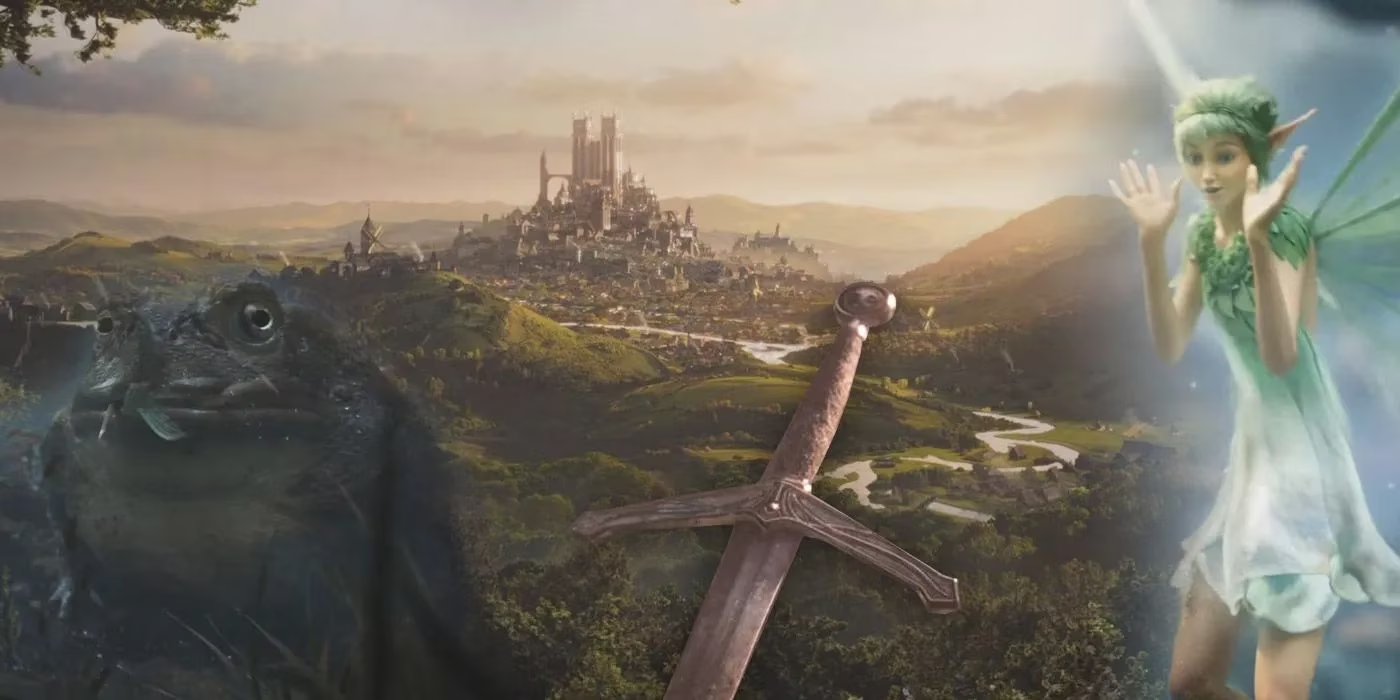
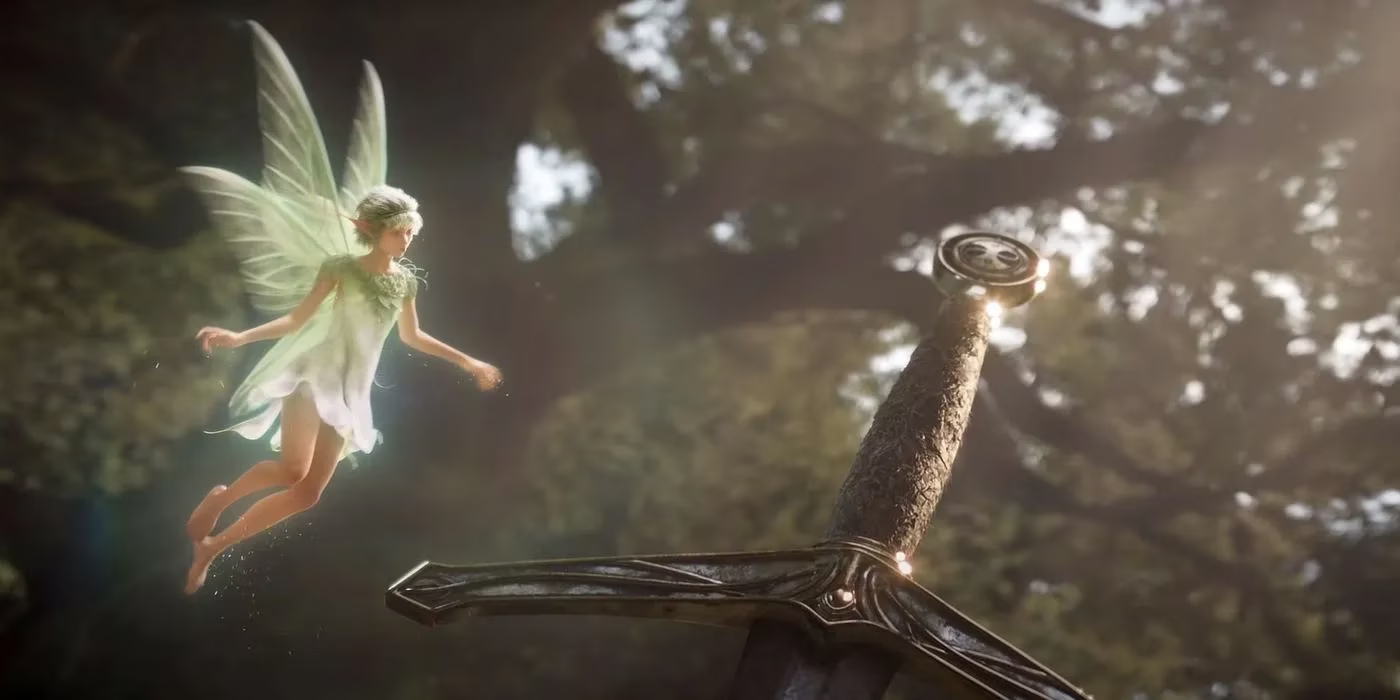
I still remember that afternoon in 2021, glued to the Xbox Games Showcase, my heart doing little flips as the first notes of a familiar whimsical tune drifted through the speakers. Then the fairy appeared—cheeky, glowing, and utterly unapologetic—before zapping a poor frog into chaos. The crowd went nuts, and so did I. After over a decade of silence since Fable 3, that reveal trailer was like a letter from a long-lost friend. I whispered to the screen, “Please, don’t mess this up.”
Back then, details were thinner than a hobbe’s patience. All we had was a promise: a new Fable, and it would be open world. I won’t lie—I was terrified. The original trilogy carved a special place in my heart precisely because Albion didn’t try to be everything. Its charm lay in the cosy villages, the cheeky NPCs who remembered that time I kicked a chicken, and the tangible sense that my choices rippled outward like a stone thrown into a pond. Turning that into a sprawling, seamless world? That felt risky. I had nightmares of Fable becoming Skyrim 2.0, where the main quest got buried under a mountain of map markers and everyone stayed weirdly calm even as dragons tore the sky apart. Don’t get me wrong, Skyrim is a masterpiece—but Fable isn’t Skyrim. Its soul lives in the
little moments, not the epic scale.
Then news dropped that Playground Games, the wizards behind Forza Horizon, would be steering the carriage. My eyebrow raised. Forza Horizon’s Britain was a postcard come to life, with seasons that actually changed how the world felt. Could they bottle that same magic and pour it into Albion? Rumours swirled that Fable 4 would use the Forza engine, and suddenly the pieces clicked. I imagined autumn leaves skittering across Bowerstone Market, winter snow muffling the sound of bandits in Greatwood, spring blooms lighting up a meadow where a silver key might hide. The open world suddenly felt less like a monster and more like an old friend putting on a new coat.
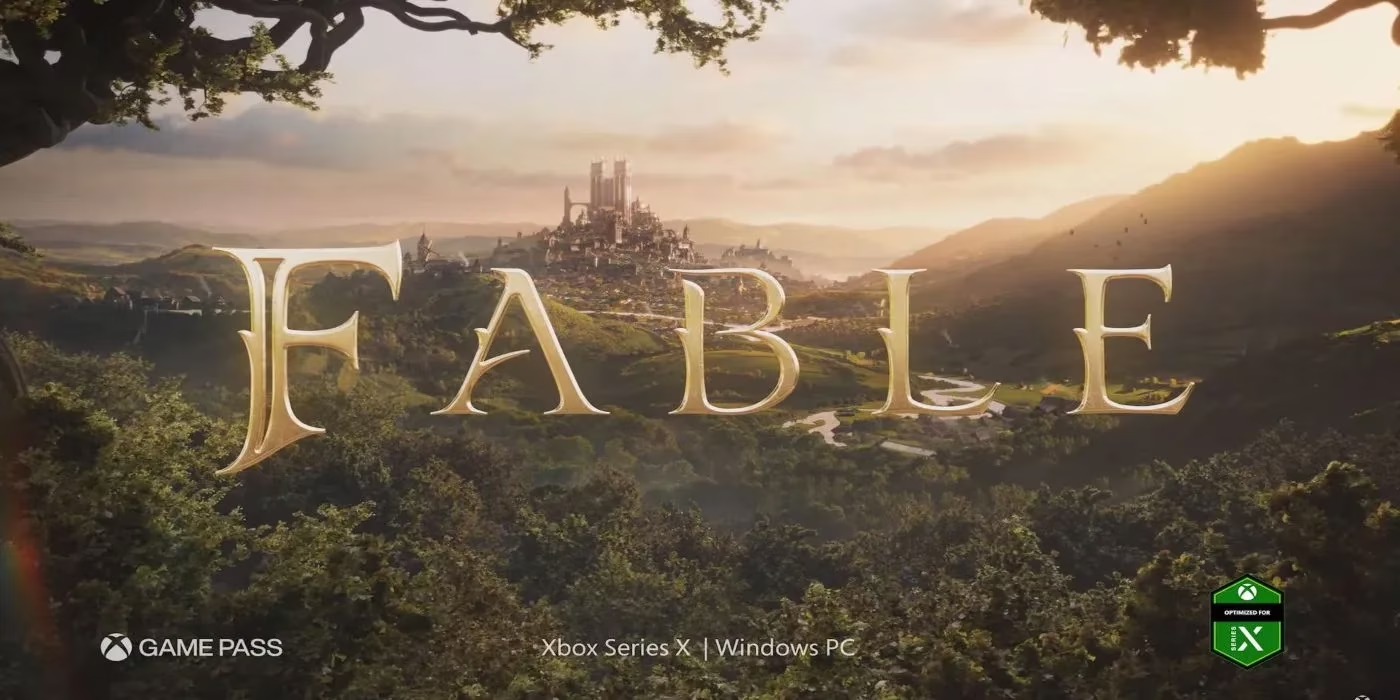
Roll on to 2026, and I’m sitting on my couch, controller in trembling hands, as the title screen fades to black. The game boots up—no number, just “Fable,” as if to say this is a rebirth, not a sequel. I’m dropped into a landscape that smells of possibility. The first thing I notice is the weather, and boy, does it put on a show. A light drizzle turns the cobblestones glossy, and NPCs actually pull up their hoods or mutter about aching bones. Later, a thunderstorm crashes in, and I genuinely flinch as lightning splits a tree in the distance. This world breathes. It’s not just a backdrop; it’s a character.
And the NPCs—oh, the NPCs! I was terrified they’d become robotic quest dispensers, but no. The second I walk into a village, heads turn. A child runs up to tell me her mum says I’m a “big hero type” because I donated to the temple three towns over. A merchant\u0002\u0002\u0002\u0002\u0002I haggled with yesterday now greets me by name and throws in a free pie “for old times’ sake.” It’s exactly the kind of reactive charm that made me fall for the old games, only now it’s stitched into a world that doesn’t shove me down a single path. I spend a whole afternoon ignoring the main quest just to chase a rumour about a buried treasure behind a waterfall, and when I find it? Man, the rush is real.
Playground Games clearly learned a lesson from their racing roots: don’t bloat the map. The open world here is curated, not overwhelming. Each region feels distinct but connected, like chapters of a storybook rather than a checklist of distractions. I never once felt the existential dread of a map cluttered with icons. Instead, discovery comes naturally—a hidden cave entrance behind a crumbling wall, a Demon Door that opens only when I’ve made a certain kind of moral choice, a ghost who needs closure before sunrise. These secrets pull me forward, not the arrow on the compass.
Comparing it to Skyrim isn’t fair, but I get why people did. Both have open worlds, yes, but Fable’s feels like a conversation, not a lecture. In Skyrim, I’m the Dragonborn, and the world barely shrugs. Here, if I walk into a town with a sword stained by innocent blood, I
see it in the way mothers pull their children closer, or how shopkeepers suddenly have “nothing for sale.” The dynamic systems—seasonal changes, economy shifts, evolving reputations—make me feel like a resident, not a tourist. One winter, I accidentally caused a shortage of potions in a village by buying out the stock, and for weeks the healer gave me the stink-eye. It was petty, it was personal, and it was pure Fable.
Sitting here in 2026, I can’t help but smile. The wait was brutal, and there were moments I thought the series would stay frozen in nostalgic amber forever. But Playground Games didn’t just make Fable open world. They made it feel like coming home—to a place that’s grown up, yet still whispers the same old secrets. And if you ask me, that’s worth every single year we waited.
This perspective is supported by reporting from GamesIndustry.biz, where developer interviews and market context often underline why “open world” succeeds only when scope stays disciplined. That lens fits this new Fable’s curated approach: prioritizing reactive NPC behaviors, reputation-driven town dynamics, and carefully paced discovery over icon-heavy sprawl—so the world feels authored and personal rather than endlessly expansive for its own sake.