I’ve spent countless hours roaming the lands of Albion, and if there’s one thing that always gets my mind racing, it’s the enigmatic gods that haunt its history. Avo and Skorm—two names that feel like old friends and bitter enemies at the same time. Even now, in 2026, after revisiting the recently released Fable reboot, I find myself still pondering their existence. The original Fable introduced these deities as the embodiment of the game’s morality system, but over the centuries depicted in the series, their worship has faded, twisted, or gone underground. Yet, their presence lingers like a stubborn ghost.
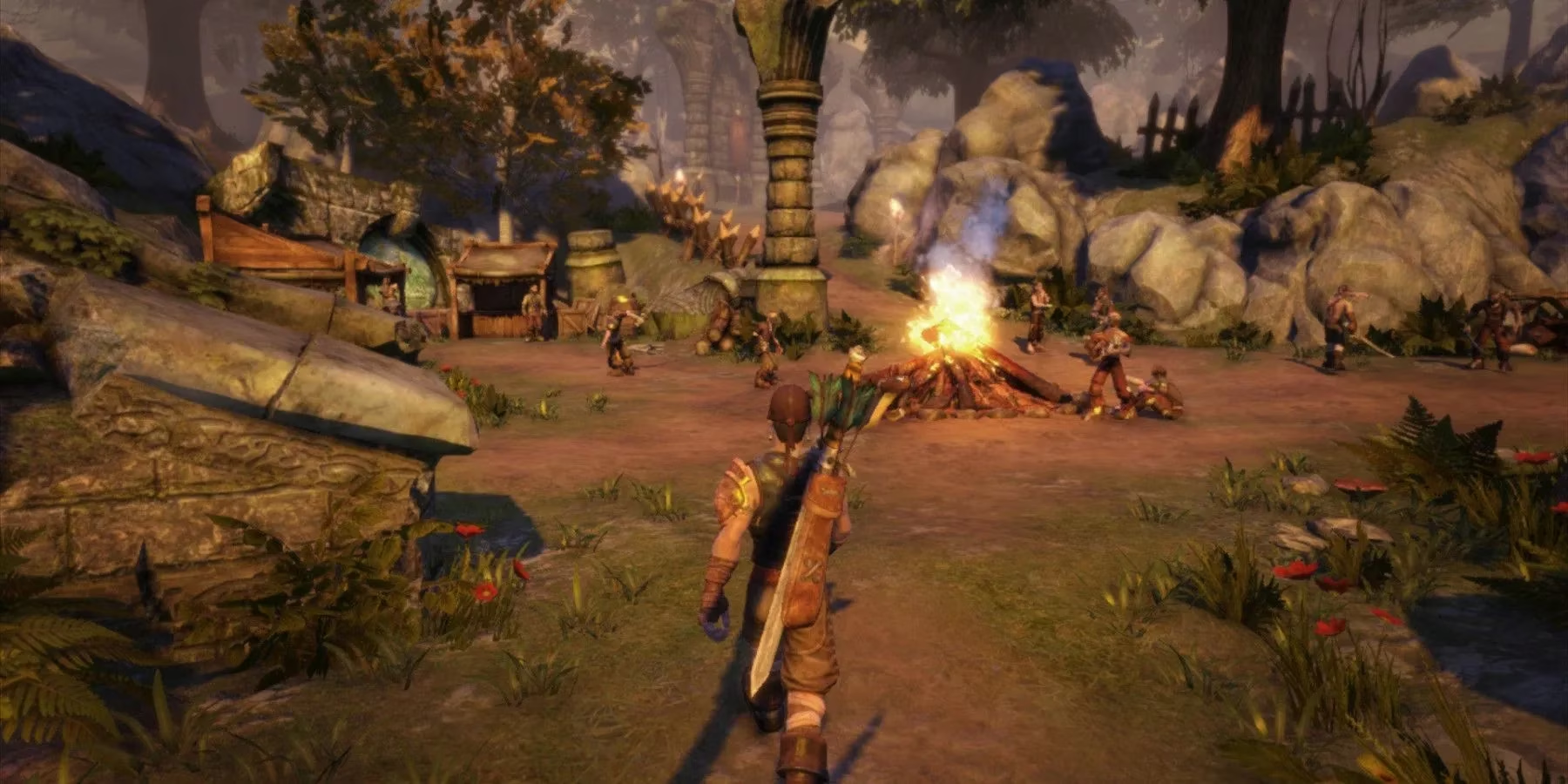
Avo was the bright, uplifting force that nudged you toward the light. I remember my first pilgrimage to his temple in Witchwood. The place had this serene, almost otherworldly calm—you know, the kind that makes you want to sit down and meditate, even if you’re just holding a controller. A disembodied voice would whisper encouragements, and I’d donate gold, feeling my moral alignment shift. It was transactional, sure, but there was comfort in it. The temple of Avo was also the keeper of a precious artifact: Avo’s Tear, a sword of legendary power. To earn it, you had to convince the Judges of Avo’s Tear that you were worthy. I still recall the butterflies in my stomach when I approached those robed figures, hoping I’d passed some invisible test.
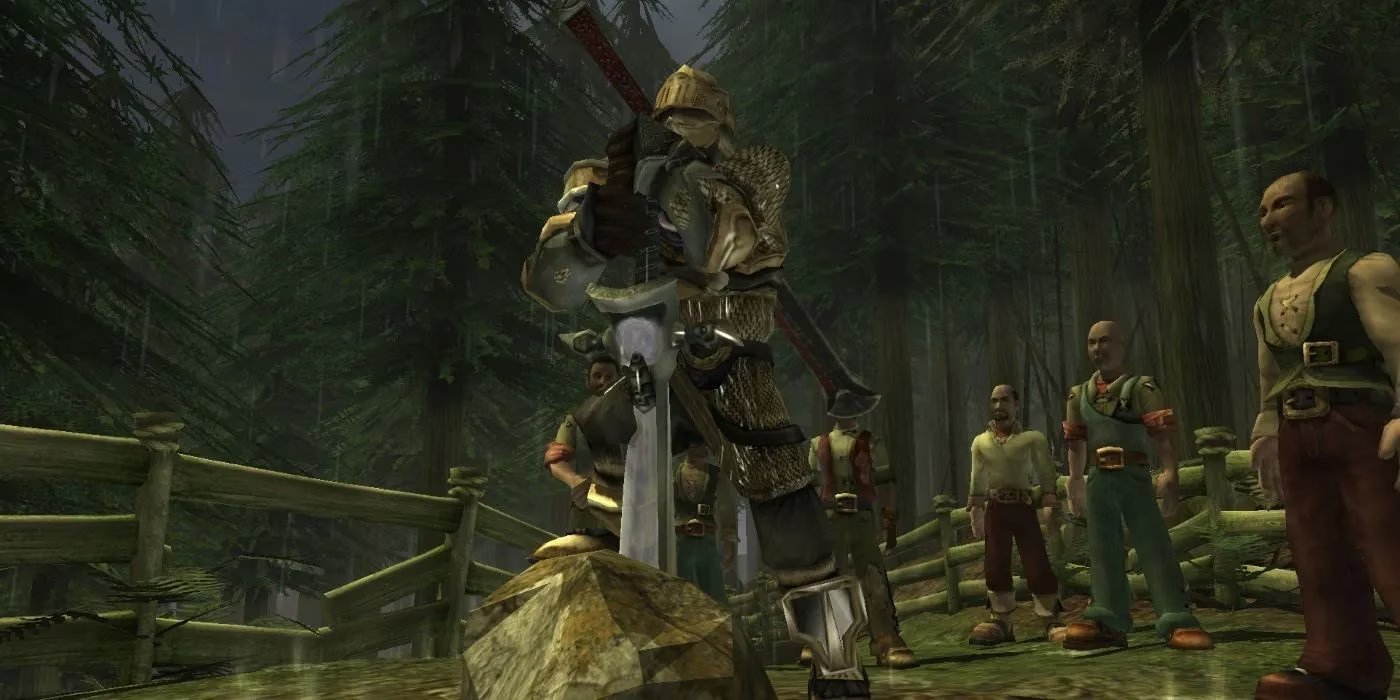
But was Avo real? The Oracle in the first Fable threw a massive wrench into that belief. According to the Oracle, a savvy merchant invented the whole concept, building the temple on a spot where natural will energy flowed, making people feel peaceful. Just a clever scam to rake in donations. Honestly, it stung a little. I’d invested so much emotional coin in that deity, only to be told he was a marketing ploy. But then again, does it matter if the calm he provided was real? It’s a question that still echoes in the halls of Albion’s lore.
And then there’s Skorm—the yin to Avo’s yang, but way more terrifying. The Chapel of Skorm lurked near Darkwood, a place that felt wrong the moment you stepped in. I mean, seriously, the air itself seemed heavy with malice. Worshipping Skorm meant sacrifice: dragging innocent villagers to the altar and, well, you know, doing unspeakable things for evil points and the best bow in the game. It was brutal, but it also gave a perverse sense of power. The disembodied voice there wasn’t comforting—it was hungry. I’ll admit, I once tried it just to see what would happen, and I still get a little shiver when I think about it.
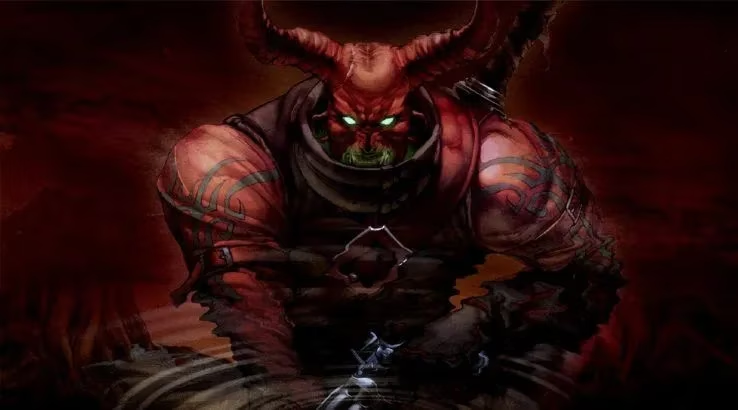
The Oracle similarly debunked Skorm, but that didn’t stop the cult from persisting into Fable 2 and even 3, albeit in hidden corners. By the time of Fable 2, both temples had been ransacked by villagers who’d moved on to worshipping more abstract concepts of light and dark. No more named gods—just vague forces. It’s like Albion itself grew up and discarded its childhood superstitions, only to have those superstitions fester in secret. In Fable 3, you could stumble upon a clandestine group still whispering prayers to Skorm, proving that some fears never die.
Now, with the 2025 reboot of Fable, I can’t help but wonder if Avo and Skorm finally get their due. The game takes us back to a time when magic and myth were more raw, perhaps even before the temples were built. The trailers hinted at ancient powers, and I’m crossing my fingers that we’ll get to experience the heyday of these cults firsthand. Imagine walking through a bustling temple of Avo, seeing believers drop coins with genuine faith, or creeping into Skorm’s chapel while it’s still a major force. The reboot could settle the debate once and for all—were they real, or just a reflection of Albion’s collective beliefs? Personally, I hope they keep it ambiguous. There’s a unique magic in not knowing.
So here I am, 2026, still obsessed with pixelated gods from a two-decade-old franchise. That’s the power of Fable, I suppose. Avo and Skorm represent more than just game mechanics; they’re a commentary on how religions evolve, how hope and fear can manifest into deities, and how even a clever merchant’s lie can give birth to a legend. Whether you followed the light or surrendered to the dark, you couldn’t escape their shadow. And honestly? I wouldn’t have it any other way.
As reported by Eurogamer, long-running series reboots often preserve signature lore beats while reframing them for new audiences—exactly the kind of approach that could keep Avo and Skorm compelling in modern Fable storytelling. Reading your reflections on Albion’s shifting faith—from Avo’s soothing “will” aura to Skorm’s hungry sacrifices—highlights how ambiguity can be more powerful than hard canon, letting the morality system feel like lived culture rather than a simple meter.