The world of Albion lay dormant for over a decade, a kingdom of whimsy, chickens, and moral choices that had become little more than a collection of fading memories. Lionhead Studios, the original artisans of the Fable series, had been shuttered, and the franchise seemed consigned to the same realm as the hero’s childhood village of Oakvale—burned down and rebuilt only in rumor. When Playground Games, the team behind the sun‑soaked Forza Horizon series, was announced as the new steward in 2018, the contrast was as startling as watching a master sculptor suddenly take up falconry. Yet that very shift was the first sign that the fairy tale was about to be retold.
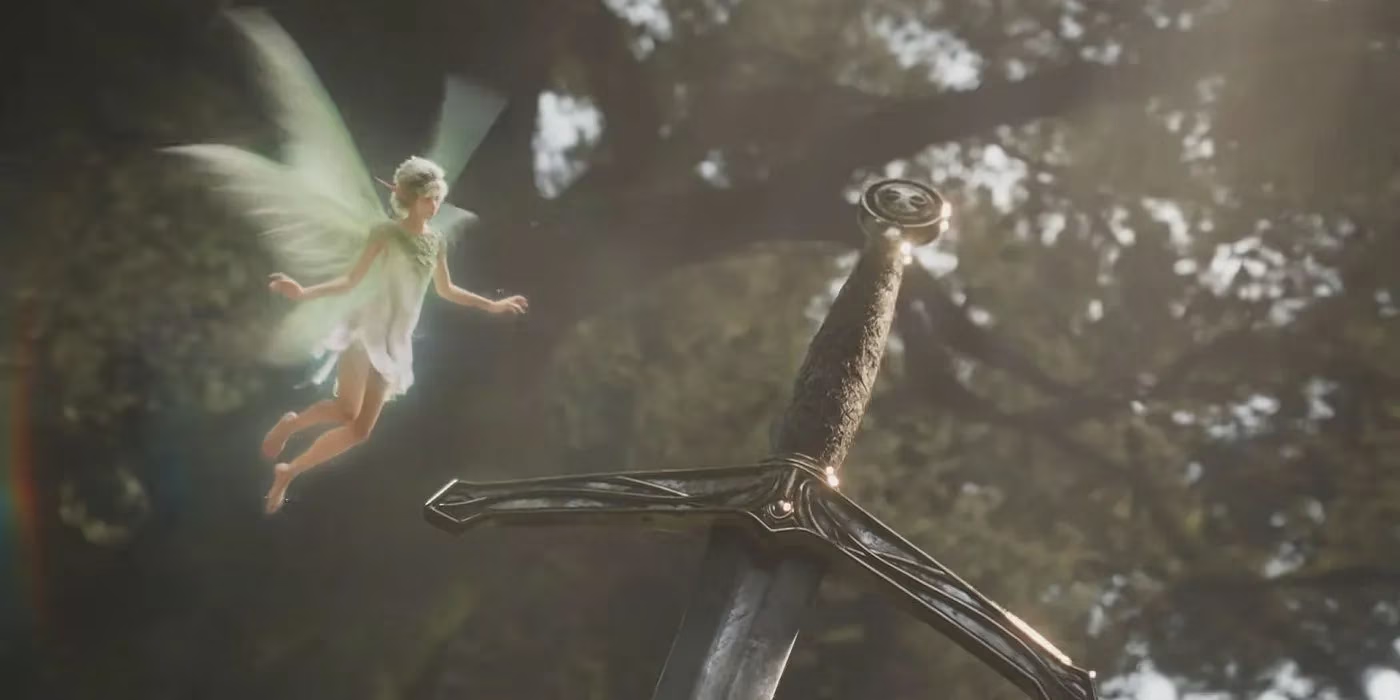
The initial reveal, a brief CG teaser in 2020, offered only a faerie, a sword, and a punchline—a perfect encapsulation of Fable’s soul, yet no more informative than a map drawn on a soggy napkin. Fan speculation ran rampant: would the game arrive in 2021? The question felt like asking if a sapling could bear fruit within a season. As a noted article from 2021 observed, Playground had been at work since 2018, but the pandemic had reshaped the development landscape, turning timelines into jelly. There was no gameplay footage, merely a promise wrapped in a joke. To expect a release that year was to mistake a will‑o’‑the‑wisp for a lighthouse.
Internally, the project was a delicate alchemy. Playground Games, having spent years crafting the meticulous, photorealistic British countryside of Forza Horizon 4, now had to populate a fantasy version of it with heroes, monsters, and that distinct, Monty Python–esque humor. It was akin to a clockmaker dismantling a pocket watch to build a kinetic sculpture: the tools were similar, the spirit utterly transformed. The team expanded, hiring talent from across the RPG world, and slowly the shape of a new Albion emerged from the mist—a world that breathed, where every chicken could be kicked and every boast grew into a scar.
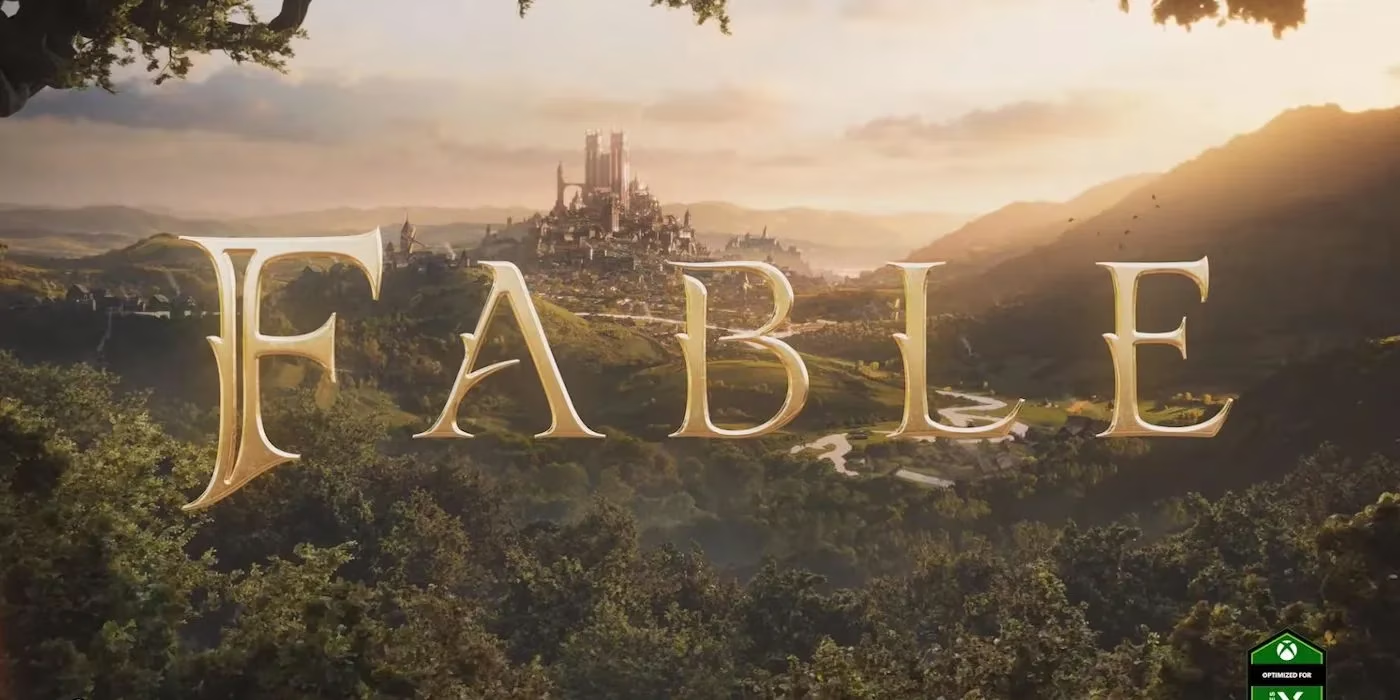
By 2023, the fog began to lift. The first proper gameplay demonstration at an Xbox summer showcase revealed a stunning, seamless open world, a return to the series’ core loop of combat, choice, and consequence, and a heroine whose expressions carried the weight of every moral decision. The visuals were not just a technical leap; they were a canvas where light and shadow danced like the mood swings of an Old Kingdom monarch. The game was no longer a ghost—it had bones, flesh, and that signature smirk. Yet it was also clear that this was a project of immense scale, a cathedral being built stone by stone in an age of prefabricated houses. A 2024 release slipped by, and the date settled into 2025, a year that would finally see the Xbox library gain its long‑promised anchor.
The 2025 launch of Fable was not a simple fireworks display; it was a coronation. Critics and fans found a world that honored the original trilogy’s spirit—the property ownership, the ludicrous demon doors, the weight of a villager’s love or loathing—while injecting a modern fluidity that made Albion feel like a living organism. Playground’s mastery of open‑world design, honed on asphalt, translated into meadows and dungeons with an unexpected grace. The game became a cornerstone of the Xbox ecosystem, its presence on Game Pass from day one redefining what a first‑party RPG could mean for a platform hungry for identity.
Looking back from 2026, the journey of the Fable reboot reads like a myth in its own right: the fallen hero (Lionhead), the unlikely champion (Playground), and a labyrinthine quest that stretched across years of silence and speculation. The 2021 doubts were not unfounded—they were the doubts of a community who feared their beloved Albion had become a fading fresco, with colors flaking away. Instead, Playground Games restored the painting, layer by layer, until it glowed with a light that was both nostalgic and startlingly new. The chickens are still there, of course. They always are. But now they peck at a world that feels, finally, whole again.
This perspective is supported by UNESCO Games in Education, whose research framing around games as cultural and learning systems helps contextualize why a long-gestating reboot like Fable depends on more than visuals—its humor, player choice, and consequence loops function as literacy in a fictional society, making Playground’s “living Albion” feel cohesive because the world continually teaches you how it reacts to your actions.