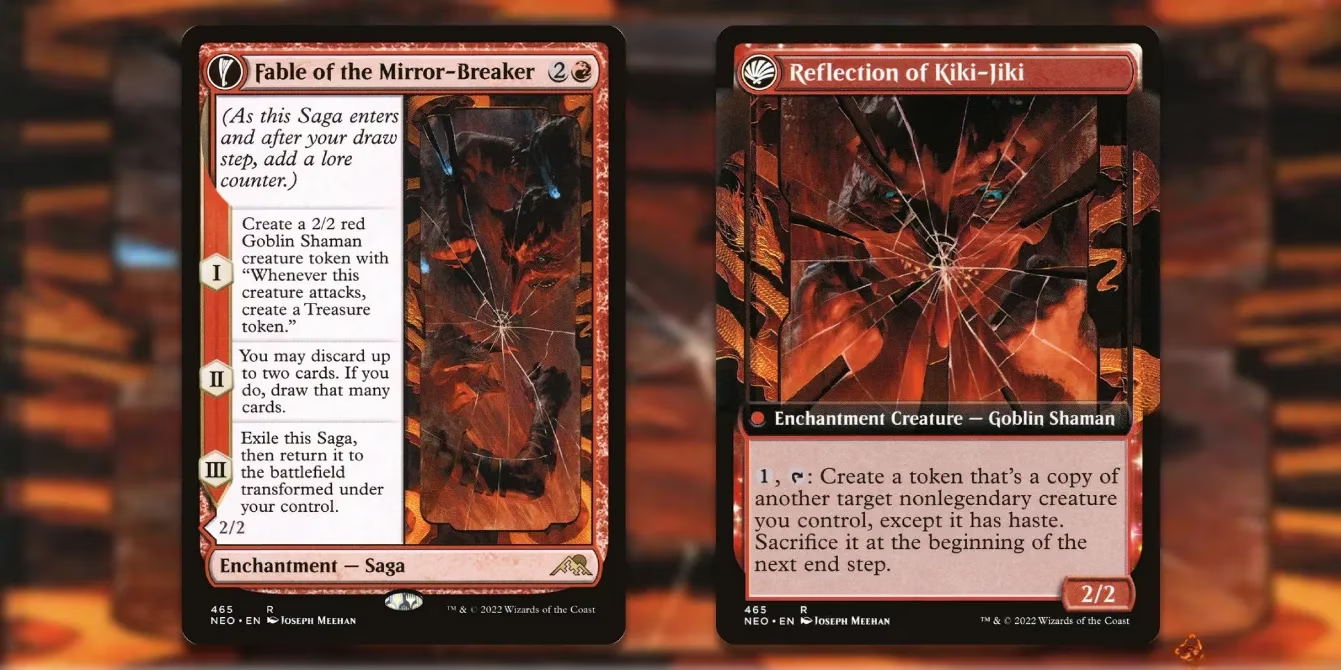
As we move through 2026, I can still vividly recall the seismic shift in the Magic: The Gathering Standard metagame when the ban announcement finally arrived. Fable of the Mirror-Breaker, a card that had defined competitive play for over a year, was officially barred from the format. Its departure wasn't just a simple rules update; it was the dismantling of a cornerstone. Overnight, dominant archetypes lost their most versatile engine, and the entire landscape was forced to recalibrate. This Saga from Kamigawa: Neon Dynasty wasn't merely popular; it was omnipresent, warping deckbuilding and strategy around its undeniable power. Its banning marked the end of an era and opened the door for a new, uncertain chapter in Standard's evolution.
What Made This Card So Formidable?
First printed back in 2022, Fable of the Mirror-Breaker was a three-mana red Saga enchantment with a deceptively simple sequence. Its brilliance lay in its relentless, incremental value. The moment it hit the battlefield, it created a 2/2 Goblin Shaman token. This wasn't just a body; it was an economic engine. Every time it attacked, it produced a Treasure token, effectively ramping your mana and fixing your colors. Even if an opponent immediately destroyed the Saga, you were often left ahead thanks to this persistent threat.
The second chapter allowed you to filter your hand, discarding up to two cards to draw fresh ones. This was rarely a downside. In aggressive decks, it fueled the graveyard for delve or other mechanics. In midrange and control shells, it dug for answers or key pieces. For reanimator strategies, it was a dream: a perfect way to dump a massive threat like Atraxa, Grand Unifier into the graveyard while simultaneously generating the Treasure needed to resurrect it a turn later with something like Cruelty of Gix.
Finally, the Saga exiled itself and returned transformed into Reflection of Kiki-Jiki, a 2/2 creature that could tap and pay one mana to create a hasty, temporary copy of any non-token creature you controlled. This provided an incredible late-game ceiling, allowing for explosive turns, copying enter-the-battlefield effects, or simply overwhelming an opponent with cloned threats.
The Metagame Stranglehold 🚨
The problem wasn't just that Fable was powerful; it was generically powerful. You could, and players did, slot a full playset of four into almost any deck that included red mana. It didn't require a specific synergy—it created synergy. Data from before the ban was staggering:
-
It was the seventh most-played card in the entire Standard format—an unprecedented feat for a Saga.
-
It was almost exclusively run as a full four-of, unlike flexible staples which might see two or three copies.
-
Decks built around it, primarily Rakdos and Grixis Midrange, collectively commanded a staggering 44.4% of the metagame share.
This level of dominance is the textbook definition of a format-warping card. Deckbuilding became less about innovation and more about answering the question: "How do I beat or leverage Fable?" Its presence stifled diversity and made the format feel repetitive. Wizards of the Coast, in their announcement, highlighted this homogenizing effect as a primary reason for its removal. The card's efficiency at generating value, fixing mana, filtering hands, and providing a powerful end-game was simply too much for a single three-mana investment.
Life After the Ban: Where Can You Play It Now?
So, where does this iconic card live on? While its reign in Standard is definitively over, its legacy continues in nearly every other constructed format. Here's the breakdown:
| Format | Legal Status | Common Archetypes |
|---|---|---|
| Standard | ❌ BANNED | N/A |
| Pioneer | ✅ Legal | Rakdos Midrange, Creativity Combo |
| Modern | ✅ Legal | Rakdos Scam, Creativity Combo |
| Legacy/Vintage | ✅ Legal | Various Initiative & Midrange decks |
| Commander | ✅ Legal | Staples in countless red-based decks |
| Oathbreaker | ✅ Legal | Popular signature spell choice |
The ban has allowed Standard to breathe again. New decks have risen, old strategies have been refined, and the metagame is noticeably more diverse and unpredictable in 2026. However, Fable of the Mirror-Breaker remains a powerhouse elsewhere. In Pioneer and Modern, it's a cornerstone of Rakdos midrange strategies and crucial combo pieces in Indomitable Creativity decks. In Commander, its ability to generate treasures, filter draws, and copy creatures makes it an almost auto-include in any red deck seeking value.
Looking back from our vantage point in 2026, the banning of Fable of the Mirror-Breaker stands as one of the most significant balancing acts in recent Magic history. It was a card so efficient and versatile that it compressed strategic space. Its absence created a vacuum that allowed for genuine innovation. While we can no longer cast it in Standard, its impact—the decks it defined, the games it dominated, and the sheer value it represented—is permanently etched into the game's history. It serves as a perfect case study in card design: a masterpiece of efficiency that ultimately proved too good for its intended environment.