Back in 2015, Microsoft stood on a Windows 10 stage and made a promise that sounded bigger than the game attached to it. Fable Legends, Lionhead Studios’ asymmetrical multiplayer experiment, would let Windows 10 players and Xbox One players share the same game space. On paper, it was a small bullet point for a title that had not exactly set the world on fire. In hindsight, it was a test balloon for something much larger: whether Microsoft could treat PC and console players as one audience instead of two separate tribes.
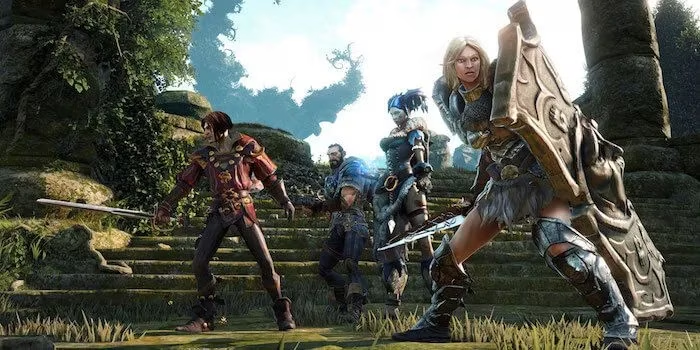
For more than a year before that reveal, Microsoft had been telling PC fans that it cared. Players had heard the speech before, and plenty of them rolled their eyes. So why should anyone have believed that Fable Legends would be different? The answer was not in the game’s marketing. It was in the plumbing. Cross-platform play between Windows 10 and Xbox One meant account systems, matchmaking, servers, and patch cadence all had to line up. That is boring work, but it is the kind of boring work that makes future PC support possible.
At the time, the move was easy to dismiss. Fable Legends was not Halo, and its asymmetric heroes-versus-villain concept had not generated much excitement. The original coverage was candid about that: the promise of cross-play was more interesting than the game itself. If Fable Legends worked as a technical test case, Microsoft might consider bigger things. A PC version of Halo 5: Guardians with cross-play? A PC port of Halo: The Master Chief Collection? Those ideas sounded like wishful thinking in 2015, but they pointed at a future Microsoft would eventually have to build.
Then the story took a sharp turn. Fable Legends never launched. Microsoft canceled the game in 2016 and closed Lionhead Studios. The test case was gone before it could prove anything at scale. For a while, the whole episode looked like a false start: a company promising PC love, using a doomed game as a symbol, and then retreating to console exclusives. Players who had been burned before had every reason to say, “Same old Microsoft.”
But here is where the 2026 view gets interesting. The specific game failed, yet the idea behind it did not. Cross-play moved from a novelty to a default. Microsoft’s Play Anywhere program, Xbox Game Pass on PC, and steady PC releases for major Xbox franchises turned the old promise into something closer to policy. Halo did come to PC. So did Forza, Gears, Sea of Thieves, and many others. Cross-play became common in multiplayer games across platforms, not just inside Microsoft’s walled garden. The Fable Legends experiment was not the cause of all that, but it was an early public signal that Microsoft was at least thinking about the plumbing.
| 2015 Promise | 2026 Reality |
|---|---|
| Fable Legends would connect Windows 10 and Xbox One players | Cross-play is standard in many multiplayer games |
| PC support was mostly talk | Xbox games regularly arrive on PC |
| A successful test could open doors for Halo and more | Halo, Forza, Gears, and others have PC releases |
| Fable Legends was scheduled for 2015 | The game was canceled in 2016; the Fable name later returned through a reboot |
So what should players take from this? The obvious lesson is that a single game is a fragile messenger. Fable Legends was not a great ambassador for cross-play because few people were excited about it in the first place. But the less obvious lesson is that platform strategy is often built through unglamorous tests. A company can learn from a canceled project even if the project itself never ships. The servers, identity systems, and matchmaking lessons do not necessarily disappear just because the game does.
There is also a cautionary tale here. Microsoft spent years promising PC players that they mattered, and the Fable Legends announcement was met with skepticism because the company had not yet earned trust. One cross-play feature was not going to fix that. Trust came later, slowly, through actual releases and services. In 2026, it is easy to forget how strange it once felt to see an Xbox exclusive on a Windows desktop. That strangeness is gone now, and cross-play is so ordinary that players barely mention it unless something breaks.
Would Fable Legends have changed anything if it had launched? Maybe not. A niche asymmetrical game with modest interest was never going to be the flagship that proved cross-play to the masses. But it could have been a useful internal stepping stone. Instead, it became a symbol of a promise that arrived late and in a different form than anyone expected. The game is gone, but the question it raised is still worth asking: when a platform holder says it supports PC, what proof should players demand? In 2026, the answer is simple. Show the games, show the cross-play, and show that the support lasts longer than a single press event.