Albion’s prodigal return has become something of a standing joke in the gaming world—if a chicken kicked in Bowerstone and no one was around to hear it, did it ever happen? By 2026, Playground Games’ reboot of the beloved Fable franchise still feels less like an upcoming title and more like a shared fever dream among diehard fans. Despite an announcement that now belongs in the Pleistocene epoch of gaming news, the developers have kept their lips tighter than a miser’s coin purse. There’s no release date, no gameplay reveal, nada. Just a spectral promise floating somewhere between the Forza Horizon studio’s day job and a mountain of very expensive job listings.
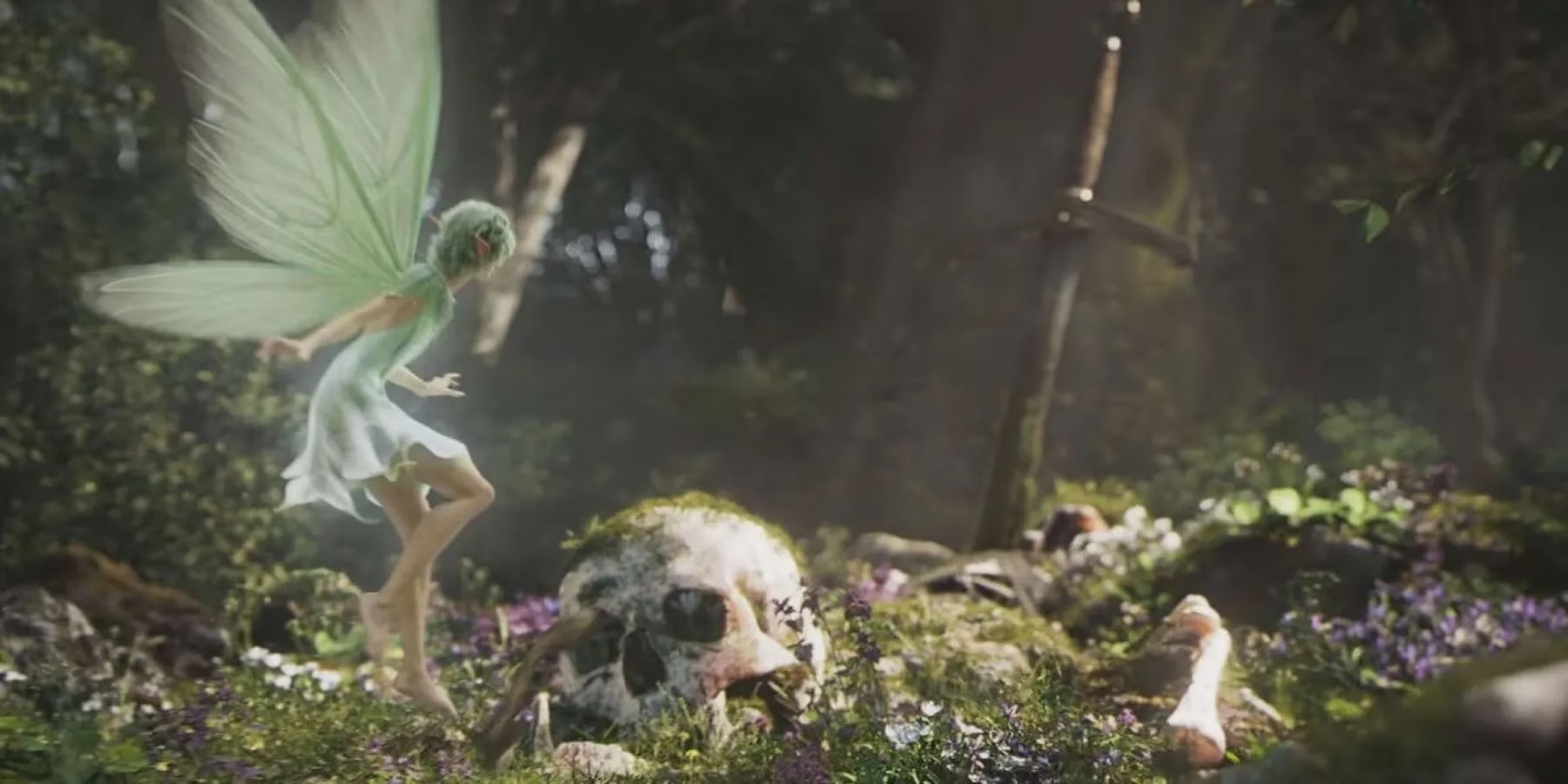
In the absence of official tidbits, the Fable faithful have turned into amateur career counselors, obsessively dissecting every new hire at Playground like it was tea leaves at the bottom of a guild seal mug. The past few years have seen a veritable who’s-who of gaming talent waltz into the studio. The narrative lead from Control, a senior gameplay designer from Cyberpunk 2077, and a parade of lesser-known but equally vital roles have all been roped in. It was, at first, a reassuring sign: Playground wasn’t just slapping a fresh coat of paint on a beloved IP and hoping nostalgia would do the heavy lifting. They were assembling a Fellowship of the RPG. As one forum wag put it, “When you need to build a hero, you don’t call the guys who tune car engines—you poach the wizards who made Geralt’s beard sway in the wind.”
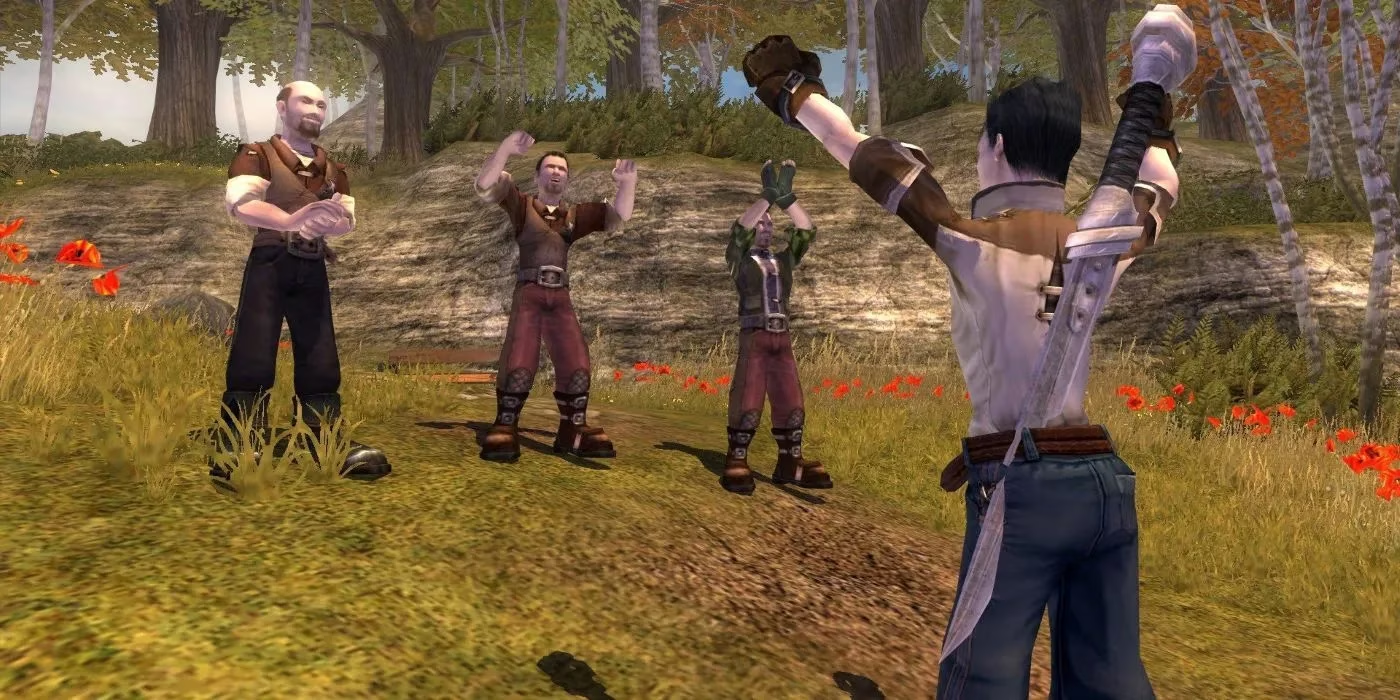
Yet here we are, in the year 2026, and the cat’s still firmly in the bag — probably playing with the yarn of unfinished dialogue trees. The steady drip of job postings that began in 2020 hasn’t exactly dried up. Recent listings as late as 2024 hinted that the team still needed quest designers, scriptwriters, and someone who could explain to an NPC why you just booted a chicken into the stratosphere. This is, frankly, both terrifying and weirdly comforting. Terrifying because it suggests Fable 4 spent much of this decade in a state of constant creative flux, a narrative soufflé that kept collapsing every time someone opened the oven door to show off. Comforting because Playground, a studio known for making cars go vroom, knows it doesn’t know how to make a hero shoot fireballs out of their hands, and is bending over backwards to learn.
It’s the ultimate “trust the process” scenario, except the process is covered in more fog than a Silent Hill map. When Playground first confirmed it was handling the Fable IP, the collective groan from fans could be heard from Knothole Glade to Samarkand. After all, this was the outfit responsible for flawless racing sims, not moral-alignment systems and polymorphing you into a balding oaf for eating too many pies. But instead of bulldozing ahead with a Forza engine reskinned with hobbes, Playground took the humble route. They started hiring anyone with a pulse and a portfolio that screamed “I understand British whimsy and can program interactive fart jokes.” That self-awareness is a rare gem—imagine if Rockstar suddenly decided to make a gardening simulator, and promptly hired every talent from the Stardew Valley modding community. That’s the level of humble pie we’re talking about.
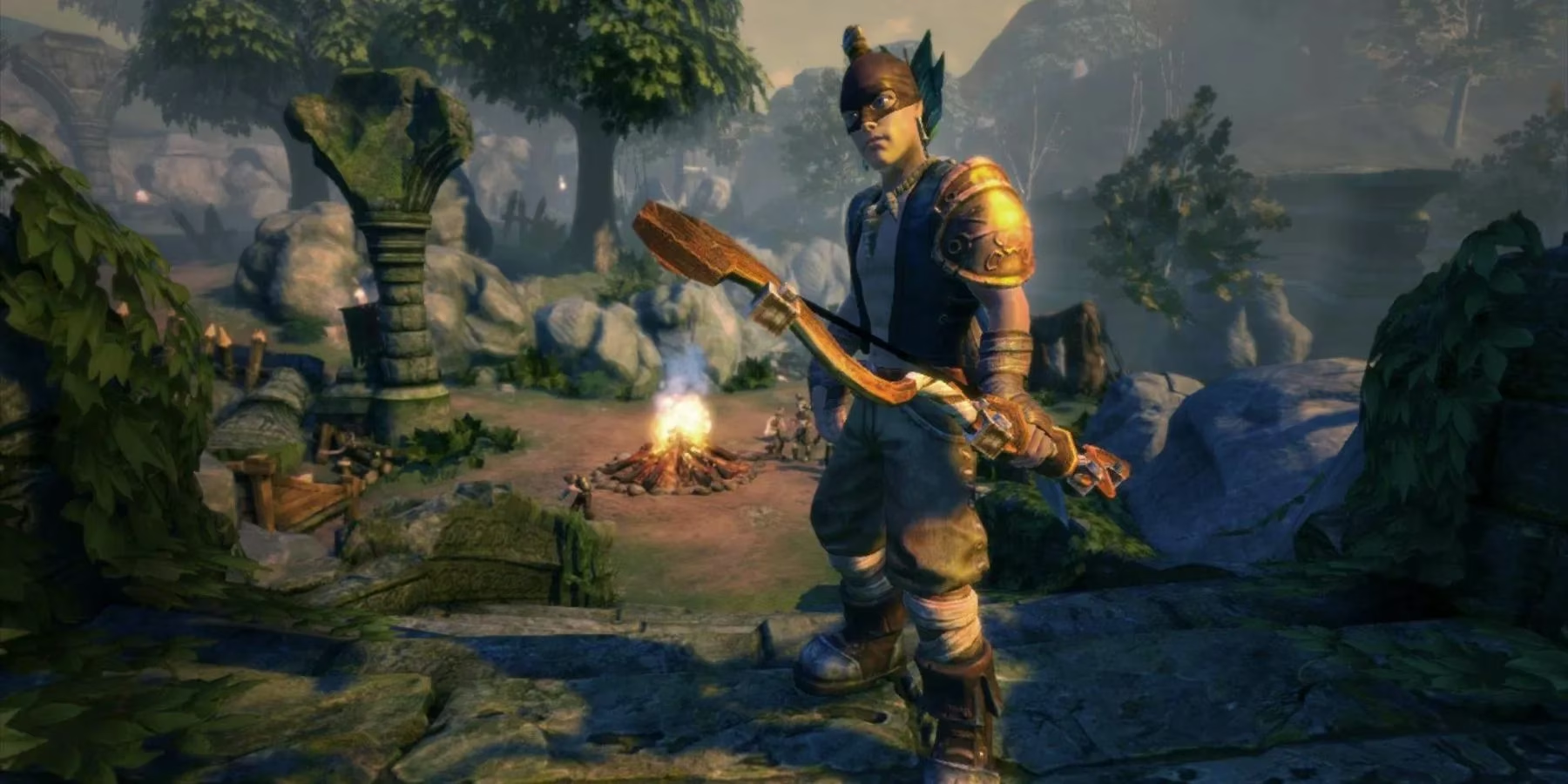
The second message buried in this avalanche of résumés is a simple one: Keep your trousers on, hero. Job listings continue to pop up because the project hasn’t crossed the finish line. Back in 2022, optimistic souls pointed to a leaked 2023 release date, which now seems as laughably optimistic as a developer saying “it’ll be done when it’s done” with a straight face. The truth is, Fable 4 was likely still a mound of design docs and concept art when that first trailer dropped—a splashy sizzle reel meant more to attract top-tier talent than to showcase a functional game. It worked like a charm, but it also left fans perched on the edge of their seats for half a decade.
At this point, the Fable community has developed a Stockholm syndrome–esque attachment to the radio silence. The lack of information has spawned its own folklore. Rumors swirl about a morality system that won’t just be the tired “Good vs. Evil” binary (toss a coin to your nuance, O’ Valley of Plenty). Others whisper about an open world so reactive that every kicked chicken permanently alters the local poultry economy. None of it is confirmed, naturally, but the job listings occasionally offer a breadcrumb. A listing for a systems designer who understands “emergent eco-systems and faction reputation” sent the subreddit into a tizzy for a month. That’s the new normal: parsing LinkedIn posts like sacred prophecies.
So where does that leave the average hero-in-waiting? Bracing for 2027, probably. Playground’s approach has been painstaking, and while the temptation to yell “just show me the dog companion!” is overwhelming, the studio’s pain is a kind of long-term blessing. By bringing in developers who’ve already shipped messy masterpieces, they’re stacking the deck against disaster. The former Control narrative lead knows how to balance quirky with cosmic horror; the Cyberpunk 2077 gameplay designer has learned, the hard way, what happens when you launch before the gears are greased. If Fable 4 does eventually materialize, it might just be the rare reboot that actually justifies a decade of waiting.
Until then, the fans will keep rooting through job portals and sighing at cryptic tweets from the official Playground account. Every new hire announcement will be met with a chorus of “soon,” dripping with sarcasm so thick you could spread it on a crumpet. Fable 4 remains the gaming equivalent of the Loch Ness Monster: the occasional blurry job listing re-ignites belief, but the proof remains elusive. In a world of instant gratification, Playground is daring us to rediscover patience—and that, perhaps, is the most old-school RPG mechanic of all.