Looking back from 2026, I can still feel the heavy weight of what could have been. It was the late 2000s, and Lionhead Studios was flying high after the spectacular success of Fable 2. We were riding a wave of critical and commercial acclaim, and the pressure to deliver a hat-trick with Fable 3 was immense. Peter Molyneux, our visionary co-founder, often spoke about the brilliant concept: the Industrial Revolution of Albion, where science and technology were killing magic. But how did such a strong idea become the game that many consider the beginning of the end for our beloved studio? The answer lies in a perfect storm of ambition, corporate pressure, and a development cycle that was simply too short.
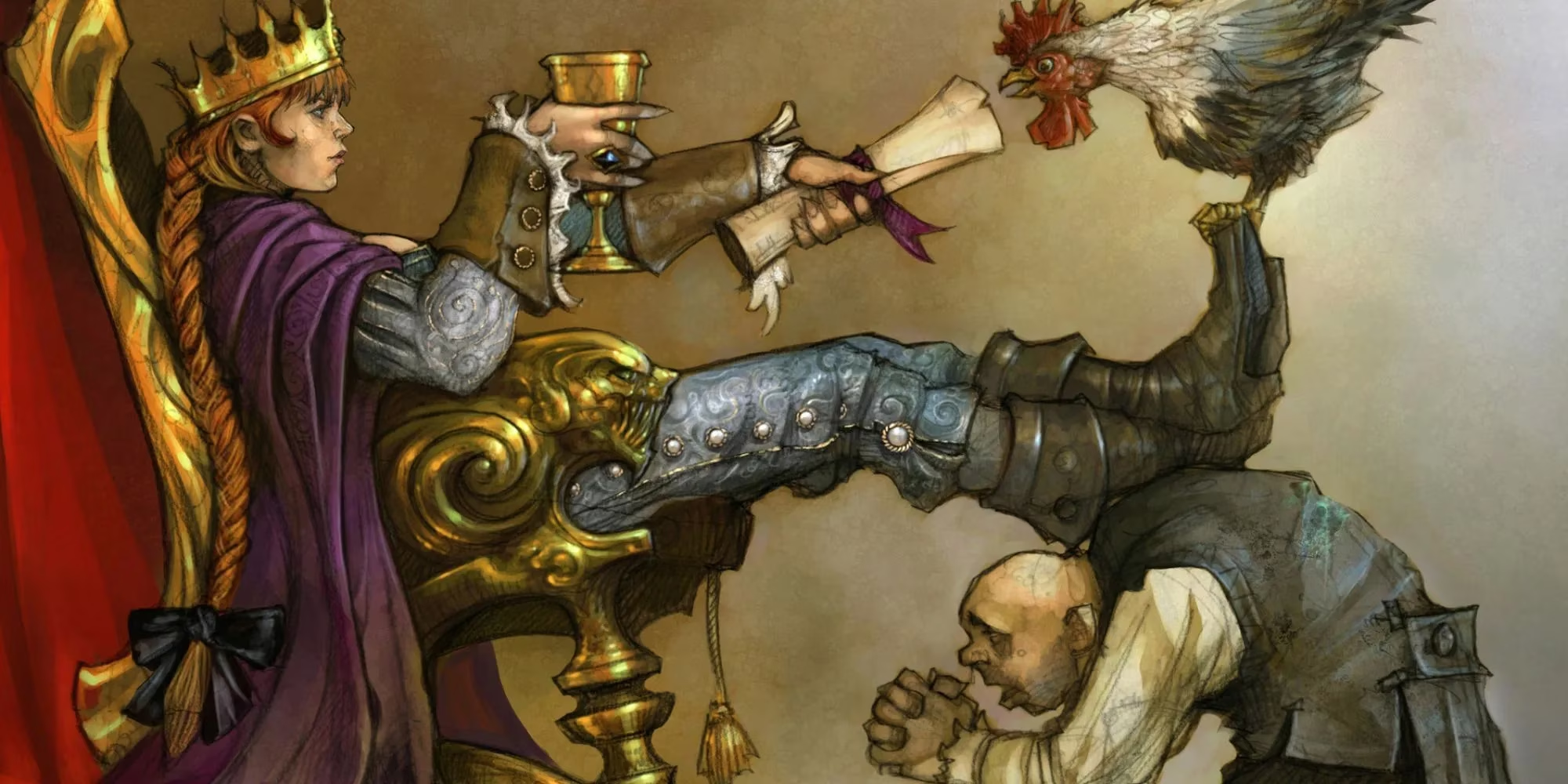
The first major shift came right after Fable 2's launch. We were now fully owned by Microsoft, and their message was clear: "Brilliant job, guys. But next time, do it on time." This was a fundamental clash of cultures. Our creative process at Lionhead wasn't about rigid game bibles and strict timelines. We built the game, played it, went back to the drawing board, and repeated. Predicting timing was nearly impossible. Yet, with the Xbox 360 dominating the market and the Kinect on the horizon, we wanted to stay on Microsoft's good side. So, when they said no more delays, we listened. Fable 3 was finished in just 18 months.
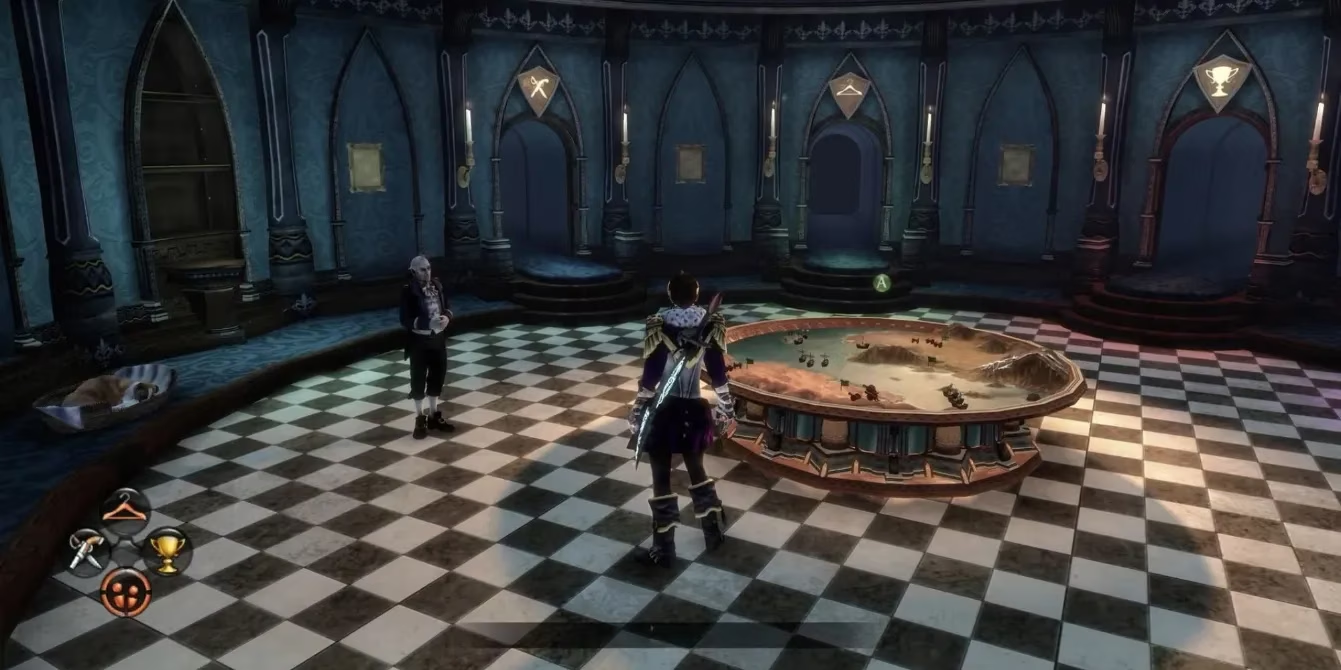
Despite the crushing deadline, our ambition didn't waver. We were cursed and blessed with the "Lionhead way"—we simply couldn't make the same game twice. This led to one of the most controversial design choices: The Sanctuary. This was a physical, in-game menu you had to walk through to manage your inventory. I remember Kostas Zarifis, our gameplay programmer, defending it as a cool, innovative idea, typical of Peter's love-it-or-hate-it concepts. The fans, however, largely hated it. Slowing down weapon changes for the sake of novelty? In retrospect, was it really worth it?
Internally, the development wasn't the chaotic mess one might expect. Zarifis paints a picture of a well-oiled machine, smoother than Fable 2 because our tools were finally mature. Dene Carter, our creative director until 2009, felt the process was "largely fixed." And we had a massive budget, especially for audio. Georg Backer, our audio producer, fondly recalls the love and resources poured into sound to create immersion. Everything from art to music got meticulous attention. So, where did it all go wrong?
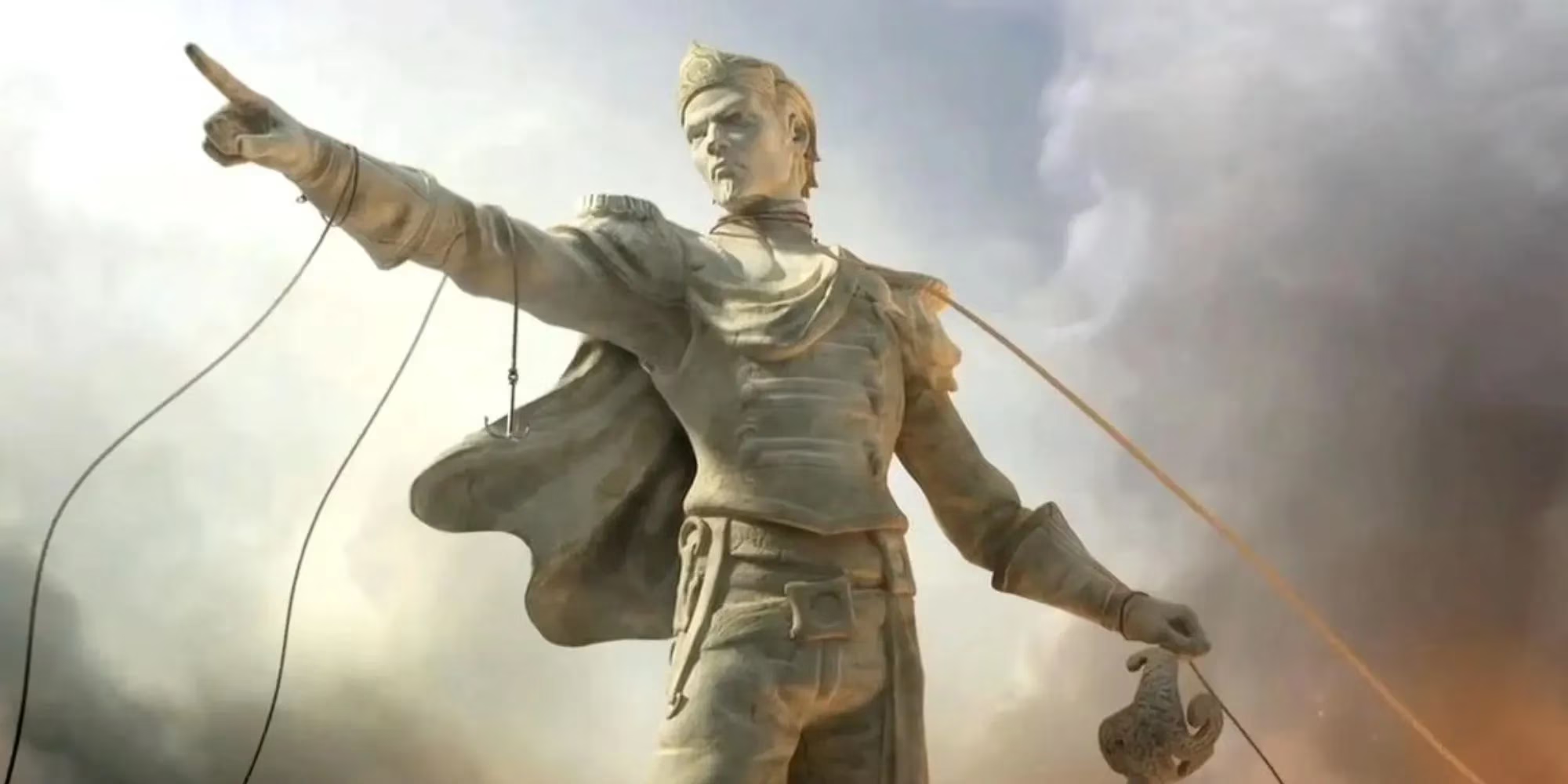
The game's narrative was incredibly bold. You played as a prince/princess overthrowing your tyrannical brother, King Logan, in an Albion rapidly industrializing. Molyneux himself realized a huge problem mid-development: from Fable 1 to Fable 3, we had spanned 500 years of Albion's history. "Oh my God," he thought, "what are we going to do for Fable 4? Is it going to be set in space?" This forward momentum created an existential crisis for the series' future.
While the core team worked on Fable 3, the studio's creative spirit was already looking beyond. We had "creative days" where anyone could pitch new ideas, leading to numerous spin-offs and cancelled projects like the infamous Project Milo. This diffusion of focus couldn't have helped the main title.
Yet, one area where Fable 3 unquestionably excelled was its audio and casting. With what felt like an "open chequebook" from Microsoft, we assembled a Hollywood-level cast. Lead voice director Kate Saxon gave her dream list: Michael Fassbender for Logan, Stephen Fry for Reaver, John Cleese for Jasper, Simon Pegg for Ben Finn. To her astonishment, we got them all, plus Bernard Hill, Nicholas Hoult, and Ben Kingsley.
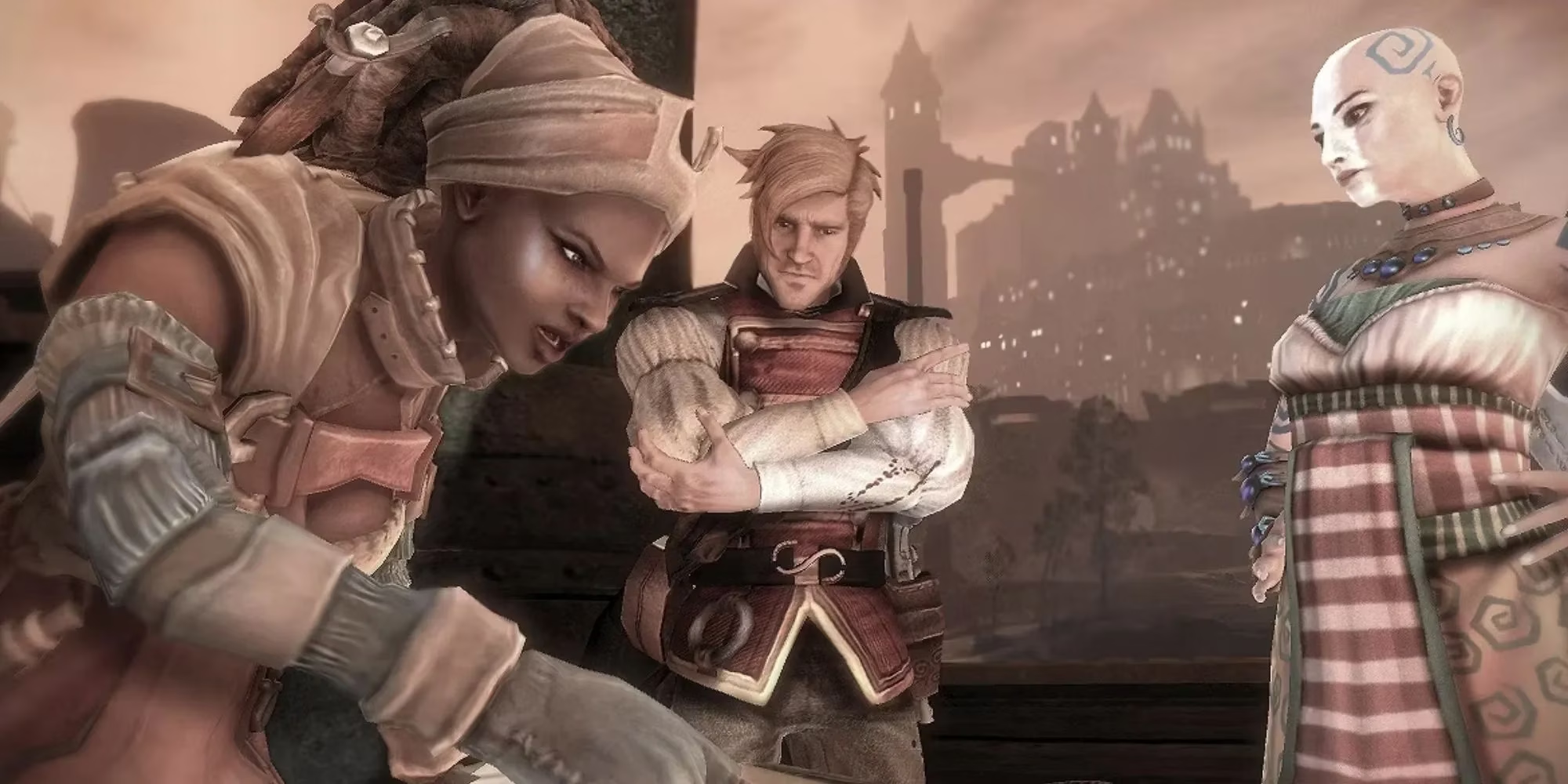
The recording process was monumental. We had three studios running simultaneously for six months. Saxon and Backer were managing four directors across four studios, "living and breathing" Fable. The actors brought incredible passion. Nicholas Hoult was sweetly nervous; Ben Kingsley meticulously checked his performance; Simon Pegg was a natural believer in gaming stories; and Bernard Hill threw himself into the physicality of his role.
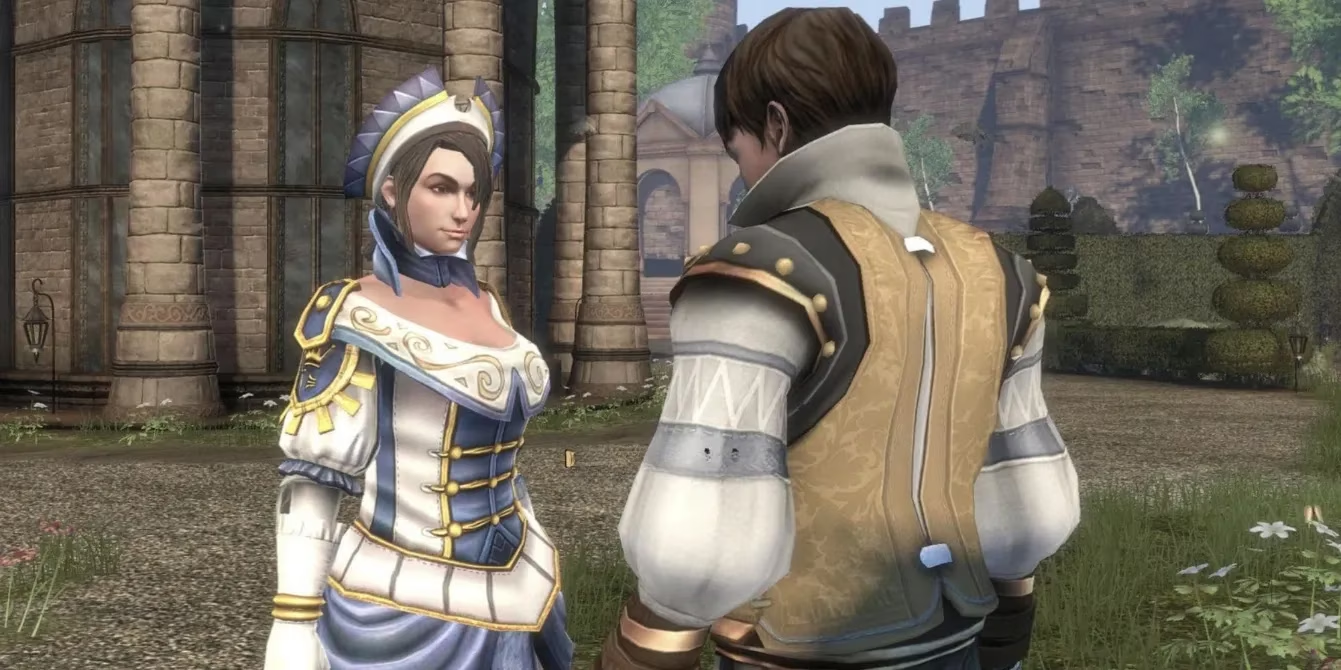
But all the celebrity hype and audio excellence couldn't mask the foundational cracks. As the immovable deadline loomed, we faced a choice: crunch or cut. Haunted by the scars from the first game's overwork, we chose to cut. Deeply.
Molyneux's heartbreak is palpable even now. "The game was a third of the size that it should have been," he laments. The entire final third of the game—where you rule as king—was eviscerated. What was meant to be a deep exploration of power and responsibility, with consequences for every action, was reduced to about ten simplistic choices (like ending child labour) connected by jarring, unexplained time-skips. The profound story of magic dying due to industry was completely axed. The player's Hero lineage was never explored.
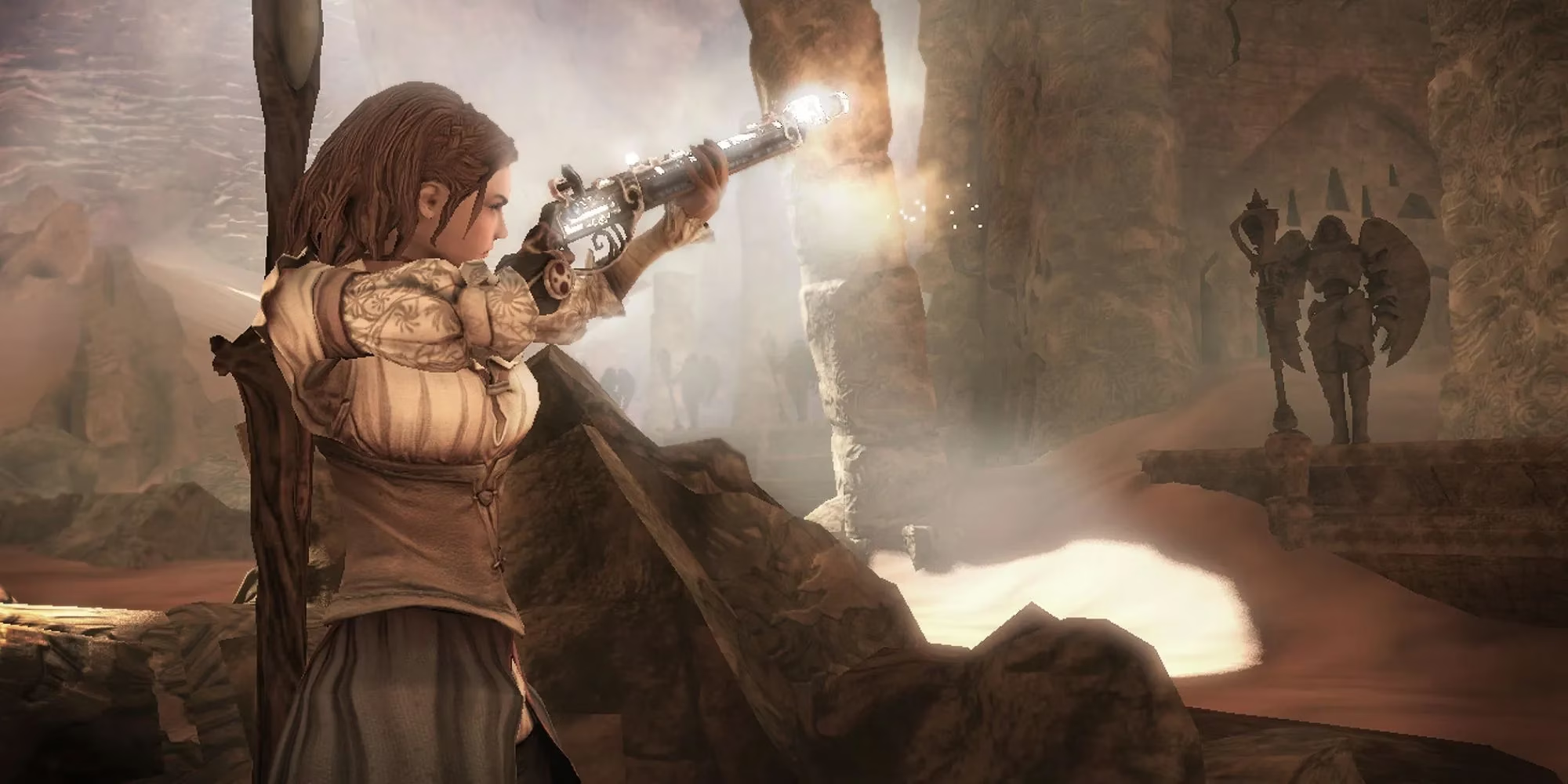
"I hate the fact that we had all this potential," Molyneux admits. "It needed another year and a half. It needed double the time." The studio's bonus structure incentivized hitting dates, not quality. I failed to go to the publisher and fight for more time like I had before.
The soul of the studio was leaving. Dene Carter, the co-creator who gave Fable its identity, departed before the game was finished, later saying he was "very glad" he was no longer there. The team that once fought tooth and nail for Fable's existence could now leave, and the franchise would continue without them—it had taken on a life of its own.
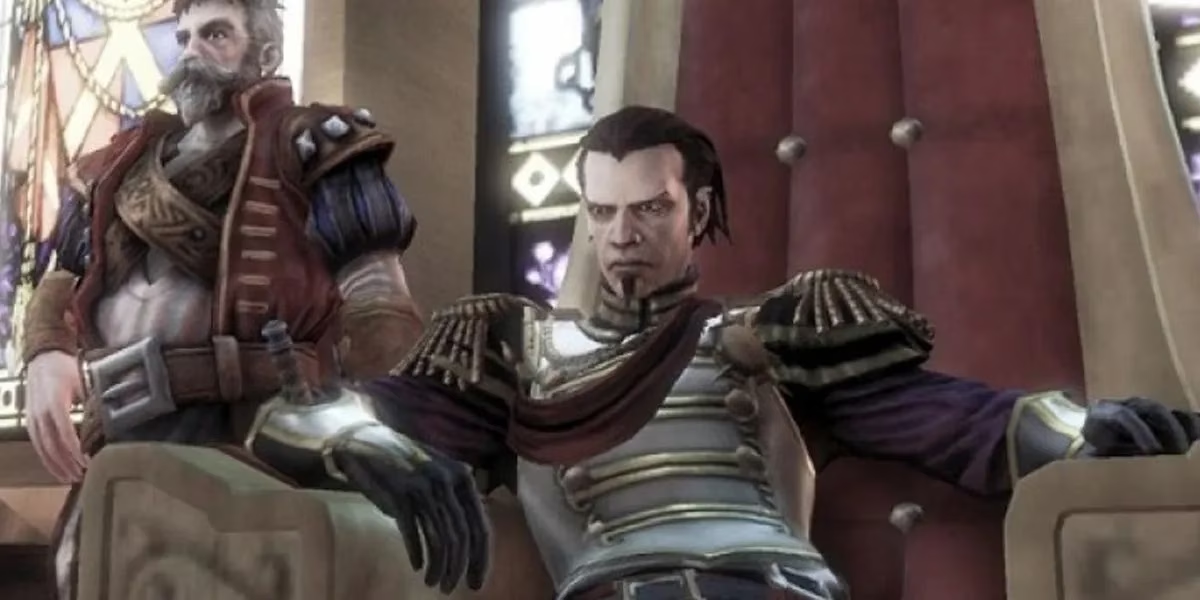
Fable 3 launched on October 26, 2010. The reception was middling—not terrible, but a far cry from the praise of its predecessors. Critics called it too simple, noting the rushed final act and stripped-back combat. In retrospect, it was indeed the beginning of the end. It was the last numbered sequel from the original team. Backer left soon after, feeling it was time to "do your own thing." The series stumbled forward with spin-offs, but the heart of Lionhead's Fable was fading.
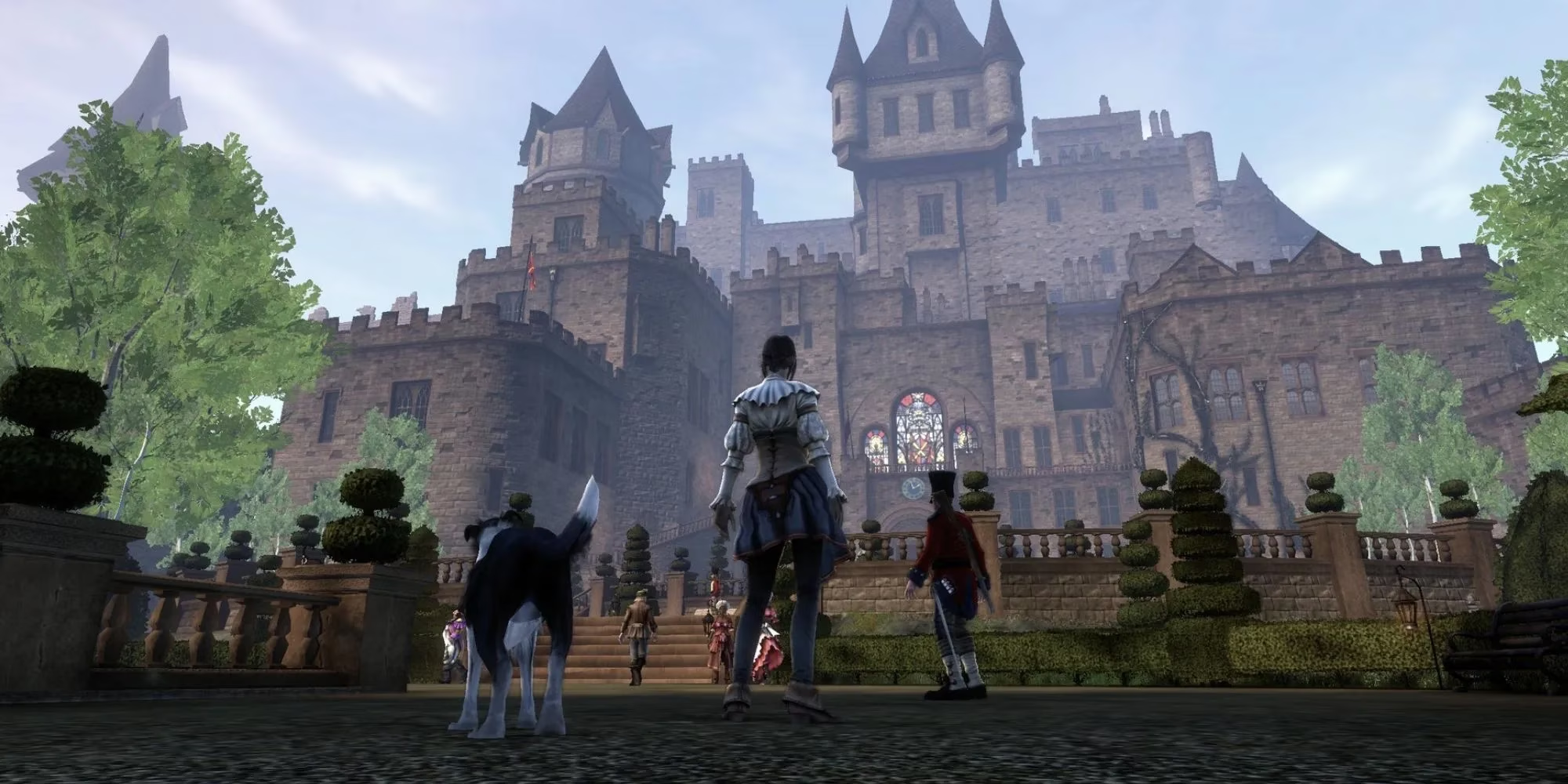
Reflecting from 2026, Fable 3 stands as a tragic monument to compromised vision. We had:
-
A Stellar Cast & Audio: Unmatched in the series, with legendary performances.
-
A Bold Concept: The Industrial Revolution vs. Magic was genius.
-
A United, Skilled Team: We were a well-oiled machine at peak technical efficiency.
But we were crippled by:
-
A Corporate Mandate: An 18-month deadline that ignored our creative process.
-
Unchecked Ambition: Refusing to repeat ourselves, even when it hurt the player experience (The Sanctuary).
-
Catastrophic Cuts: The game's soul—the king simulator and magic narrative—was left on the cutting room floor.
-
Loss of Key Creators: The departure of foundational people like Carter during development.
It breaks my heart. We delivered a game on time and got a pat on the back from Microsoft, but we sacrificed the very essence of what made Fable magical. We proved you could finish a big game quickly, but at what cost? The cost, it turned out, was the studio's future. The dream of Albion's industrial age became a cautionary tale about the brutal collision of art, commerce, and time.