In the realm of video game role-playing, personalization has always been a key pillar for immersion. The Fable series, developed by Lionhead Studios, has historically championed this ideal, positioning itself as a forerunner in player customization. With the anticipated release of Fable 3, the studio is pushing these boundaries even further, particularly in an area that transforms the player from a mere adventurer into a lord of the manor: house customization. This evolution begs the question: can interior design truly become a compelling part of a heroic saga?
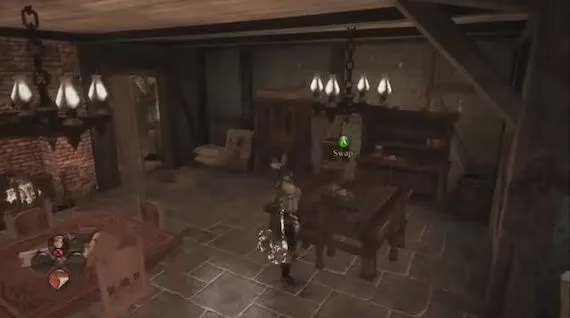
The latest insights into Fable 3 reveal a system that allows players to let their inner interior decorator run wild. Moving beyond the foundations laid by Fable 2, the game offers unprecedented control over the aesthetics of each property a player owns. Gamers can now differentiate their holdings using a vast array of decorative elements, from the furniture that fills the rooms to the wallpaper that adorns the walls. While this meticulous decorating might not directly alter the main storyline in a dramatic fashion, it profoundly enriches the 'Role-playing' element. It allows players to leave a personal mark on the world, crafting unique spaces that reflect their character's taste, wealth, and status. Isn't the essence of role-playing found in these personal, seemingly mundane choices?
For players whose interests lie more in action-packed adventures than perfecting their virtual Feng Shui, Fable 3 introduces a clever solution. A new character, a personal butler voiced by the legendary John Cleese of Monty Python fame, is available to manage the decorating drudgery. This feature acknowledges different playstyles, ensuring that players focused on combat and exploration aren't burdened by property management. However, strategic players should note a crucial economic loop: even if decorating is delegated, proactive management remains key. To maximize income from your real estate empire, you must:
-
Repair Properties: Maintain your houses to keep their value and appeal high.
-
Monitor Rent: Adjust and collect rent to ensure a steady stream of gold.
This system creates a compelling mini-game within the larger adventure, where successful property management funds greater heroic exploits.
Under the creative direction of Peter Molyneux, Lionhead Studios has consistently aimed to deliver novel experiences with each Fable iteration. Fable 3 continues this tradition, building upon its predecessor's framework. The development team has worked to refine various aspects of gameplay. Some of the new features introduced may lean towards the whimsical and humorous side the series is known for, while others directly address noted flaws, such as improvements to Fable 2's combat system to make skirmishes more dynamic and satisfying.
| Aspect | Fable 3's Approach |
|---|---|
| Customization | Deep, detailed property decoration (furniture, wallpaper). |
| Accessibility | Butler (John Cleese) can handle decorating tasks. |
| Gameplay Loop | Property repair & rent management for optimal income. |
| Core Combat | Refined and improved from Fable 2's system. |
| Creative Vision | Peter Molyneux's drive for a unique role-playing experience. |
The game's ambition extends to platform accessibility as well. While initially releasing for Xbox 360, plans for a PC version were confirmed, promising to eventually let a broader audience step into the boots of a rising monarch. The central promise of Fable 3 is the journey from revolutionary to ruler, and the property system is a tangible extension of that power fantasy. As king or queen, your decisions shape the kingdom, and your homes reflect your reign's prosperity and style.
Ultimately, Fable 3 presents players with a defining choice in their role-playing journey. Which type of ruler will you become? 😊 Will you be the hands-on sovereign who personally curates every tapestry and chair in the realm, or the pragmatic leader who delegates such tasks to a capable, humorous butler, focusing on grander strategic decisions? This level of choice in how one engages with the world's economy and aesthetics underscores the game's commitment to player agency. In 2026, looking back at the legacy of role-playing games, Fable 3's deepened customization systems stand as a notable attempt to blend domestic management with epic fantasy, proving that a hero's journey can be measured not just in monsters slain, but in homes beautifully furnished and kingdoms wisely managed.