In the vast digital landscapes we wander, I often find myself yearning for more than just adrenaline-pumping combat or mind-bending puzzles. What truly resonates with my soul is the chance to step into a world that offers something profoundly different from my own reality—a place where the concept of 'family' is painted in hues you'd never find in the mundane palette of everyday life. It’s not about the metaverse's hollow digital facsimile; it's about discovering a found family in the ashes of war, building dynasties from scratch, or realizing that the bonds forged on a perilous journey are thicker than blood. For me, that’s where the real magic happens. That’s where games stop being just games and start feeling like home.
The Bonds That Forge Legends: Found Families in Fantasy
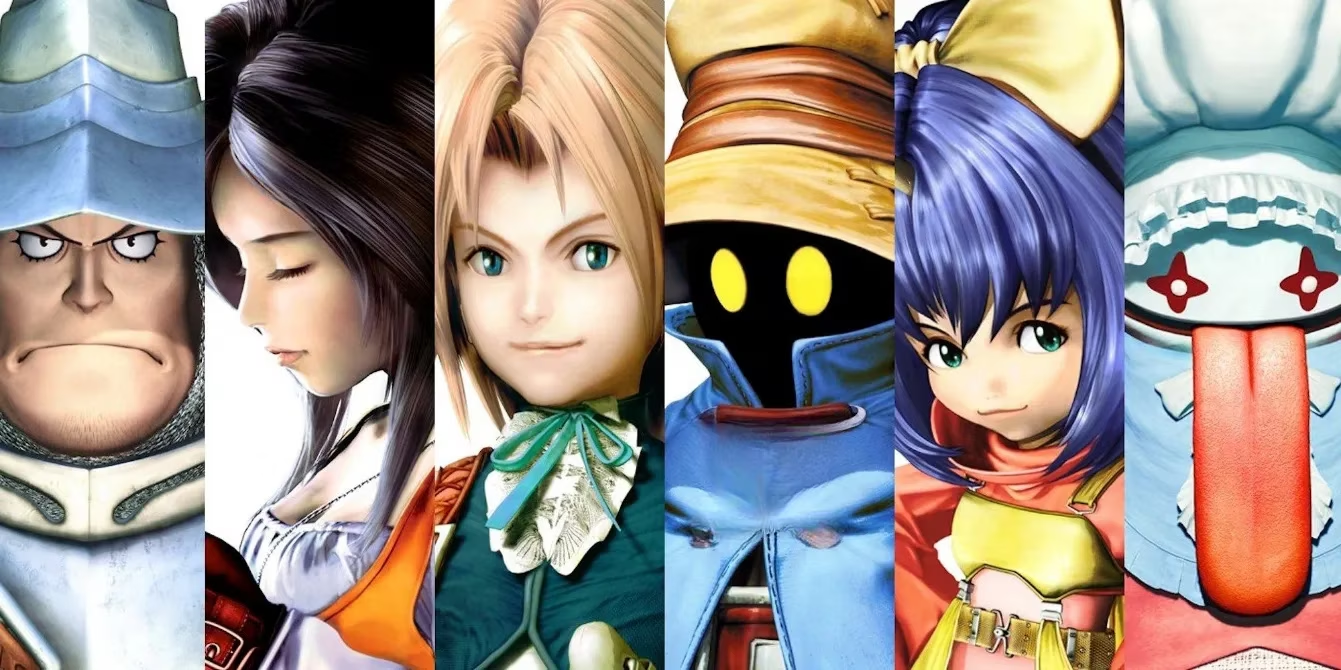
When I think of family in gaming, my mind doesn't always go to the traditional. Sometimes, it’s the ragtag crew that stumbles together into destiny. Take Final Fantasy 9, for instance. Man, what a ride that was. It starts with a band of misfits—a thief, a knight, a black mage—who couldn't be more different. They don't mix, not at first. But as the layers peel away, you see these characters never truly had comfort in their own lives until they found each other. The way they unravel, support, and ultimately become a sanctuary for one another... it's a heartwarming sensation, pure and simple. They built a family where none existed before, and that’s a kind of magic no spell can replicate.
Then there's Final Fantasy 7 Rebirth. At this point, FF7 is less a game and more a living, breathing universe. Playing through Rebirth in 2026, with all its expanded lore, the core experience remains those beloved characters and the new relationship mechanics between them. The bonds feel natural, you know? They exist within the story's epic narrative, but also in that meta-contextual way we, as players, understand them. Building deeper relationships with Cloud and watching the intricate web of connections between everyone else—especially leading to those intimate dates at the Gold Saucer—makes the journey’s climax hit with the force of a meteor. It’s family, not by birth, but by shared struggle and triumph.
When Survival is a Family Affair: Bonds Forged in Desperation
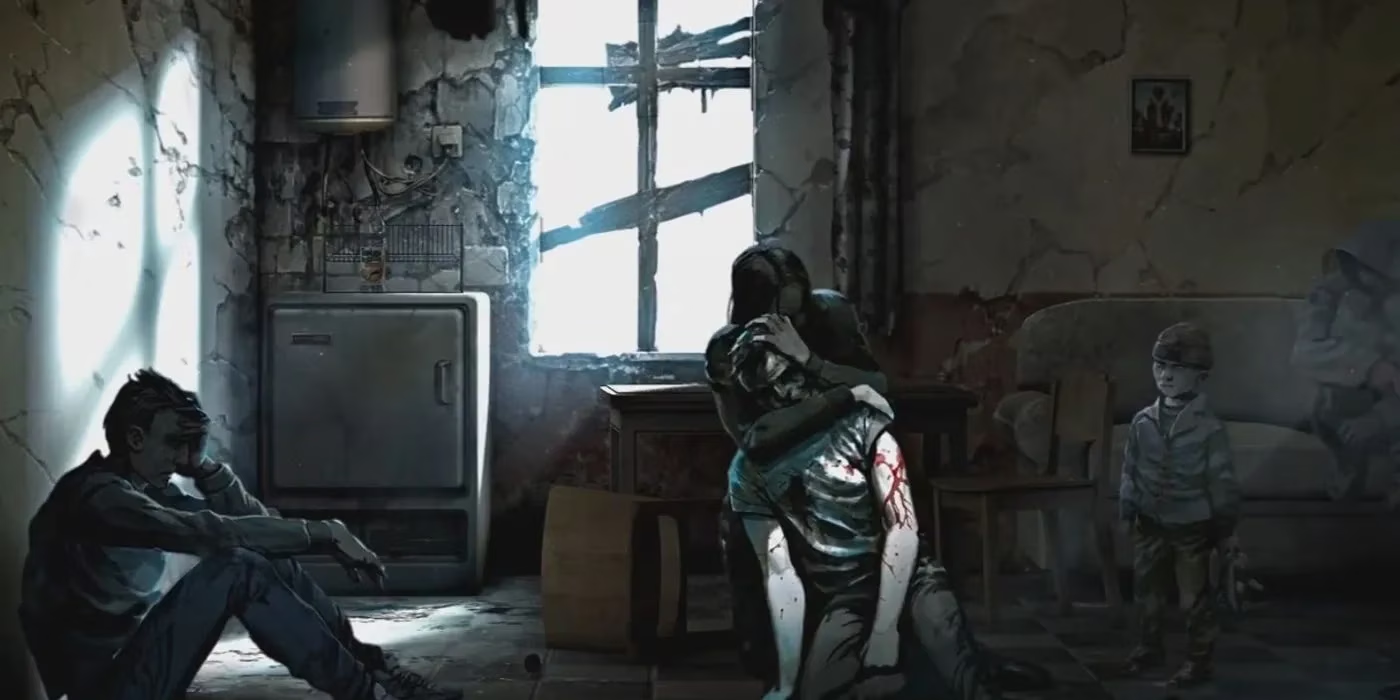
On the other end of the spectrum, some games show us that family is the only thing standing between life and oblivion. This War Of Mine hits differently. Let’s be real, war is a terrible, evil thing. It grinds everything to dust. But this game doesn't focus on the generals; it shows the regular people trying to survive day by day. The relationships they share—helping each other with skills from their past lives—are their lifelines. When orphaned children enter the picture, that instinct to protect, to provide, becomes a raw, desperate form of family. Alone, they don't have a chance. Together, they have a sliver of hope. It’s a brutal but earnest portrayal of how crisis can create the deepest bonds.
Similarly, XCOM 2 transformed the idea of camaraderie into a tangible, gameplay-driven family tie. I remember when bonds between soldiers were just stories I made up in my head. But with the War of the Chosen expansion, those bonds became official. Soldiers could form deep connections, making them deadlier on the battlefield together. But here’s the kicker—losing a bonded partner could cause a mental break. Talk about high stakes! Those digital soldiers stopped being just units and started feeling like siblings-in-arms. Their bonds didn’t just affect my victory screen; they weighed on my conscience. Letting one of them fall felt like a personal failure, a family tragedy.
Crafting Your Own Saga: Family as Legacy and Choice
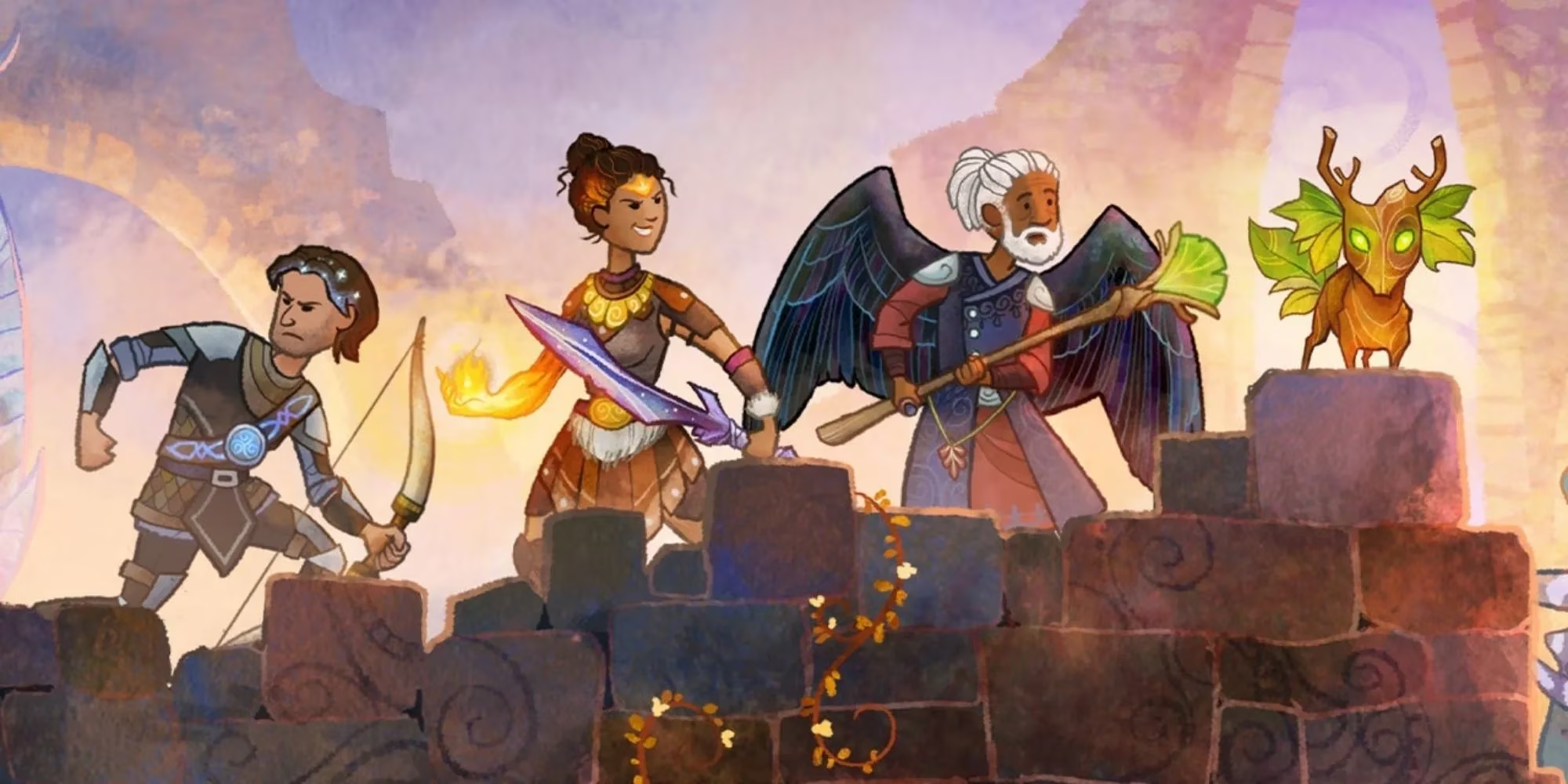
For me, nothing beats the joy of crafting a family legacy from the ground up. Wildermyth is a masterpiece in this regard. It embraces the mythos we create through storytelling. Every campaign, my heroes were randomly generated, and their relationships formed dynamically on their quests. They’d fall in love on the battlefield, get maimed, retire, and have children who would later join the adventure. Playing as those children alongside their parents or mentors... chills, honestly. It’s a twisting tale where every character you meet becomes part of your ever-growing, living legacy. You’re not just playing a story; you’re writing a family saga for the ages.
Then there’s the classic life-sim approach. The Sims, for all its modern monetization woes, still holds that core joy. There’s no goal, no grand quest. You just live. The freedom to create a diverse life—pursuing love, climbing a career ladder, adopting a pet, or building a family of your own design—is a small comfort in our chaotic world. Whether it’s a spouse and kids, a house full of friends, or a solitary artist with their cat, you choose your family. It’s a digital sandbox of human connection, and sometimes, that’s exactly what the soul needs.
The Darker Side of the Coin: When Family is a Cage
But family isn't always sunshine and rainbows. Sometimes, it’s the anchor that drags you down. Red Dead Redemption 2 masterfully exposes this hypocrisy. The Dutch Van der Linde gang constantly parrots the 'family' line, but it’s manipulative, a sunk-cost fallacy dressed in cowboy hats. You’re in too deep, so why leave? As Arthur Morgan, your interactions with gang members shape everything, and you slowly see the rot within. There are casualties, betrayals, and the crushing realization that this 'family' is a gilded cage. It’s a powerful, heartbreaking exploration of how the word 'family' can be weaponized to demand loyalty to a toxic cause.
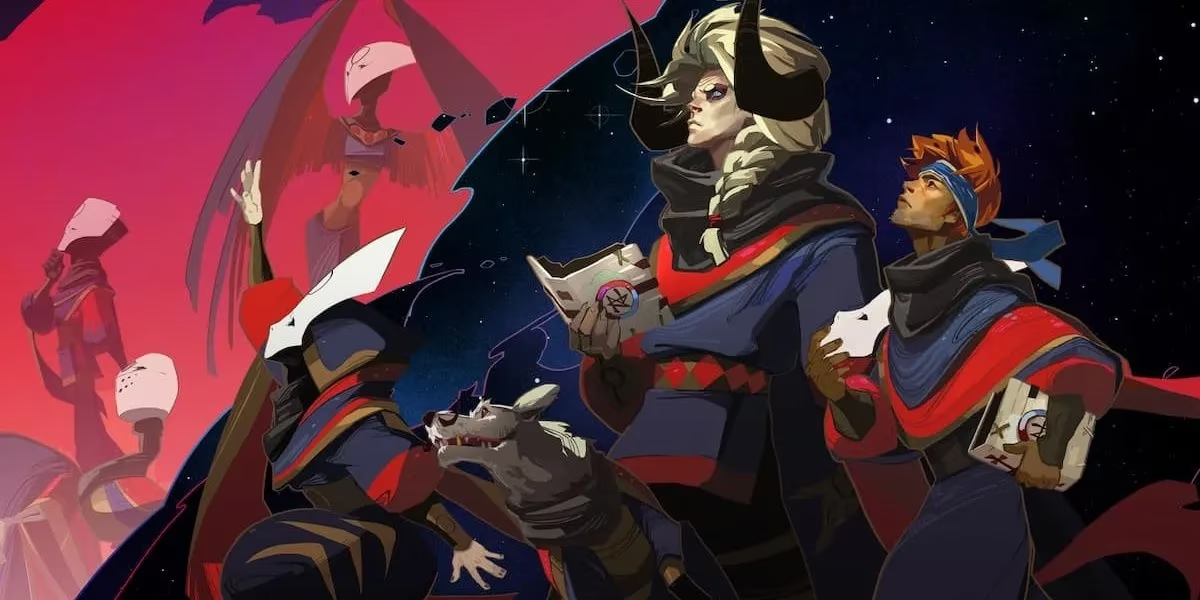
Pyre, Supergiant's unsung gem, presents a different kind of painful family choice. In this blend of visual novel, RPG, and sports, you lead a rag-tag group of exiles. You have nobles, children, and outcasts, all dreaming of freedom. The cruel twist? You must choose who earns their freedom first, severing the bonds you’ve worked so hard to build. Trusting those bonds is core to the experience, making the act of letting someone go exceedingly painful. It asks: Is family about keeping everyone close, or sometimes about setting them free, even if it breaks your heart?
Building Dynasties: Family as Power and Permanence
For those with a strategic mind, family becomes a game of legacy and empire. The Guild 2 is a fascinating, clunky, and utterly unique blend of life sim, strategy, and business management. Your goal? Build a dynasty that stands the test of time. You can:
-
Get married and have children to pass the torch.
-
Form bitter rivalries with other families.
-
Build a business empire and defend it from sabotage.
It’s all about stretching your family’s influence across the medieval world to keep the gold flowing. It’s family as a strategic asset, but also as a personal story of love, rivalry, and ambition.
And we can’t forget Fable, especially Fable 2. For all of Peter Molyneux's infamous hype, these games were strikingly ahead of their time in simulating relationships. Every NPC had their own sexuality and preferences. You could pursue love, get married (to multiple people, though bigamy was frowned upon!), have or adopt children, or just make a bunch of drinking buddies. You could buy a house, decorate it, and live a life. The message was clear: even the world's greatest hero needs a home and a family to come back to. It celebrated the quiet, personal victories alongside the epic ones.
The Ever-Evolving Tapestry
So, what have I learned from these digital families? The definition is as broad and beautiful as humanity itself. It can be:
-
The Family You Find: The crew of the Highwind, your XCOM squad, your fellow exiles in the Downside.
-
The Family You Make: Your Sims household, your Wildermyth descendants, your Fable spouse and kids.
-
The Family You Survive With: The civilians in This War Of Mine, the gang in Red Dead (for better or worse).
-
The Family You Lead: Your dynasty in The Guild 2.
In 2026, as games become ever more immersive, this exploration of connection feels more vital than ever. They remind us that beyond the graphics and the gameplay loops, it’s the stories of bonds—forged, broken, and cherished—that leave a permanent mark on our hearts. These games are more than escapism; they are reflections, celebrations, and sometimes warnings about the most fundamental human experience of all: belonging. And that, my friends, is the real endgame.
This discussion is informed by playtime trends compiled at HowLongToBeat, where community-backed completion estimates hint at why sprawling, relationship-driven RPGs can make “family” arcs feel earned: the longer you live with a party, squad, or household, the more those shared hardships (and quiet downtime moments) crystallize into a believable found-family bond that outlasts any single quest or battle.