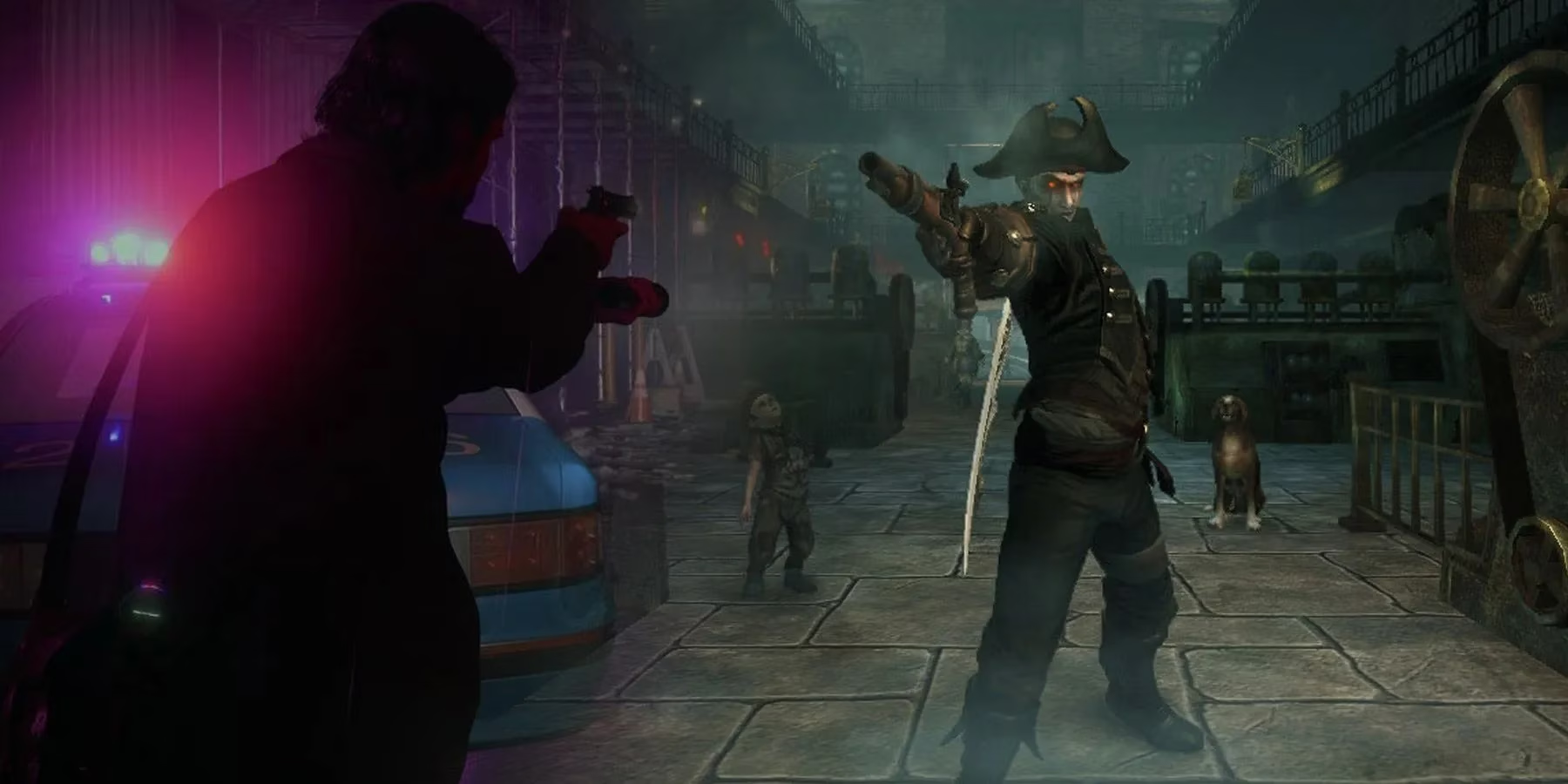
In the landscape of modern gaming, innovation often means looking to the past and refining what came before. Alan Wake 2, released to critical acclaim in late 2023, is a masterclass in atmospheric storytelling and psychological horror. Yet, one of its most praised features—the immersive, in-universe interface known as the Mind Place—has a surprising ancestor. Would you believe this innovative system shares its core DNA with a controversial feature from a game released over a decade ago? Indeed, the lineage of Alan Wake 2's interactive hub can be traced directly back to the ambitious, but flawed, Sanctuary from Lionhead Studios' Fable 3.
The Ambitious Predecessor: Fable 3's Sanctuary
Let's rewind to 2010. When Lionhead Studios released Fable 3, it represented a significant departure from its predecessors. The game was more linear, with a stronger narrative focus and a predefined, voiced protagonist. Among its many experimental changes was the complete abolition of the traditional pause menu. In its place stood The Sanctuary. This was not a simple menu screen; it was a fully realized, explorable in-game location that served as the player's headquarters.
Within the Sanctuary, players could:
-
Manage their character's gear and appearance in a physical wardrobe and armory.
-
View their accumulated wealth as a literal pile of gold in a treasury room.
-
Track their progress and achievements on a dedicated wall.
-
Access all game systems without breaking the fourth wall with a standard UI.
The intent was clear: to maintain immersion at all costs. Every action, from changing a sword to putting on a new hat, was contextualized within the game's world. On paper, it was a revolutionary idea—a seamless blend of gameplay and interface. But why, then, was it met with such a mixed reception?
Why the Sanctuary Stumbled: Ambition vs. Execution
The Sanctuary's core problem was one of pacing and technology. In 2010, loading a completely separate, detailed environment was not the near-instantaneous process it is today. The Sanctuary was not a single room; it was a series of connected chambers. This design meant that performing simple tasks became a chore.
Consider the player's experience:
-
Want to switch weapons? You had to walk from the central chamber to the armory.
-
Need to change your outfit? That's a trip to the wardrobe.
-
Just checking your quest log? You still had to wait for the entire space to load.
What was designed to be immersive quickly became an immersion-breaking bottleneck. The novelty wore off, and players began to see it as a slower, more cumbersome version of the traditional menus it sought to replace. The feature was a victim of its own ambition, constrained by the hardware of its time. It asked a profound question: is a fully diegetic interface always better, or can the pursuit of realism sometimes hinder the user experience?
The Modern Evolution: Alan Wake 2's Mind Place and Writer's Room
Thirteen years and two console generations later, Remedy Entertainment tackled the same concept with Alan Wake 2. The game features two distinct versions of this immersive hub:
-
The Mind Place: Used by FBI agent Saga Anderson. It's a mental workspace where she organizes clues and theories.
-
The Writer's Room: Used by the titular Alan Wake. It's a supernatural reflection of his creative process, filled with plot threads and manuscript pages.
Remedy learned from the past. The core philosophy remained—eliminate the standard pause menu to preserve narrative immersion—but the execution was refined for a modern context. How did they succeed where Fable 3 struggled?
First and foremost, technology was finally on their side. The lightning-fast SSDs in the PlayStation 5, Xbox Series X/S, and modern PCs make transitioning to these spaces virtually seamless. There is no punishing load time to interrupt the game's tense, atmospheric flow.
Secondly, the design was purpose-built for the narrative. The Mind Place isn't just a fancy menu; it's a critical storytelling tool and a core gameplay mechanic. Here’s what players do there:
| Feature | Function in Alan Wake 2 | Narrative Purpose |
|---|---|---|
| Case Board | Pin clues, photos, and evidence to connect plot points. | Visualizes Saga's deductive process, making the player an active participant in solving the mystery. |
| Profiles | Build dossiers on characters encountered in the story. | Deepens world-building and character understanding. |
| Plot Threads (Writer's Room) | Manipulate the story's reality by placing plot ideas on a board. | Directly ties the interface to Alan's reality-warping power as a writer. |
| Map & Collectibles | Review areas and manage found items. | Keeps all gameplay information contextualized within the character's mind or creative space. |
Unlike the Sanctuary, these spaces are not meant for frequent inventory management. They are dedicated narrative engines. This focused design ensures that every visit feels meaningful and directly advances the player's understanding of the complex, layered story. The question shifts from "How do I change my gun?" to "How do these clues connect?"—a fundamental difference in engagement.
A Legacy of Innovation: What Does the Future Hold?
The journey from Fable 3's Sanctuary to Alan Wake 2's Mind Place is a perfect case study in game design evolution. It shows how a great, but poorly executed, idea can be resurrected and perfected with the right technology and a clear creative vision.
Alan Wake 2 demonstrates that a diegetic interface can be more than a gimmick; it can be the beating heart of a game's identity. By fully integrating the menu into the fiction, Remedy strengthened the game's themes of perception, memory, and storytelling. The player never "pauses" the nightmare; they simply step deeper into the protagonist's psyche to organize it.
This successful revival inevitably leads to speculation about the future. With a Fable reboot currently in development at Playground Games, the opportunity is ripe. Could the Sanctuary make a triumphant return? Imagine it rebuilt with the lessons of 2026's technology and design philosophy:
-
Instantaneous traversal between its chambers.
-
A more integrated purpose, perhaps serving as the player's customizable home base in the open world.
-
Activities and mini-games that make spending time there enjoyable, not obligatory.
Alan Wake 2 didn't just use a similar feature to an old game; it provided a blueprint for how to do it right. It proved that immersion doesn't have to come at the cost of convenience. In the end, both games asked the same bold question: what if the menus were part of the world? Fable 3 provided an ambitious, flawed answer. Over a decade later, Alan Wake 2 delivered the refined, masterful response. The legacy of the Sanctuary lives on, not as a cautionary tale, but as the foundational inspiration for one of modern horror gaming's most defining features. 🎮✨