Let me take you on a trip down memory lane, back to the glorious, sometimes pixelated, days of the 2000s. As a seasoned gamer, I can tell you, those years weren't just good for RPGs—they were a straight-up golden age. The arrival of the PS2, Xbox, and more powerful PCs? It was like the gaming gods had handed developers a magic paintbrush and said, 'Go wild!' Suddenly, the worlds we explored weren't just maps; they felt alive. Characters started talking back with actual voices (some better than others, I'll admit), and the stories... oh, the stories got so big you could get lost in them for weeks. The 2000s were a buffet of incredible gaming, but for us RPG lovers, it was a five-star feast.
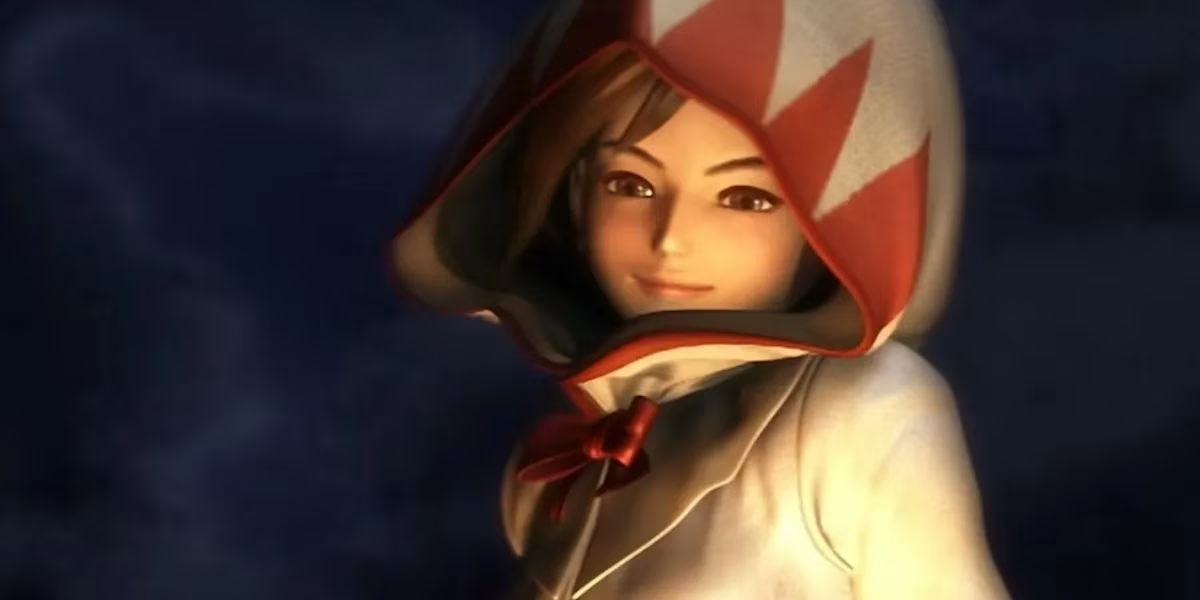
First stop, the PS1 era's beautiful swan song: Final Fantasy IX. Look, after the sci-fi edge of FF7 and FF8, the series creator, Hironobu Sakaguchi, basically said, 'Let's go home.' And what a homecoming it was! What started as a side project became a mainline title that felt like a warm hug for longtime fans. The characters were charming, the battle system was a blast, and Nobuo Uematsu's soundtrack? Pure magic. It was the perfect, heartfelt goodbye to the PlayStation 1 and remains, in my totally biased opinion, one of the absolute best RPGs ever crafted. It's the kind of game that sticks with you, you know?
Now, let's talk about a hidden gem that doesn't get nearly enough love. Enter Shadow Hearts on the PS2. This game had guts—setting its spooky, turn-based tale in 1913 and 1914. You follow Yuri Hyuga and Alice Elliot, diving into a sequel that continued threads from the cult classic Koudelka. But the real star of the show was the 'Judgment Ring' battle system. Picture this: a creepy, occult-inspired ring pops up during fights, and you have to stop it in specific zones to power up your attacks. It was a brilliant mini-game mechanic that made every fight feel tense and fresh. It's a masterpiece that, sadly, time has kinda forgotten, which is a real shame.
The PC Powerhouses
While consoles were rocking, the PC scene was having its own renaissance. CRPGs were coming back with a vengeance, and in 2002, one titan stood above the rest: Neverwinter Nights. BioWare, with a team of 65 wizards, used the Dungeons & Dragons 3rd Edition rules to create something special. The world was dark, dealing with a sinister cult, and the writing? Top-notch. The dialogue had more layers than an onion, making every conversation meaningful. It wasn't just a game; it was a truly magnificent, sprawling adventure that set the bar sky-high for PC RPGs.
Speaking of BioWare, let's jump to a galaxy far, far away. In 2003, Star Wars: Knights of the Old Republic dropped, and let me tell you, it was the game Star Wars fans had been dreaming about since, well, forever. Creating your own character in that iconic universe and hopping between planets felt revolutionary. The turn-based lightsaber combat was phenomenal, and the story—following the amnesiac Revan—is still one of the best in Star Wars history. Light side or dark side? The choice was yours, and it actually mattered. It wasn't just 2003's best RPG; it's one of the greatest Star Wars games, period. No contest.
Licensed Legends and Defining Sequels
Who would've thought one of 2004's best RPGs would come from the X-Men? X-Men Legends by Raven Software was a brilliant action-RPG. Controlling a team of four mutants, switching on the fly with the D-Pad, felt incredibly powerful. The roster was huge, packed with fan favorites and Marvel cameos. It was a love letter to the comics, with diverse environments and gameplay that was just plain fun. For a licensed game, it punched way above its weight class.
Then came Fable: The Lost Chapters in 2005. The original Fable was already fantastic, but this expanded version? It took a crown and bedazzled it. Adding new quests, bringing back the cut character Scythe, and giving us more of the world of Albion—it was the definitive edition in every way. It perfected an already near-perfect formula of choice, consequence, and British humor.
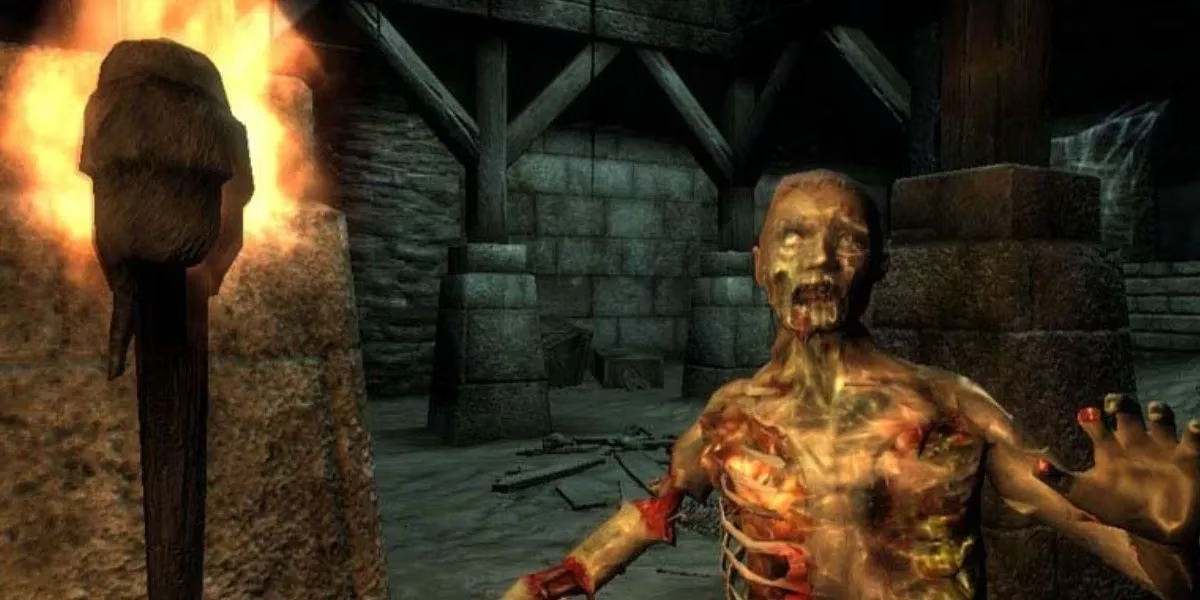
Bethesda truly announced itself as an RPG kingpin with The Elder Scrolls IV: Oblivion in 2006. Coming off Morrowind, they built a world so vast and detailed you could—and many did—lose thousands of hours in it. Being sent on a quest by Patrick Stewart's voice (Uriel Septim himself!) to stop a Daedric invasion? Iconic. The modding community kept this game alive and kicking for years, proving that a great open world never really gets old.
The New Frontiers
In 2007, BioWare dared to create its own universe with Mass Effect. After the success of KOTOR, they handed the sequel off and bet big on a new sci-fi epic. Creating your own Commander Shepard—male or female, paragon or renegade—was a revelation. The commitment to a branching narrative across a planned trilogy was ambitious, and the sense of discovery exploring the galaxy with a stellar crew was unmatched. It laid the foundation for a legendary series.
Then, in 2008, Bethesda worked its magic on another classic franchise: Fallout 3. Taking the post-apocalyptic series from isometric to first-person in the ruins of Washington D.C. was a risk, but it paid off. The world was hauntingly huge, filled with familiar horrors, and the new VATS system cleverly bridged the gap between real-time and the original turn-based feel. It was a brutal, captivating rebirth.
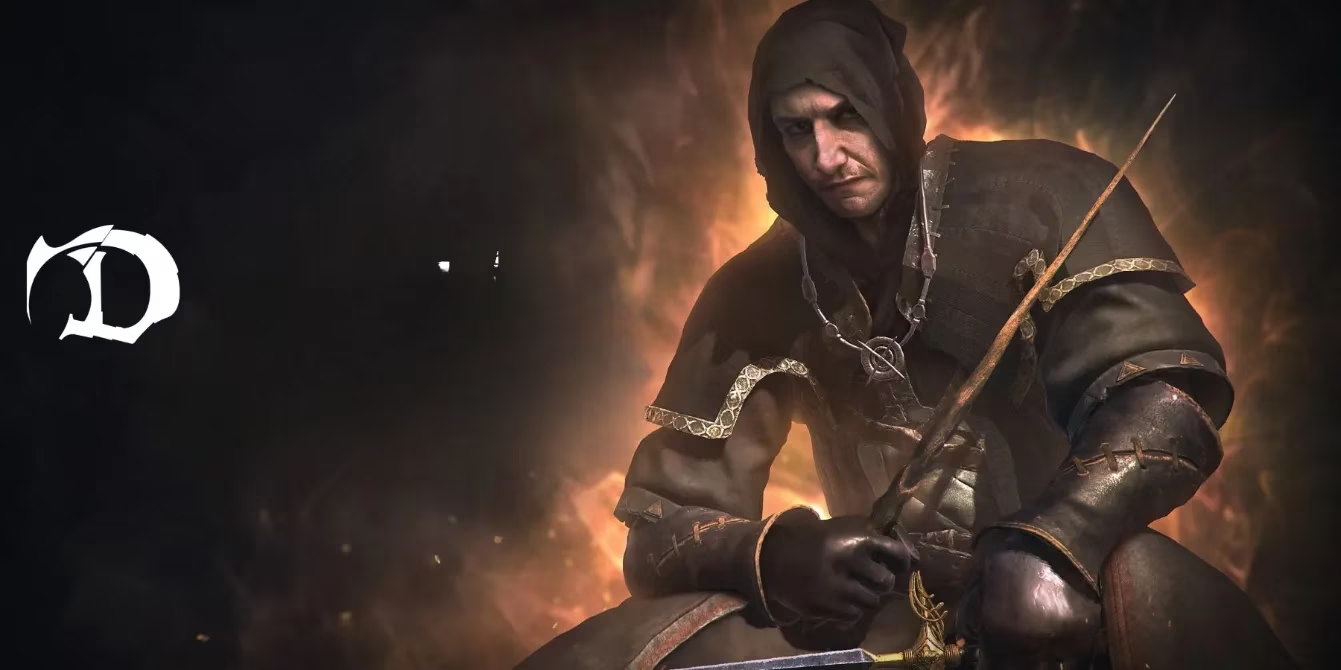
Finally, we close the decade with the game that started a revolution: Demon's Souls in 2009. FromSoftware, known for their tough-as-nails King's Field games, decided to crank the difficulty to eleven on the PS3. Set in the bleak world of Boletaria, this action-RPG was punishing, obtuse, and utterly brilliant. The combat had a raw, physical weight to it—every sword swing mattered. It was the brutal, beautiful precursor to the entire Soulsborne genre. Even today, its influence is undeniable, and the fact it got a stunning remake just shows this tough old game still has plenty of fight left in it.
Phew! Looking back, the 2000s weren't just a decade for RPGs; they were a playground where developers experimented, evolved, and created timeless worlds. From forgotten gems like Shadow Hearts to era-defining titans like Oblivion and Mass Effect, each game left its mark. They taught us about choice, consequence, and the pure joy of getting lost in another world. And honestly? Playing them now, whether through original hardware, remasters, or backwards compatibility, is a reminder of just how special that time was. They just don't make 'em quite like they used to... or maybe they do, but they're standing on the shoulders of these giants.